





















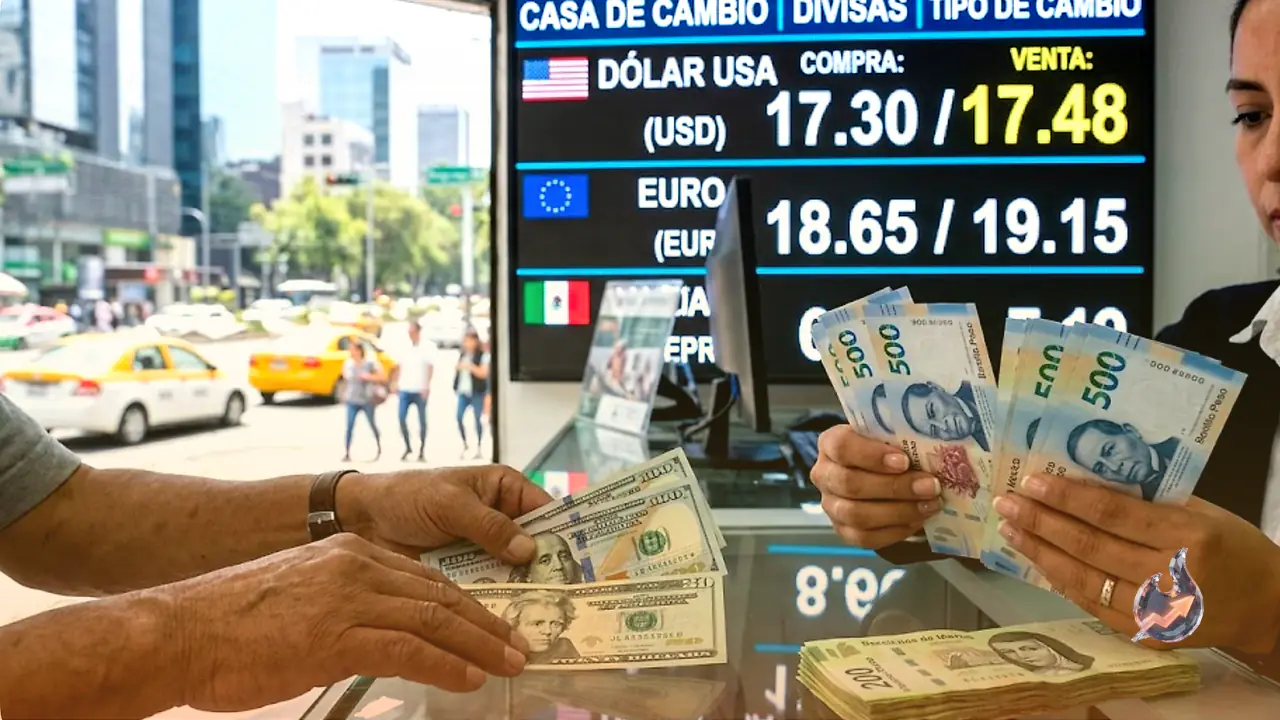

The Mexican Peso pushed higher on Thursday, riding a wave of dollar weakness after a soft US employment report and market chatter that Japanese authorities may have stepped into the currency market. As the two currencies changed hands, USD/MXN traded at 17.48, down 0.43% on the day. In live trading the pair was quoted near 17.47, off roughly 0.50% from the previous close of 17.55.
A weak jobs print does the damage
The trigger came early in the North American session, when the US Bureau of Labour Statistics (BLS) released its monthly employment figures. June Nonfarm Payrolls landed far weaker than the market had penciled in, sliding from 129K to just 57K and undershooting forecasts. The disappointment did not stop there. The numbers for May and April were revised lower, stripping a combined 74K jobs out of the earlier tallies. For a currency market that had grown used to firmer US data, the miss was a jolt.
The Unemployment Rate, on the other hand, ticked down from 4.3% to 4.22%, though that improvement came for the wrong reason: a slide in labour force participation rather than a burst of hiring. With the labour market looking softer than the headlines suggested, the Greenback extended its slide. The US Dollar Index (DXY), which measures the American currency against a basket of six others, fell 0.55% to 100.85. Adding to the pressure, talk of intervention in the currency market by Japanese authorities knocked the dollar against the yen and fed the broader move lower.
Trade friction sits in the background
Beyond the data, the North American trade relationship is again in focus. The three countries bound together by the USMCA pact could have signed a 16-year extension on Wednesday, but Washington is pressing for changes to an agreement the partners negotiated six years ago. The potential disruptions and the broad economic hit from any breakdown are seen as stark. The stakes are large: the three economies together account for nearly a third of the world's gross domestic product, and intraregional trade climbed past $1.6 trillion in 2024, up from $1 trillion when the deal took effect in 2020.
The auto sector is feeling the strain most directly. On Wednesday, US auto industry officials pushed for a quick resolution that would restore duty-free trade with Canada and Mexico, warning that tariffs leave them at a disadvantage against Japanese and South Korean car makers.
Warsh keeps the spotlight on prices
Also on Wednesday, Fed Chair Kevin Warsh said inflation expectations had eased slightly over the previous four weeks, but he underlined that the central bank's overriding priority remains "price stability." Despite the soft jobs data, money markets are still leaning toward tighter policy: they are pricing a 66% chance of a rate hike at the September 16 meeting, with investors positioned for nearly 17 basis points of tightening.
USD/MXN on the charts
On the daily chart, USD/MXN is trading around 17.4818 and holding a mildly bullish near-term tone. Spot is sitting above the cluster of simple moving averages from the triple set, with the reading near 17.3656 acting as underlying demand. The pair is nudging into a zone marked out by two descending resistance trend lines, one drawn from 18.1651 and the other from the longer-term 21.0808 peak. Live momentum readings back up the cautious tone: the Relative Strength Index (14) sits at 53, just above the neutral 50 line and pointing to steady, not stretched, upside momentum. The story's own reading placed the RSI at 53.6, essentially the same picture.
On the upside, the first barrier lies along the nearer downward trend line off 18.1651, with a second cap from the longer descending line that starts at 21.0808. Together they act as a gradually falling ceiling above the current price. On the downside, initial support rests at the triple moving average area near 17.3656, and live charts flag support around 17.15 with resistance near 17.67. As long as the pair holds above its moving-average base, dips are likely to be read as corrective within the constructive bias. (The technical analysis here was prepared with the help of an AI tool.)
The dollar's slide spread across markets
The reaction to the payrolls miss was not confined to the peso. GBP/USD traded well above the 1.3300 barrier as the Greenback came under fresh selling, with Cable extending a multi-day recovery and eyeing a challenge of 1.3400. EUR/USD snapped two days of pullbacks to climb toward multi-day peaks near 1.1470, helped by the dollar's retreat and a sharp sell-off in USD/JPY. Gold, meanwhile, pushed above $4,100 per troy ounce to its highest level in a week as the softer dollar lifted the metal. US markets, it is worth noting, were set to close on Friday for the Independence Day holiday.
What moves the Mexican Peso
The Mexican Peso is the most heavily traded currency in Latin America, and its value hinges on several moving parts. Chief among them are the health of the Mexican economy, the policy stance of the country's central bank, the level of foreign investment flowing in, and even the remittances sent home by Mexicans living abroad, especially in the United States. Geopolitics matters too. Nearshoring, the trend of companies relocating manufacturing and supply chains closer to home, is viewed as a tailwind for the peso, since Mexico is seen as a key manufacturing hub in the Americas. Oil is another lever, given that Mexico is a major exporter of the commodity.
How Banxico steers policy
Mexico's central bank, known as Banxico, has one core mission: keep inflation low and stable, at or near its 3% target, which is the midpoint of a tolerance band running from 2% to 4%. It does this by setting interest rates. When inflation runs too hot, Banxico raises rates to make borrowing costlier for households and businesses, cooling demand and the wider economy. Higher rates tend to help the peso because they lift yields and make the country more attractive to investors. Lower rates do the opposite and tend to weaken the currency.
Why the data and the mood matter
Macroeconomic releases are central to gauging the economy's health and can swing the peso's value. A strong Mexican economy, built on solid growth, low unemployment and high confidence, is good for the currency: it pulls in foreign investment and can nudge Banxico toward higher rates, particularly if the strength arrives alongside elevated inflation. Weak data, by contrast, usually drags the peso down. As an emerging-market currency, the peso tends to thrive in risk-on stretches, when investors judge broader risks to be low and reach for higher-yielding bets. When markets turn choppy or uncertainty rises, the peso typically weakens as investors dump riskier assets and retreat to safer havens.