
















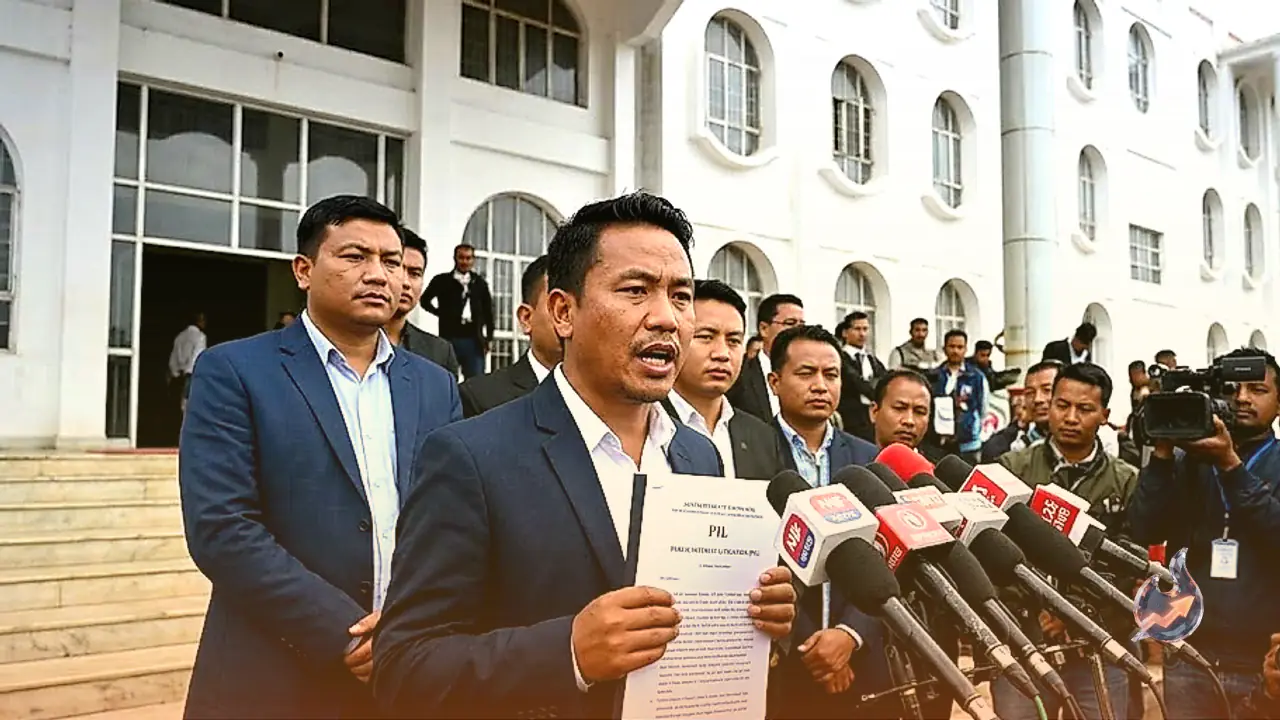

A prominent student organization in Shillong has taken legal action to contest an industrial clearance process. The Jaintia Students’ Union has approached the Meghalaya High Court to challenge the environmental public hearing conducted on July 31, 2026, for a proposed mining project by Shree Cement Limited located at Lum Syrman in Elaka Nongkhlieh.
Public Interest Litigation Filed in High Court
A central delegation representing the union filed a Public Interest Litigation before the court on Monday. The delegation was led by Education Secretary Bocheru Mi Pohsnem and General Secretary Neilkee Mukhim. The union stated that judicial intervention became necessary after multiple representations submitted to state authorities and law enforcement, along with several First Information Reports, failed to halt the clearance process or prompt any corrective actions.
Pending Proceedings and Hearing Allegations
The student body also highlighted that separate complaints and proceedings remain pending before the Meghalaya Human Rights Commission and the National Green Tribunal, noting that it had awaited decisive measures from these authorities while administrative clearances kept moving forward. Within its petition, the union questioned the execution of the mandatory environmental public hearing, alleging that the proceedings were compressed into a brief 46-minute exercise and that indigenous stakeholders alongside local landowners were systematically barred from participating.
Clashes and Allegations of Police Inaction
Furthermore, the petition alleges that protesters faced physical assaults during the event and claims that an emergency medical ambulance operated by the union was targeted. According to the organization, its driver, Rapbor Mukhim, suffered severe head injuries after being struck by stones and catapults. The legal filing also targets local law enforcement for alleged inaction during the violence.
Threat of Wider Agitation
The union claimed that instead of proceeding against those accused of attacking demonstrators and damaging infrastructure, police deployed tear gas against peaceful indigenous youths and registered cases under bailable provisions. Describing the court petition as its final institutional recourse to safeguard indigenous rights, the student body warned that a failure to secure redress would trigger a broader public mobilization and regional agitation in collaboration with civil society groups.