
Taking a firm stance against industrial contamination in environmental hotspots, regional pollution monitors in Meghalaya have proposed an environmental compensation penalty of Rs 7.5 lakh against SPY Agro Industries (NE) Pvt Ltd in Byrnihat. The decision follows repeated observations of standard environmental breach and unpermitted industrial discharge into local water systems in the Ri-Bhoi district.
Formal Show-Cause Notice Issued to Industrial Unit
The Meghalaya State Pollution Control Board (MSPCB), through a formal show-cause notice dated November 26 and issued by Member Secretary Dr G.H. Chyrmang, has directed the management of the distillery to explain within a fortnight why the stipulated fine should not be enforced. The legal notice was served under statutory powers provided by the Water (Prevention and Control of Pollution) Act of 1974 and the Air (Prevention and Control of Pollution) Act of 1981. This action closely follows an earlier closure notice served to the factory premises on November 19.
Inspectors Spot Solid Deposits Bleeding Into Umtrew River
During a follow-up field assessment carried out by regulatory personnel on November 25, investigators documented traces of whitish solid residues downstream from the distillery site. These findings matched pollutants identified in previous spot checks. The board noted that the effluent residue was being carried down the stream of the Umtrew river. Notably, the Umtrew river is already listed by state regulators among the seven most polluted river stretches in Meghalaya.
Factory Operations and Standard Capacity Limits
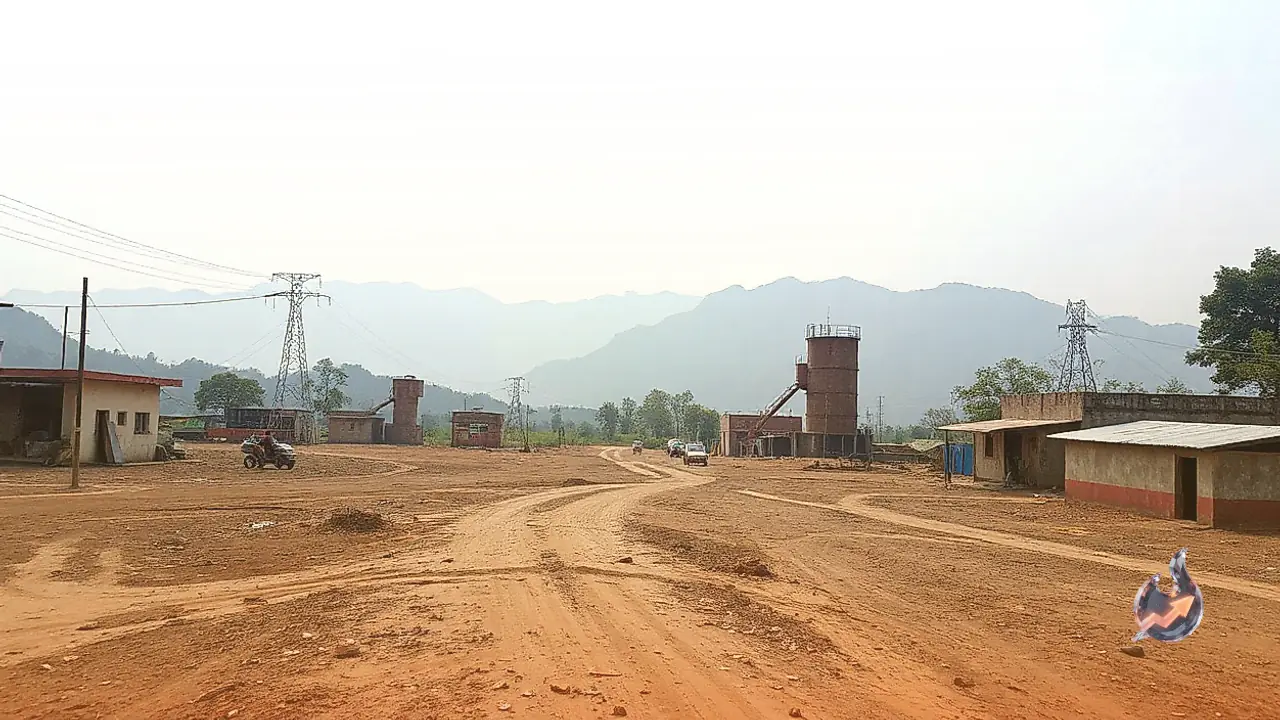
Located at the Extended EPIP site in Lower Baliyan, Byrnihat, within Ri-Bhoi district, the distillery facility had secured official consent to operate on September 2, 2025. Permitted operational features at the site include a grain-based Extra Neutral Alcohol (ENA) facility capable of producing 100 kilolitres daily, a malt grain spirit plant with a 6-kilolitre daily capacity, and a co-generation power plant featuring a 4.2 MW turbine setup to generate 3.5 MW of electrical power. The original operating consent bound the firm to maintain air, water, and soil emissions strictly within environmental thresholds.
Calculation Methodology and NGT Mandates
The proposed environmental compensation of Rs 7.5 lakh was arrived at using standard evaluation guidelines laid down by the Central Pollution Control Board (CPCB). Factors in the penalty formula included the facility's overall pollution index value of 100, an operational scale parameter of 1.5, and a recorded violation timeline spanning 10 days. To strengthen its regulatory enforcement, the state board cited landmark rulings by the National Green Tribunal (NGT) that advocate for the precautionary principle and the polluter pays framework to recover damages from industrial violators.
Severe Environmental Stress in the Border Belt
The punitive measure highlights growing concern over atmospheric and environmental degradation around Byrnihat, an industrial town situated on the border between Assam and Meghalaya. Findings by the Centre for Research on Energy and Clean Air (CREA) revealed that Byrnihat recorded India's highest annual average PM2.5 level in 2025 at 100 micrograms per cubic metre. Furthermore, global air monitoring entity IQAir ranked Byrnihat as the world's most polluted urban concentration in 2024, citing an annual average PM2.5 figure of 128.2 micrograms per cubic metre. MSPCB officials reiterated that non-compliance with statutory directives would trigger further legal proceedings under federal environmental laws.