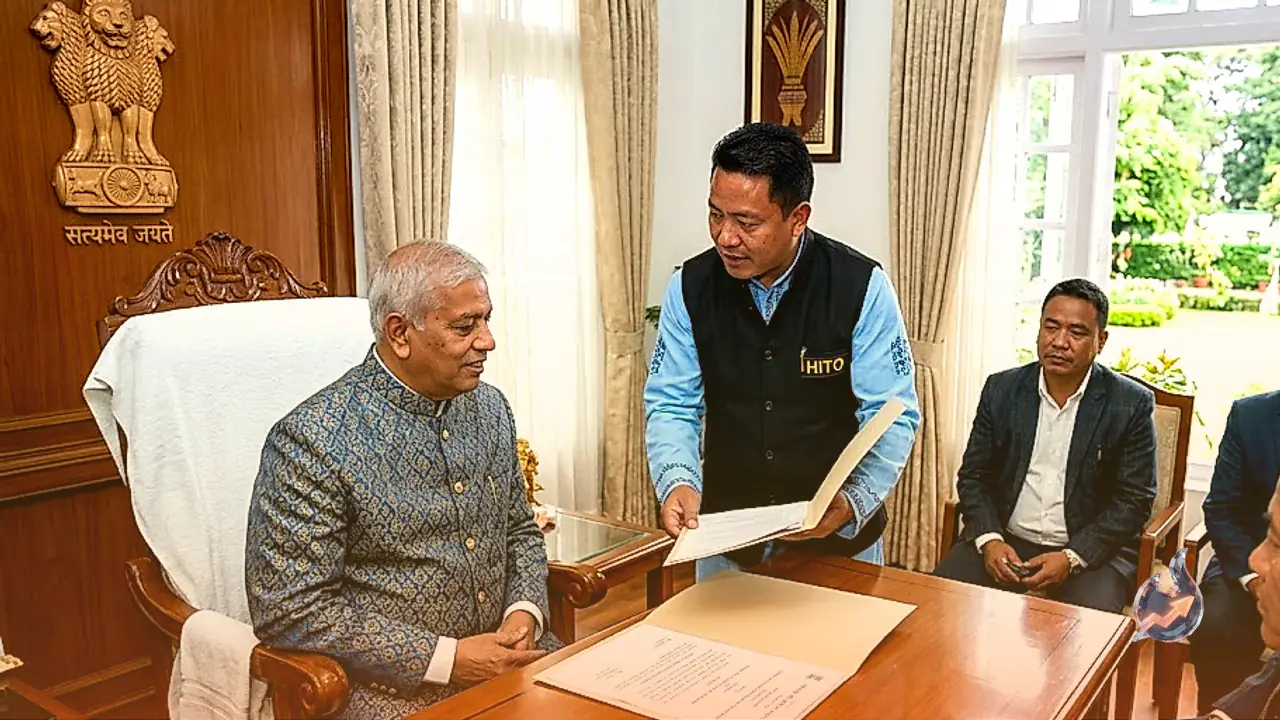



















A Christian clerical delegation from Meghalaya and Assam has formally approached the Meghalaya state government requesting the declaration of November 1 as an official state holiday. The date marks the death anniversary of Reverend JJM Nichols-Roy, a prominent constitutional figure and tribal rights leader. Representatives from the Pastors' Fellowship of the Church of God, Meghalaya and Assam, submitted their formal proposal during a meeting in Shillong with Deputy Chief Minister Prestone Tynsong on Wednesday.
Formal Representation Submitted in Shillong
During the interaction in Shillong, the delegation explained the rationale behind declaring November 1 a state holiday. Speaking to journalists following the meeting, Reverend Doctor SK Syiemlieh, General Secretary of the Fellowship, indicated that Deputy Chief Minister Prestone Tynsong assured the delegation that the state government would carefully review the proposal. The delegation emphasized that official recognition would serve as a fitting tribute to a leader who played a foundational role in shaping the political and social architecture of Meghalaya and the broader Northeastern region.
Honoring the Legacy of Reverend JJM Nichols-Roy
Reverend JJM Nichols-Roy is widely revered across the region as a pioneering church figure, constitutional architect, and tireless champion of indigenous rights. The Pastors' Fellowship highlighted his historic contributions across multiple domains, including tribal welfare, religious freedom, constitutional drafting, and social service. As one of the key leaders who advocated for tribal autonomy within the Indian constitutional framework, Nichols-Roy's work helped secure special administrative safeguards for indigenous communities in Northeast India.
Preserving Constitutional and Tribal Heritage
According to the Fellowship, establishing November 1 as an official state holiday would do more than honor Nichols-Roy's memory. The organization stressed that the annual observance would provide a vital platform for future generations to reflect on Meghalaya's constitutional heritage, spiritual traditions, indigenous identity, and democratic values. By granting state recognition, Meghalaya would acknowledge the enduring impact of his visionary leadership on the socio-political development of the state.