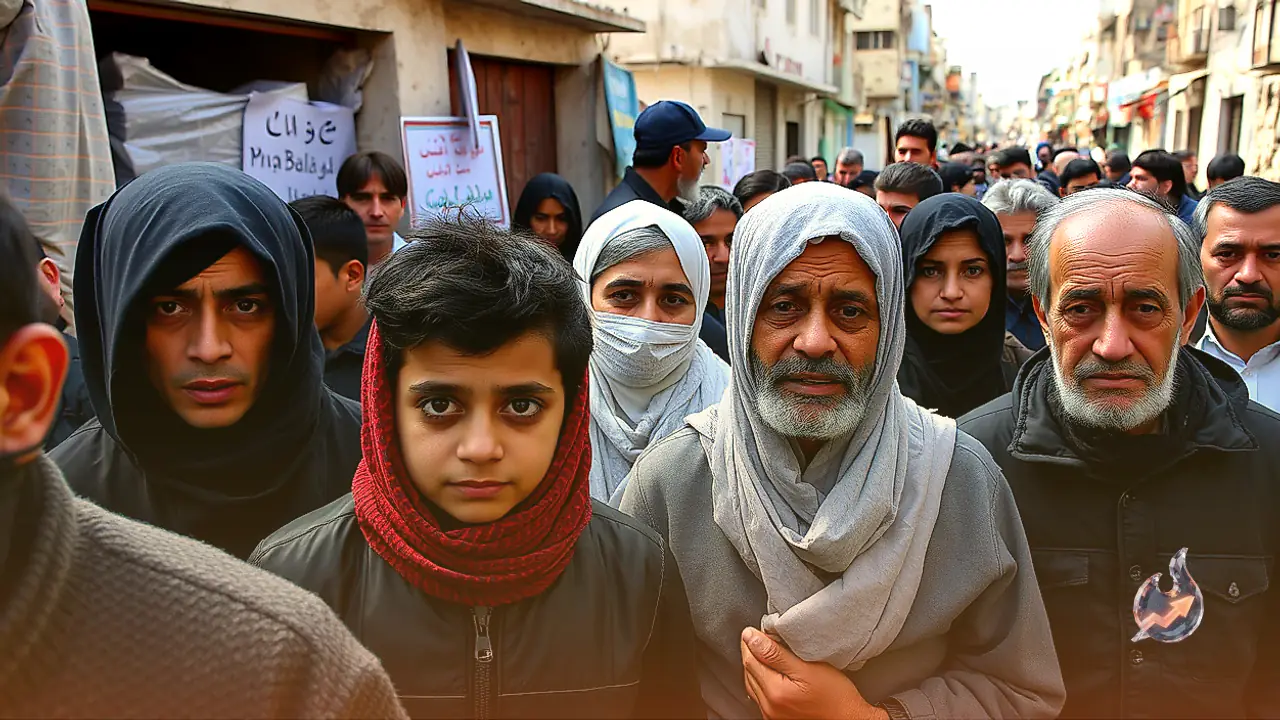

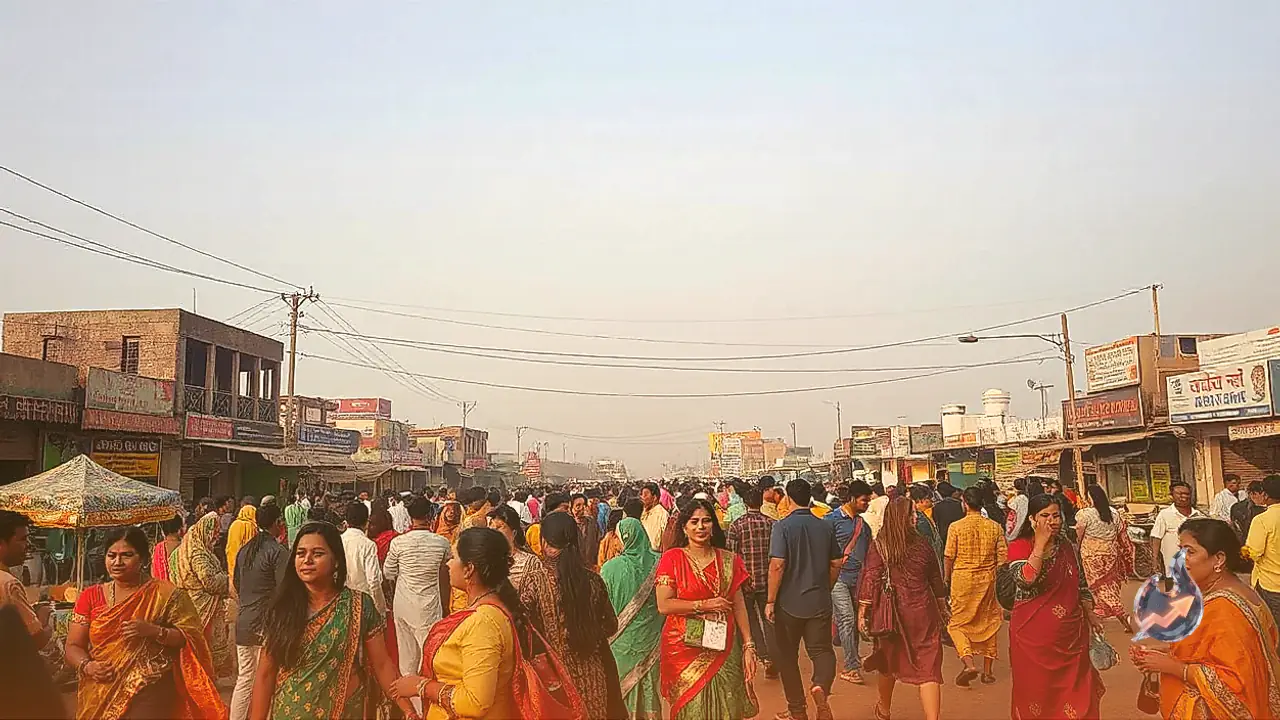















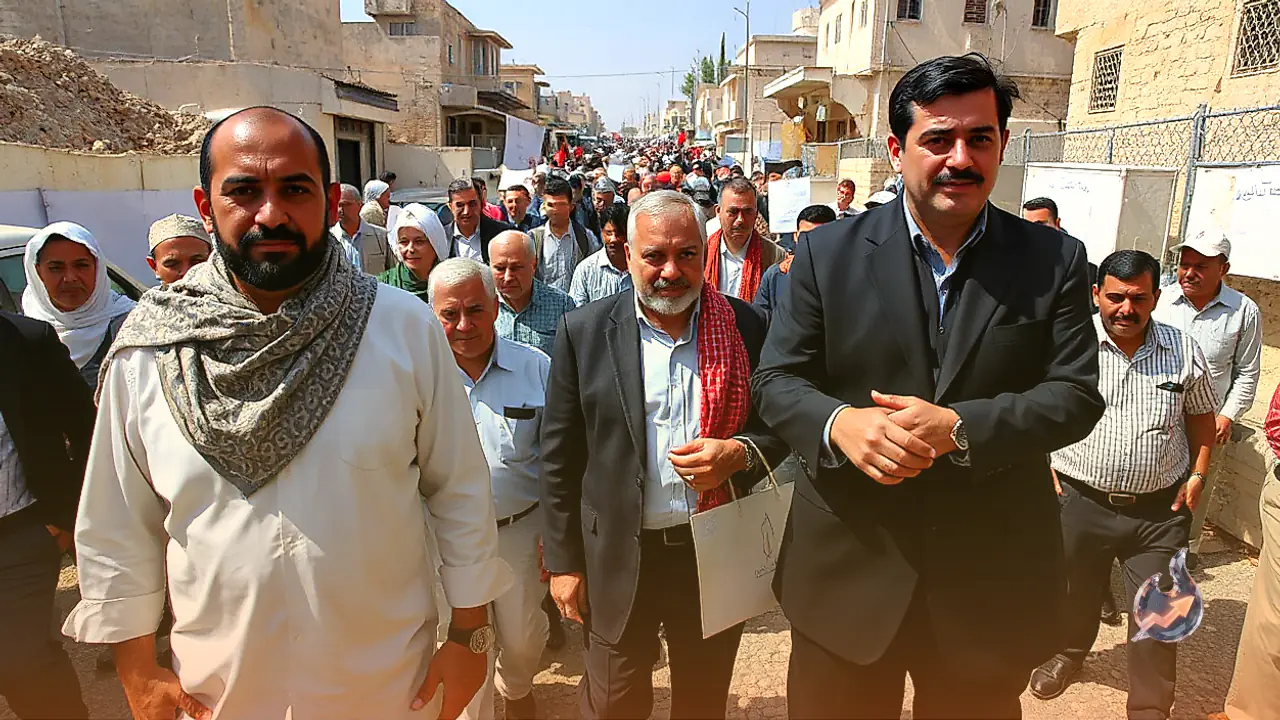

During evening rush hour in Nazareth, the largest Arab-majority city in Israel, students stand by the roadside distributing flyers to passing motorists. Their message is urgent, pressing everyone to cast a ballot in the tightly contested general election. Opinion polls suggest that Arab political parties might find themselves holding a critical balance of power once the votes are tallied.
Disillusionment and frustration have historically suppressed voter turnout among Arab Israelis, a demographic that accounts for roughly one-fifth of the country's population and often identifies as Palestinian citizens of Israel. However, this electoral cycle features an intense, unified drive to unseat the most right-wing governing coalition in national history, an alliance anchored by veteran Prime Minister Benjamin Netanyahu alongside far-right and ultra-Orthodox factions.
Twenty-three-year-old Arkan Badran, volunteering alongside the students handing out literature, voices a widespread sentiment. He views it as a civic duty to bring down an extremist government that treats them as second-class citizens, urging all young men and women to vote for Arab lists that truly represent their future.
Most polling data indicates that neither Netanyahu and his nationalist partners nor the primary Change Bloc, spearheaded by centre-right former military chief Gadi Eisenkot, possesses a straightforward path to an outright parliamentary majority. If these projections hold true, anti-Netanyahu parties aiming to construct a ruling coalition after the election will face a stark dilemma. They must either renege on prior pledges never to work with the prime minister or forge a political arrangement with Arab-majority lists.
A major stumbling block remains Eisenkot's refusal to contemplate a government incorporating Arab parties, a stance he justifies by pointing to a purported lack of shared values. The broader political and social fabric of Israel has undergone a profound transformation following the unprecedented, deadly Hamas-led assault on October 7, 2023, and the ensuing war in Gaza, which collectively fueled heightened mistrust and hostility toward the country's Arab minority.
Suha Salman Mousa, representing the Mossawa Centre in Nazareth, an organization advocating for equal rights, describes an increasingly hostile climate. She notes that in the aftermath of October 7, Arab citizens were frequently treated as national enemies, noting shrinking spaces for free speech, numerous arrests, and individuals losing their jobs over social media posts or participation in anti-war protests. Salman Mousa directly accuses government ministers of engaging in systematic discrimination and incitement against Arab Israelis. Concurrently, civil society groups point out that authorities have disproportionately slashed budgets earmarked for Arab municipalities, though the government defends these reductions as financial necessities mandated by wartime defense and security expenditures.
The social atmosphere has been further strained by politicized campaigns targeting Arab medical professionals in Israeli hospitals, alongside racially motivated assaults on Arab bus drivers perpetrated by Jewish individuals. Certain electoral strategies have actively sought to widen these societal fissures. Bezalel Smotrich, the far-right Finance Minister, has publicly vowed to Judaise sections of the northern Galilee and southern Negev regions where the majority of Arab citizens reside, drawing parallels to the expansion of settlements in the occupied West Bank.
The majority of Arab Israelis trace their lineage to Palestinians who remained inside the borders of the newly formed state during the 1948 war, a conflict that saw hundreds of thousands displaced from their homes. The current administration frequently frames this population as an existential threat to the Jewish identity of the state. In line with this rhetoric, the prime minister has lately alleged that his political rivals intend to form a dangerous government by teaming up with Arab factions.
To drive this narrative home, the Netanyahu campaign has erected prominent billboards, including one positioned at a major traffic junction at the entrance to Nazareth. These displays suggest a binary choice between the right and Palestine, juxtaposing images of key opposition figures, including right-wing politicians, under the implication that they represent the latter. Additionally, the campaign has deployed artificial intelligence-generated videos showing opponents embracing Arab leaders.
At Radio Nas, a prominent Arabic-language broadcasting station based in Nazareth, news anchor and Channel 12 analyst Mohammed Magadli reflects on these tactics. His father, Raleb Magadli, historically served as Israel's first Muslim minister between 2007 and 2009 under the Labor Party banner. When asked about the refusal of Change Bloc leaders to cooperate with Arab factions, the younger Magadli attributes it fundamentally to racism, while acknowledging the underlying political calculations of Benjamin Netanyahu in delegitimizing Arab parties simply because of their identity.
Recent polling suggests that Eisenkot's coalition and Netanyahu's religious-nationalist bloc are each projected to capture roughly 50 seats out of the 120 available in the Israeli parliament. Meanwhile, between 13 and 14 seats are expected to be secured by Arab-majority factions, comprising the Joint Arab List—an alliance of Hadash, Balad, and Taal—and the smaller United Arab List, an Islamist party led by Mansour Abbas.
Although the United Arab List originated from the Islamic Movement in Israel and maintains socially conservative principles, Mansour Abbas has carved out a distinct path by pragmatically engaging with Jewish political partners. His primary focus remains addressing the domestic grievances of Arab Israelis, speaking relatively infrequently about Palestinians residing in the West Bank and Gaza. Abbas is no stranger to executive influence, having served as a minister in the short-lived 2011 government led by Naftali Bennett.
For the current electoral contest, Abbas made the strategic decision to place a Jewish former police official and centrist lawmaker, Yoav Segalovitz, in the second position on his party's slate. Abbas remains convinced that mainstream figures like Eisenkot will exhibit greater flexibility regarding post-election coalitions, reiterating his determination to enter the next government. He explains that mere parliamentary representation has proved insufficient for serving Arab society, prompting a deliberate shift toward pursuing positions of genuine influence.
Conversely, the Joint List, an aggregate of secular parties campaigning for equal rights, an end to the military occupation of Palestinian territories, and a two-state solution, envisions playing a different role. It proposes acting as an electoral safety net for forces seeking to oust the Netanyahu administration, provided they receive policy concessions in return.
A dominant concern for Arab voters in this election cycle is the alarming surge in violent gang crime. A survey conducted in September by the Israel Democracy Institute think tank revealed that tackling this issue was the primary electoral consideration for 53.5% of Arab citizens. Homicides within the community reached an unprecedented peak of 252 fatalities last year, a rate roughly five times higher than that recorded among Jewish Israelis, according to data compiled by the Abraham Initiatives, a coexistence organization.
In Jaffa, a mixed Arab-Jewish neighborhood now amalgamated into Tel Aviv, Ziad Samouni points out the exact spot where his son Hussein was fatally shot by two motorcycle-riding gunmen last November. With clearance rates for such crimes remaining exceptionally low, local residents accuse authorities of willful inaction. Samouni feels that the prevailing indifference allows internal violence to persist unchecked within Arab society. He now participates in the Israeli-Palestinian Bereaved Families for Peace support group.
In response to inquiries, the Israeli police stated that the homicide investigation into Hussein's death remains active and emphasized their commitment to treating all violent crime with utmost seriousness. Samouni expresses a universal paternal desire for the bloodshed to cease, urging every Arab citizen who believes in the necessity of change to exercise their right to vote.
Earlier this month, Israel's Supreme Court overturned a ruling by the Central Elections Committee that had sought to disqualify the United Arab List, the Joint List, and two of their parliamentary candidates. The committee, heavily influenced by the ruling coalition, had claimed the candidates violated laws prohibiting the denial of Israel as a Jewish state, an allegation the parties strongly contested.
As election day rapidly approaches, cars flying partisan flags cruise through the streets of Nazareth. The stakes could hardly be higher, as Arab citizens weigh whether their votes will ultimately dictate the distribution of power and secure their long-term place within Israeli society.