






















Humanitarian operations in the Gaza Strip are facing a devastating blow as the United Nations World Food Programme (WFP), a primary lifeline for millions in the enclave, announced drastic reductions to its lifesaving food assistance due to severe funding shortfalls. The emergency measure arrives at a critical juncture as winter nears and the vast majority of Gaza's displaced population struggles daily to secure adequate nutrition. The agency warned that the scale of its assistance will shrink by roughly one-third, reducing the total number of people receiving relief from 1.6 million down to 1.1 million, leaving an estimated half a million people without critical nutritional support.
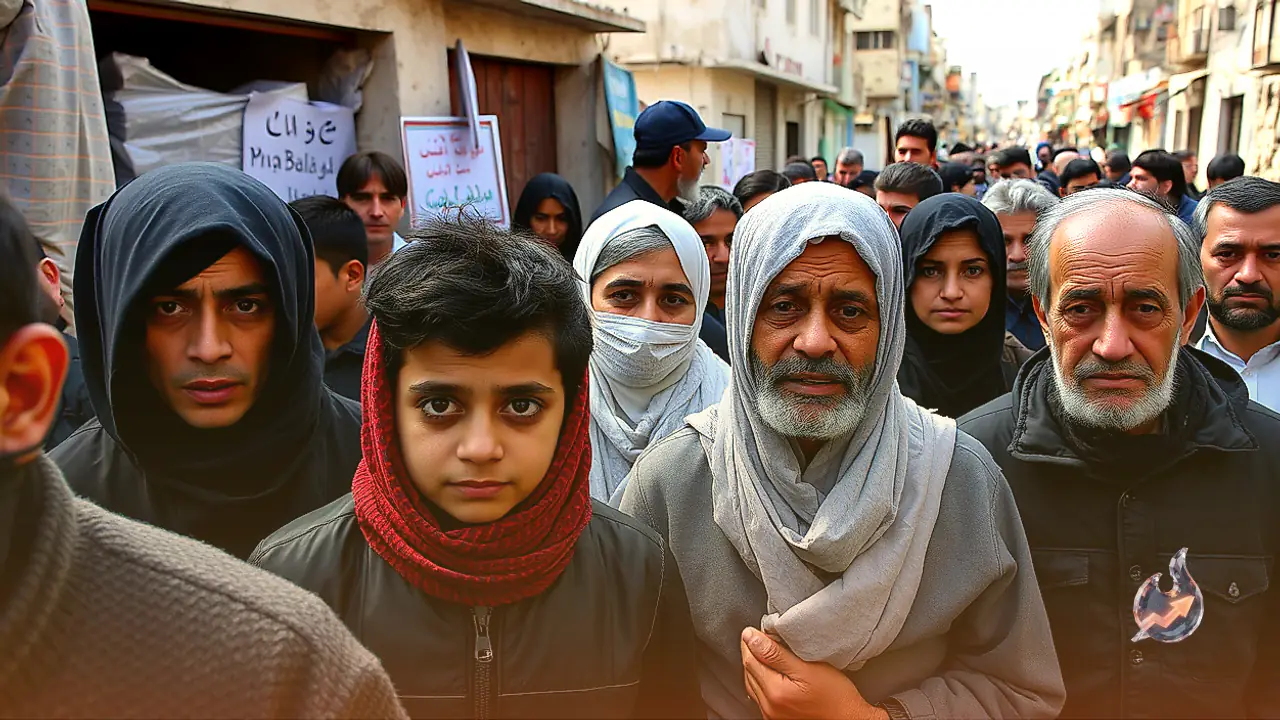
The reduction directly impacts a population that has endured relentless upheaval. Out of Gaza's approximately 2.1 million residents, virtually the entire populace remains displaced from their homes, with two-thirds relying entirely on international food distributions to survive. With tents and temporary shelters offering little protection against dropping temperatures, the sudden contraction in available rations threatens to plunge the territory into an even deeper humanitarian catastrophe.
Steep Cuts to Daily Community Kitchen Meals
One of the most immediate consequences of the budget crunch is the sharp curtailment of freshly cooked food distributed through community kitchens. Daily production is being scaled down from 250,000 hot meals to just 150,000, eliminating 100,000 warm meals each day. For countless displaced persons who lack cooking utensils, stoves, or fuel, these neighborhood kitchens represent their sole reliable source of cooked sustenance.
The hardship is set to become even more pronounced in isolated and high-risk zones. Families sheltering in hard-to-reach pockets, particularly those situated adjacent to the military-controlled perimeter known as the Yellow Line demarcating Israeli forces, will no longer receive meals on a daily schedule. Instead, emergency provisions in these vulnerable sectors will be distributed only every other day, forcing households to stretch a single day's ration across forty-eight hours.
Displaced Families Struggle in Makeshift Camps
In the crowded tent encampments across the al-Mawasi district of Khan Younis, displaced residents expressed sheer dismay upon learning of the cuts. Mervat al-Satari, a mother of five living in the camp, characterized the development as an outright disaster, questioning how she will sustain her young children with diminished food parcels and explaining that her family often waits hours simply to receive a single community meal.
Another mother of three in al-Mawasi, Sawsan Bahloul, explained that previous daily handouts were barely sufficient to keep hunger at bay. The provisions offered by community kitchens typically consisting of simple portions of pasta or lentils with occasional additions of potatoes or aubergines were already inadequate to nourish growing children. Bahloul noted that transitioning from daily distributions to a delivery every two days will severely exacerbate hunger for her household.
Financial Deficit Drives Operational Rollback
Shaun Hughes, the WFP director for Palestine, emphasized that the decision to curtail relief stems strictly from monetary shortfalls rather than logistical or access impediments. Hughes stated plainly that the cutbacks are being implemented because of financial constraints, noting that needs have not diminished and that the agency retains physical access to the territory. The core crisis lies in an unprecedented drought of donor contributions rather than an inability to deliver.
For its Palestinian operations in 2026, the WFP secured less than half of the funding allocated in prior years. To sustain its essential relief pipelines over the coming six months, the agency has issued an urgent appeal for $450m (£338m). Humanitarian coordinators warn that without immediate financial commitments from international donors, basic distribution networks could face even deeper suspensions.
Reductions in Cash Transfers and Dry Rations
The current scale-back follows earlier rounds of austerity initiated earlier this year. Starting in July, the WFP was forced to trim cash assistance programs that had supported approximately half a million Gazans, drastically curbing their purchasing power in local commercial markets. The secondary effect has now reached dry ration distribution, where monthly allocations of essential flour sacks and pre-packaged grocery boxes will plunge from 1.1 million recipients to just 600,000.
This reduction strips 500,000 individuals of basic staples, forcing them to depend exclusively on shrinking communal soup lines. For households attempting to rebuild modest stability, the loss of direct dry rations undermines what little dietary autonomy they retained amid ongoing displacement.
Market Availability vs Extreme Poverty
Although a formal ceasefire agreement between Hamas and Israel was reached a year ago, the broader environment in Gaza remains broken. Physical reconstruction has not materialized, economic recovery remains negligible, and commercial border crossings remain under stringent Israeli surveillance. While commercial grocery stalls and open-air markets feature goods, prevailing prices are far beyond the reach of local residents. More than 80% of Gaza's working-age population is unemployed, cementing near-universal dependency on free humanitarian aid.
Displaced families residing in the wreckage of damaged structures recount the stark decline in their living standards. Dalal al-Dahdouh, who lives with her family of eight amid the ruins of her home in Gaza City, remarked that even prior to the latest reductions, the food boxes and flour rations were grossly insufficient and lacked basic nutritional variety. Dahdouh recalled that before the hostilities, her family enjoyed their own home, fresh vegetables, sanitary facilities, and productive land, whereas they are now entirely reliant on relief vouchers.
Absence of Cooking Gas and Hazardous Fuel Alternatives
Compounding the nutritional crisis is the near-total unavailability of domestic cooking fuel across the strip. The Israeli government prohibits the entry of cooking gas, classifying it as a dual-use commodity that could potentially be repurposed by Hamas for military objectives. Because commercial firewood is prohibitively expensive, families are routinely forced into hazardous survival tactics.
Parents frequently dispatch their children into streets and debris heaps to scavenge scraps of cardboard and discarded plastic waste. Burning these materials as fuel to bake bread or heat stew exposes entire camps to noxious smoke, compounding respiratory and sanitary illnesses. Shaun Hughes pointed out that families continue to endure brutal daily conditions without proper shelter, clean drinking water, sanitation facilities, or adequate medical care, noting that scaling back nutrition will heavily compound hardships that households have endured across three grueling years.
Threat of Famine and Escalation in the West Bank
Humanitarian monitors maintain that while conditions show minor variation compared to the height of hostilities a year ago, acute malnutrition and the looming prospect of famine remain persistent threats across the coastal enclave. Projections by the Integrated Phase Classification (IPC), the international benchmark on food crises, indicated in July that two-thirds of Gaza's population roughly 1.4 million individuals were anticipated to encounter crisis or worse stages of acute food insecurity during the July to December 2026 window.
In response to the resource crunch, the WFP intends to protect certain vital interventions where possible. The agency continues to subsidize industrial bakeries responsible for producing one-third of the territory's bread supply, while maintaining targeted nutritional supplements for roughly 300,000 vulnerable mothers and infants alongside specialized healthy snacks for 200,000 schoolchildren.
The food crisis is similarly expanding in the occupied West Bank, where the WFP maintains assistance for approximately 200,000 Palestinians following a 50% reduction in program beneficiaries implemented in September. Agency assessments attribute growing food insecurity across the West Bank primarily to rising violence from Israeli settlers and the systematic displacement of Palestinian communities.