




















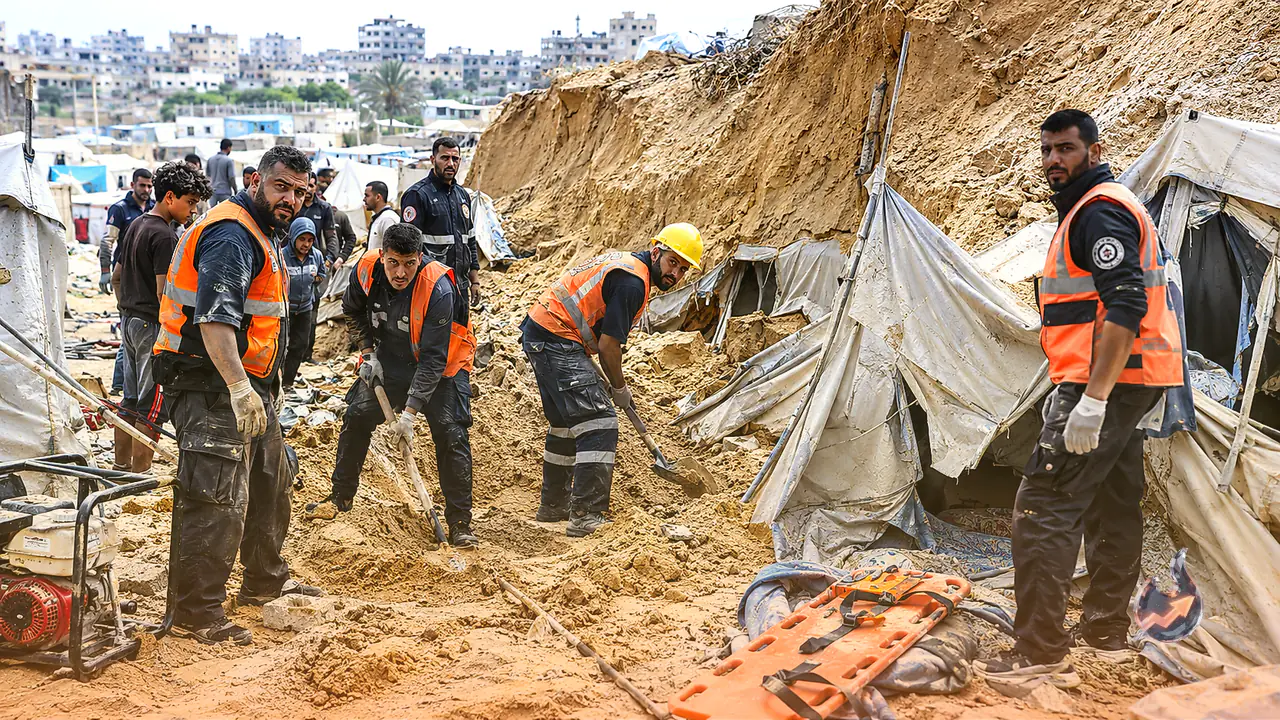

Five people, including three children and two women, lost their lives in central sector of Gaza after a sand embankment gave way and collapsed onto a group of makeshift tents. First responders confirmed the tragedy, which followed a period of intense and continuous rainfall in the region. The fatal incident occurred on Sunday night at a makeshift camp established for displaced families located south of the city of Deir al-Balah. Video footage from the site captured rescue personnel utilizing the flashlights of their mobile phones to sift through heavy boulders, shifting sand, and collapsed canvas in a desperate search for survivors trapped underneath.
Civil Defence Warnings Amid Humanitarian Crisis
The Hamas-run Civil Defence service in Gaza described the disaster as a severe humanitarian crisis that must serve as an urgent wake-up call for international organizations. Authorities emphasized the immediate need to provide safe, secure shelters for displaced populations and to relocate tents away from hazardous sandy terrain, slopes, and locations vulnerable to structural collapses. The tragedy was preceded by torrential downpours on Saturday, which left tens of thousands of tents completely flooded across the territory and stripped countless Palestinian families of any dry place to rest.
Overwhelmed Emergency Services and Severe Flooding
According to the Civil Defence, floodwaters surged up to 1.5m (4.9ft) in several areas, severely crippling rescue operations. Officials reported that out of the 2,100 distress calls received by emergency teams, responders were physically able to reach only ten percent due to the overwhelming scale of the disaster. Warning that the lives of displaced individuals constitute an urgent humanitarian responsibility, the agency stressed that these tents must not be allowed to transform into death traps buried beneath sand and rainwater.
International Relief Efforts and Aid Shortfalls
Karl Baker, the regional crisis co-ordinator for the International Organization for Migration, informed the BBC from Gaza that the enclave's population of 2.1 million people is currently squeezed into just 30 percent of its total territory. This extreme overcrowding forces a vast number of civilians to reside in zones that are exceptionally prone to severe flooding. While UN agencies and humanitarian partners are working tirelessly to distribute adequate tents, tarpaulins, and improve drainage infrastructure within the camps to help residents endure the winter, Baker cautioned that current aid flows remain entirely inadequate, describing the supplies as the very smallest of plasters.
Restrictions on Equipment and Continuing Destruction
United Nations agencies have continuously urged Israeli authorities to permit the entry of specialized machinery and construction materials necessary to upgrade living conditions for displaced families. Cogat, the Israeli military body responsible for coordination, stated that over 91,000 tents, 12 waste-removal vacuum trucks, and essential fuel supplies have been delivered under the Gaza Winterization Plan. However, the body reiterated that Israel maintains a strict ban on importing any equipment that could potentially be repurposed for military operations by Hamas or other armed factions.
The Wider Context of Displacement and Conflict
Estimates from the UN indicate that roughly 80 percent of all structures throughout Gaza have suffered complete destruction or severe damage during the ongoing conflict between Israel and Hamas. More than 1.9 million residents have experienced displacement, many multiple times, with 1.2 million currently surviving inside tents or temporary shelters. Despite a ceasefire brokered in October 2025, the UN notes that living conditions remain dire as continued air strikes and military engagements provoke further displacement and casualties. The broader conflict began on October 7, 2023, following attacks led by Hamas on southern Israel, resulting in approximately 1,200 deaths and 251 hostages. Since then, the conflict has claimed the lives of over 74,640 people in Gaza, according to health ministry figures recognized as reliable by the United Nations.