


















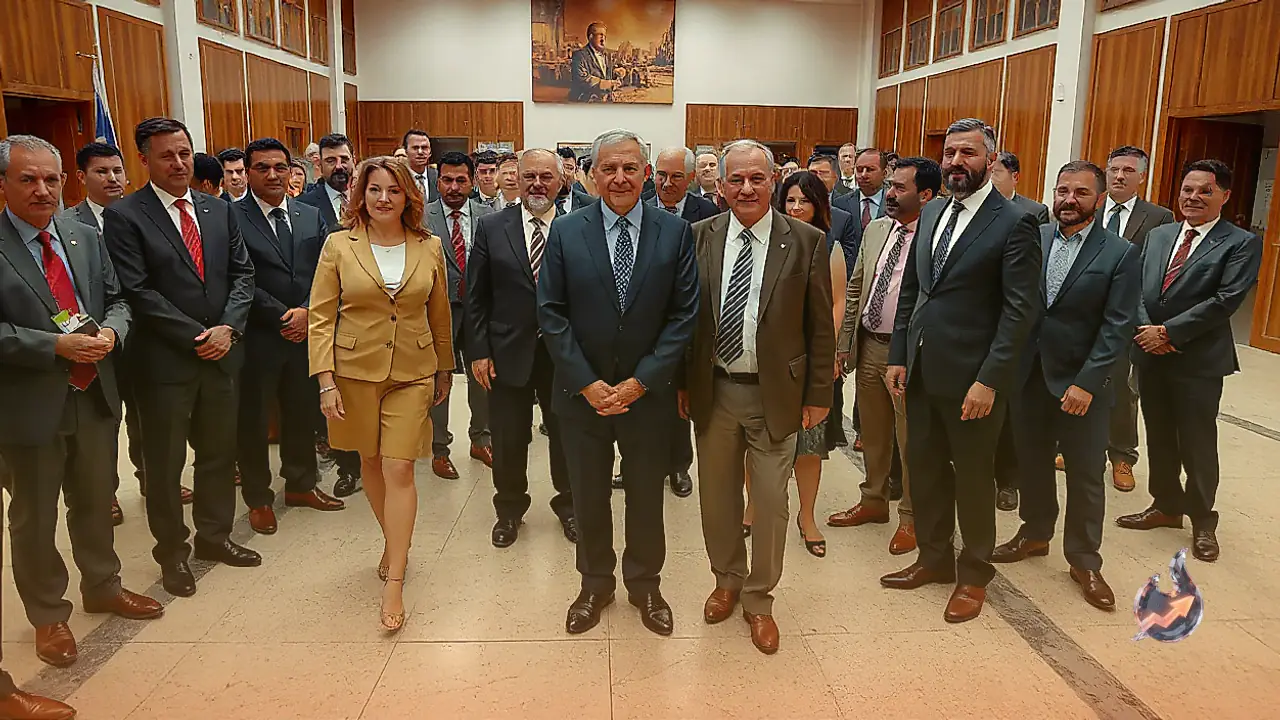

Political maneuvering in Israel entered a decisive phase as President Isaac Herzog initiated formal consultations with elected party factions on Wednesday evening, aiming to resolve an intense deadlock following national elections. The moves commenced hours after Herzog formally accepted the certified ballot tallies from the Central Election Committee during a morning gathering in Jerusalem. Addressing faction representatives, Herzog underscored the urgent necessity of compromise, stressing that party leaders must realize that sticking rigidly to prior electoral commitments could paralyze governance and force citizens back to the voting booths.
Parliamentary Split and the Rise of Arab Alliances
The legislative ballot held on 27 October for the 120-seat Knesset failed to grant a governing majority to any established coalition. The right-wing Likud party, led by Prime Minister Benjamin Netanyahu, alongside its ultra-Orthodox and far-right partners, secured 53 seats, falling well short of the 61-seat threshold required for parliamentary dominance. Simultaneously, the centrist Yashar party headed by Gadi Eisenkot, combined with three other Jewish opposition groups within his orbit, garnered 48 seats. With neither bloc able to command a legislative majority, the composition of the assembly remains deeply divided.
In an unexpected electoral surge driven by robust community participation, two Arab-led blocs, the United Arab List and the Joint List, captured an unprecedented 19 parliamentary seats. While this substantial share mathematically positions them as potential kingmakers capable of breaking the deadlock, standard coalition pathways remain blocked. Before the vote, almost every Jewish faction, with a solitary exception, made explicit public pledges barring cooperative arrangements with Arab political formations to build an executive team. This stance leaves both prospective prime ministerial candidates with severely restricted arithmetic options.
Presidential Mandate and Formal Timelines
While executive authority in Israel rests with the cabinet, the presidency carries pivotal constitutional responsibilities in breaking post-election stalemates. By law, the head of state holds the authority to assign a Knesset member the mandate to construct a viable cabinet. The selected lawmaker receives a baseline window of 28 days to conclude coalition negotiations, with the head of state holding statutory power to grant an extension of up to 14 additional days if an agreement appears attainable within reach.
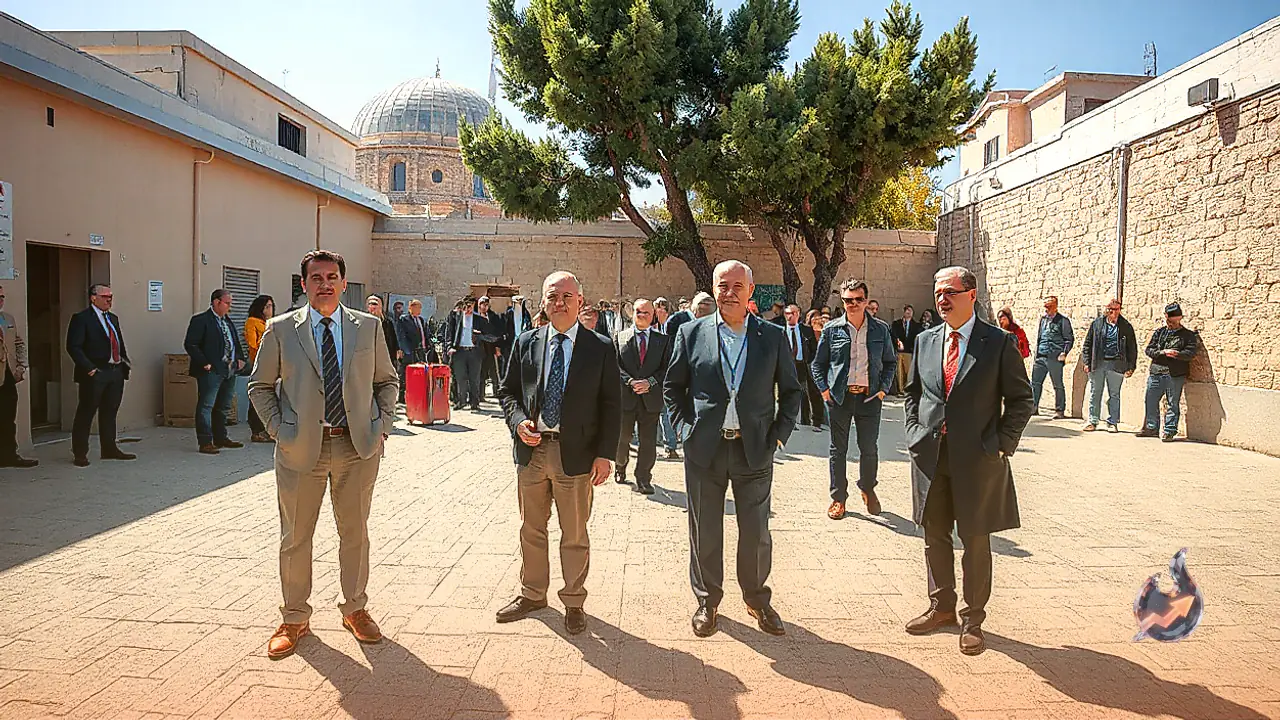
Under the prevailing legal framework, the president retains broad discretion and is not obliged to designate the head of the largest individual faction. Instead, the mandate is intended for the legislator judged best situated to piece together a workable parliamentary alliance. Justice Noam Sohlberg, chairing the Central Elections Committee, officially certified and handed over the definitive returns to Herzog at the Jerusalem event. Herzog subsequently declared his intent to engage faction heads systematically, pressing all sides to adopt realistic expectations in light of prevailing political arithmetic.
Election Integrity and Inquiries Into Foreign Influence
The aftermath of the balloting has witnessed contested rhetoric regarding voter turnout and procedural legality. At the certification gathering, Justice Noam Sohlberg forcefully defended the electoral process, remarking that efforts to cast doubt upon the integrity of the voting represented a grave concern for institutional stability. He maintained that a peaceful transfer of authority represents a cornerstone of democratic health, bound strictly by the will expressed by the electorate. Election authorities confirmed that no operational irregularities had occurred, dismissing claims from the prime minister's circle that Arab-led parties had illicitly secured victory as insufficient justification for withholding official certification.
Concurrently, the domestic intelligence organization Shin Bet has been examining claims concerning covert overseas involvement. Sohlberg informed electoral committee members that intelligence findings indicated a broad influx of financial assets into Israel originating from foreign states, including entities deemed hostile. Security services concluded that thorough investigative steps remained essential to assemble the full factual picture and establish the operational scale with certainty. Previous accounts suggested accusations had been submitted alleging financial backing from Qatar intended to accelerate Arab voter turnout, an assertion that the Qatari foreign ministry dismissed entirely as groundless. Officials clarified that the ongoing inquiry would not alter the verified outcome of the parliamentary race.
Political Clashes and Legal Confrontations
The contentious atmosphere has sparked sharp verbal hostilities between competing political factions. Far-right National Security Minister Itamar Ben-Gvir, heading the Jewish Power faction and aligned with the prime minister, demanded that the Shin Bet take Arab party leaders into custody for extensive questioning until all doubts regarding external interference were settled. Yousef Jabareen, leading the Joint List, fired back at these assertions, accusing Ben-Gvir and the prime minister of conducting a campaign to strip the electorate of its democratic outcome.
Opposition leader Gadi Eisenkot escalated the confrontation on Tuesday, charging that Netanyahu and his Likud machinery were orchestrating a severe assault on legal norms and democratic principles. Tensions intensified further when Attorney-General Gali Baharav-Miara rejected a formal push by Shin Bet director David Zini, an appointee of the prime minister, to summon four Arab lawmakers for interrogation, noting that security agencies had failed to produce credible evidence of illicit conduct. Likud officials promptly hit back at Baharav-Miara, claiming her refusal served to obstruct investigative efforts and conceal serious foreign tampering within the electoral system.
President Herzog Warns Against Demonizing Arab Citizens
Against this backdrop of heightened communal frictions, Herzog appealed to the public and political leadership for composure while investigators complete their assessment. Crucially, the president cautioned against targeting Arab Israelis, who constitute around 20 percent of the nation's populace and frequently identify as Palestinian citizens of Israel, insisting they must not be subjected to sweeping suspicion or public smear campaigns.
Denouncing the rhetoric deployed in public debates, Herzog condemned crude, racially charged language, affirming that discriminatory attacks against any domestic community have no legitimate standing in civic discourse. As cross-party discussions progress, the presidency faces the complex task of finding common ground among deeply polarized legislative factions, while the threat of another costly national election continues to loom large over the country.