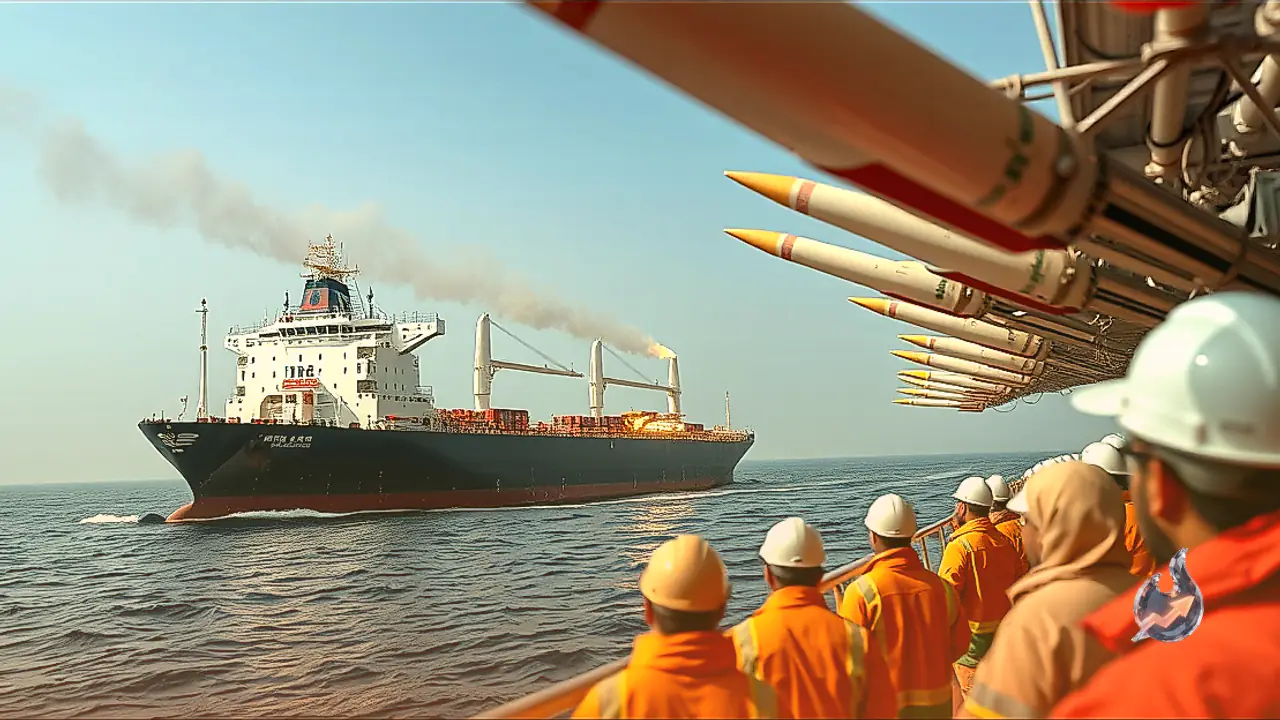






















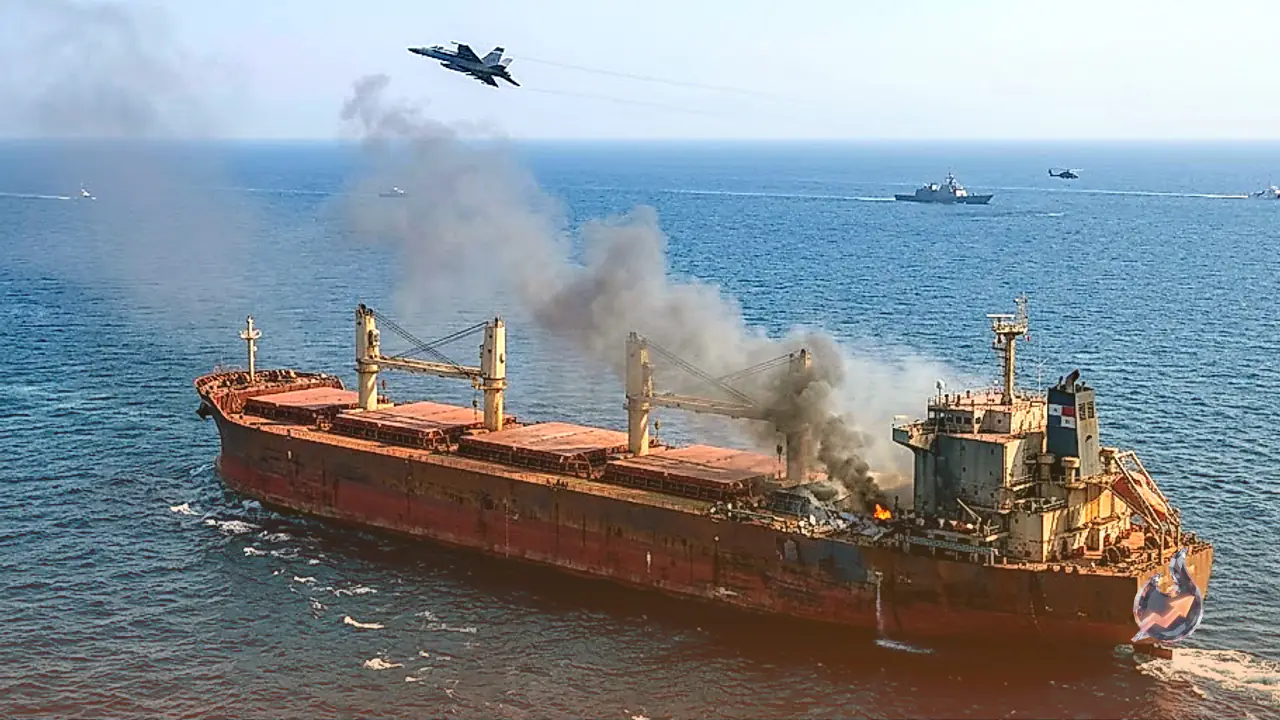

Maritime tensions in West Asia reached a dangerous new threshold after a US fighter jet launched a targeted air strike against a commercial cargo vessel transiting the Gulf of Oman. The incident targeted a Panama-flagged bulk carrier that had recently departed from an Iranian port and was attempting to navigate the contested maritime corridor in defiance of an enforced naval cordon. Following repeated warnings and navigational orders that went unheeded, the military aircraft struck the aft section of the vessel, completely knocking out its propulsion system and immobilizing it at sea. Military officials confirmed that despite the severe mechanical damage inflicted on the ship, no crew members sustained injuries during the operation.
Panama-Flagged Bulk Carrier Targeted and Disabled
According to US Central Command (CENTCOM), the vessel involved in the confrontation is the Panama-flagged cargo carrier M/V Ocean Molica, which also operates under the name Arika Sun. Military authorities detailed on the social media platform X that the fighter jet executed a surgical strike against the vessel's propulsion infrastructure. The precise engagement was specifically calibrated to strip the vessel of its forward mobility and neutralize its operating capability, halting its unauthorized transit without sinking the ship or endangering the civilian mariners onboard.
Enforcement Protocols of the Maritime Blockade
The strike forms part of a broader, stringent naval blockade imposed by the United States on maritime traffic originating from or heading toward Iranian ports. Under the active rules of engagement, naval units issue real-time maritime warnings and procedural instructions to all commercial vessels entering the surveillance zone. Vessels that comply with these directives are routinely diverted toward alternative transit lanes away from restricted waters. Conversely, merchant vessels that actively refuse compliance or attempt to breach the blockade perimeter face direct military intervention designed to render their propulsion and mechanical systems completely inoperative.
Quarterly Crackdown: 135 Vessels Turned Away
Official data released by CENTCOM on October 10 illustrates the sheer scale of the ongoing maritime enforcement across the region. Over the past three months of continuous operations, military forces have immobilized four commercial vessels and turned back 135 ships that attempted to cross the blockade zone. In addition to commercial traffic interdictions, military strikes have systematically destroyed 10 tankers allegedly linked to the covert maritime transport network operated by Iran's Islamic Revolutionary Guard Corps (IRGC). This sharp intensification of kinetic enforcement has ignited profound alarm among international maritime logistics operators, given that both the Gulf of Oman and the nearby Strait of Hormuz represent indispensable choke points for global energy distribution.
Critical Navigational Advisory Issued to Mariners
In response to the deteriorating security environment, CENTCOM has issued a stark advisory directing all civilian mariners, commercial shipping companies, and operational crews in the region to strictly observe blockade protocols. Maritime operators navigating through the Gulf of Oman and the waters adjacent to Hormuz have been urged to monitor all standard Notice to Mariners emergency broadcasts and maintain active bridge-to-bridge communications on VHF Radio Channel 16 with US naval forces. With military interdictions expanding across Iranian coastal waters, shipping cartels and energy analysts warn that transit risks, insurance surcharges, and crude oil supply volatility will face intensified upward pressure.