




















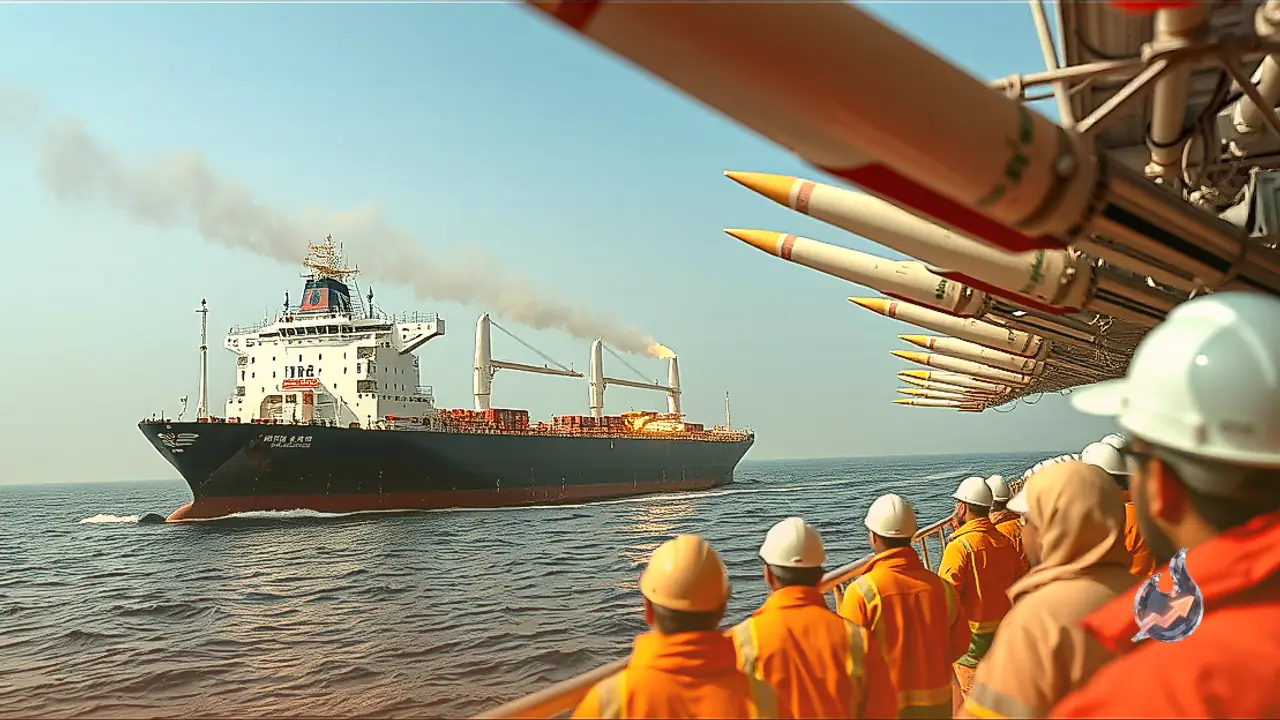

A chemical and oil tanker navigating deep inside the Gulf waters north of Qatar has been struck by multiple incoming projectiles, leaving several crew members wounded and escalating concerns across global energy shipping routes. The violent episode took place approximately 51 nautical miles, or roughly 94 kilometers, off the coast of Madinat al-Shamal. Because it struck so far west within the Gulf basin rather than along contested outer choke points, maritime observers view the strike as an alarming and rare expansion of targeted waters.
Vessel Details and Circumstances of the Incident
Maritime intelligence specialists at Vanguard identified the stricken ship as the Acers, an oil and chemical tanker sailing under the flag of Antigua and Barbuda. Tracking movements indicated that on Saturday, the commercial vessel had been charting a course toward the Strait of Hormuz, the critical narrow corridor linking the inner Gulf to the Gulf of Oman and open oceans beyond.
The United Kingdom Maritime Trade Operations agency confirmed that the vessel sustained direct hits from multiple projectiles. Casualties were verified aboard the ship following the impact. While specific counts of injured mariners and the precise nature of the structural damage were not immediately disclosed, the strike triggered emergency alerts across regional shipping networks.
First Westward Casualty Attack in Several Weeks
The strike represents the first documented assault on a vessel this far west of the Strait of Hormuz since early September, observed Martin Kelly, who serves as head of advisory at EOS Risk Group. That previous reference point occurred on 9 September, when the Panama-flagged tanker El Gaia came under fatal attack inside the Strait of Hormuz directly north of the Musandam peninsula of Oman, claiming the lives of two crewmen.
Official records maintained by the International Maritime Organization, a specialized agency of the United Nations, corroborate that the 9 September disaster was the most recent regional incident to cause human casualties prior to this latest assault. Since the outbreak of war pitting the United States and Israel against Iran in February, at least 24 commercial seafarers have lost their lives across 93 confirmed strikes targeting merchant shipping.
Clarification on Gulf of Oman Tanker Emergency
Simultaneously on Thursday, maritime risk firm Vanguard moved to correct an earlier security alert concerning a separate vessel in the Gulf of Oman. Initial advisories had suggested that an onboard blaze had erupted on a tanker approximately 40 kilometers east of Fujairah in the United Arab Emirates.
Upon further verification, Vanguard clarified that there were no verified indications of fire aboard the ship in question, identified as the Marshall Islands-flagged tanker Dhalkut. The clarification dispelled initial fears of a coordinated double strike across opposite sides of the peninsula, though nerves across the shipping industry remain severely rattled.
Breakdown of Hormuz Truce and Naval Stand-Off
Under normal geopolitical conditions, roughly one-fifth of all globally consumed oil and natural gas transits through the narrow gates of the Strait of Hormuz. Following the eruption of the Iran war earlier this year, traffic ground to a near-total halt under a relentless barrage of Tehran-launched missiles and aerial drones against commercial freighters, coupled with a punitive US naval blockade choking Iranian domestic ports.
A brief window of diplomatic hope emerged in June when Washington and Tehran negotiated a preliminary framework agreement aimed at terminating the conflict and restoring uninhibited navigation through the strait. The peace initiative collapsed in a matter of weeks, however, as fresh Iranian salvos against maritime traffic prompted the United States to immediately reinstate its maritime blockade.
Contested Routes, American Convoys, and Crude Flow Volumes
Throughout the hostilities, Iranian authorities have insisted on exercising operational oversight across the strait. Iranian forces actively targeted merchant vessels that attempted to detour through Omani territorial waters to the south, a route explicitly chosen by ship operators seeking to steer clear of Iranian territorial boundaries.
In an effort to keep crude flowing out of Gulf Arab producer nations, the United States armed forces stepped in to provide military protection convoys for merchant tankers moving back and forth through the chokepoint. According to analytical estimates compiled by shipping intelligence group Kpler, crude oil transport through the waterway has averaged 12 million barrels per day over the previous fortnight. That volume represents approximately 80 percent of the traffic levels logged prior to the outbreak of the war. Nonetheless, the projectile strike off Qatar demonstrates that commercial vessels continue to face severe peril across the wider Persian Gulf.