

















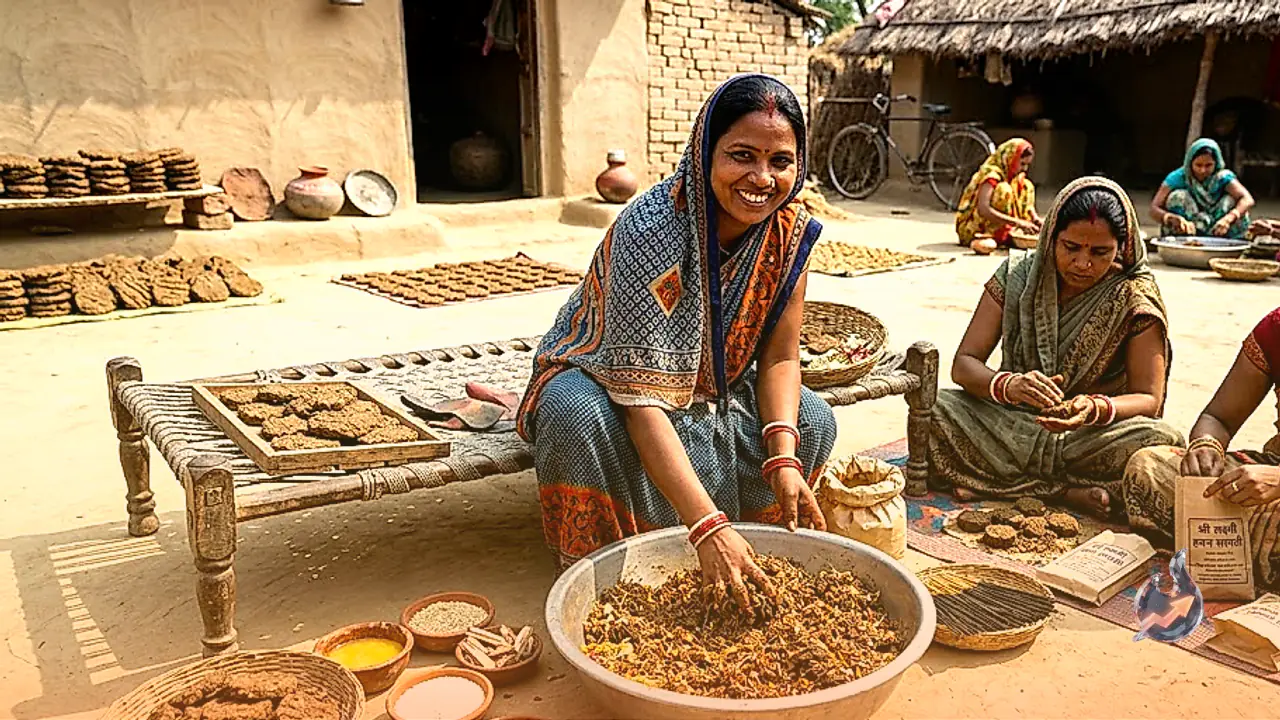

Setting up a micro-enterprise from home with minimal capital is increasingly proving to be an effective vehicle for financial self-reliance across rural India. In Uttar Pradesh's Amethi district, members of a women's self-help group have turned this idea into reality by producing traditional havan samagri using indigenous ingredients. The enterprise operates entirely out of household spaces, removing the need for industrial premises or expensive mechanical installations. Built primarily on locally available cow dung and everyday herbal botanicals, the venture benefits from year-round consumer demand for religious rituals, which spikes sharply during major festive occasions such as Navratri, providing a stable source of local employment.
A 31-Ingredient Formulation Grounded in Cow Dung and Botanicals
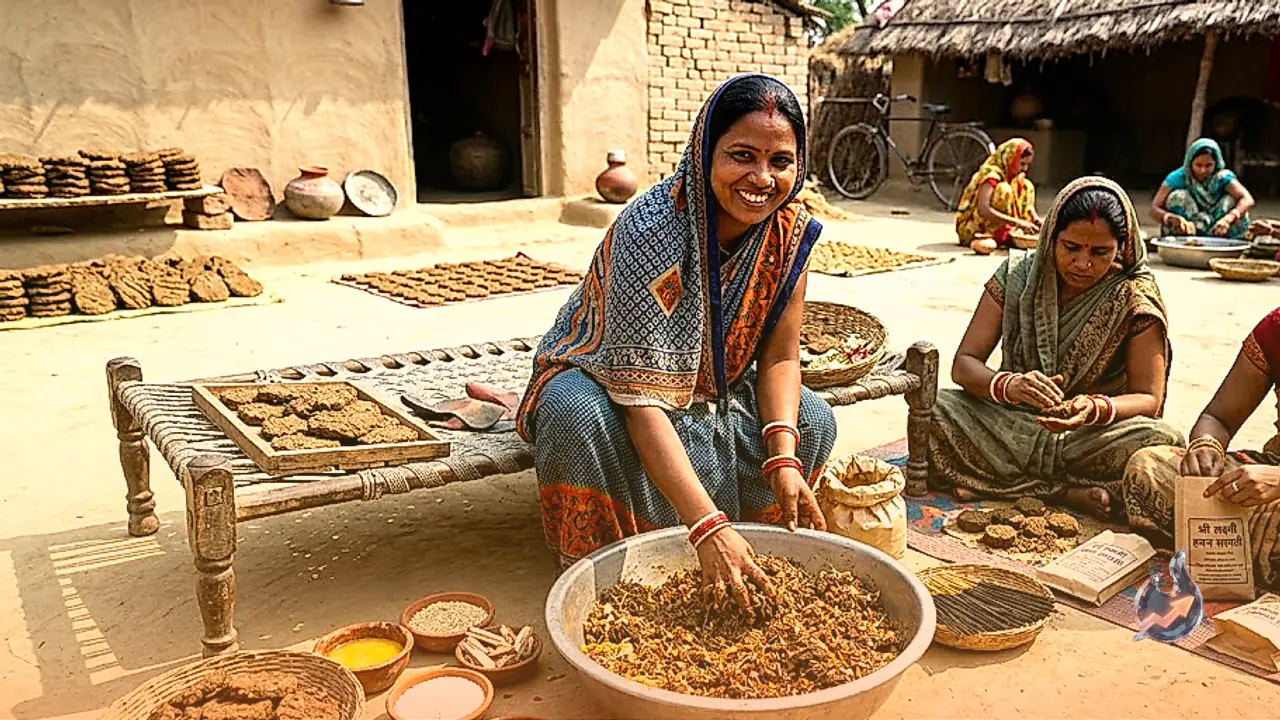
Lakshmi Devi, an active participant in the collective, initiated the activity by pooling modest personal savings. Through the self-help group framework, she procured the baseline materials required for compounding and started packaging the mixture directly at home. According to Lakshmi Devi, the complete formulation incorporates approximately 31 specific ingredients to ensure authentic aroma and traditional burning qualities. Alongside dried cow dung, the recipe combines medicinal herbs with loban, sugandha, cloves, and fennel seeds.
The production cycle begins with spreading raw cow dung under open sunlight until completely dried. Once dry, it is powdered and thoroughly mixed in calibrated ratios with the remaining 30 ingredients. The complete process takes approximately two to three days from raw preparation to packaged goods. Reflecting on her journey, Lakshmi Devi noted that prior to joining the group, she faced severe economic hardship and had to depend on others for money. Being part of the group and running this venture has eliminated the humiliation of asking for funds, giving her independent income as well as dignity and social recognition in her village.
Collaborative Model of 11 Women Expanding into Daily Essentials
Pinki, another member working alongside the group, explained that roughly 11 women currently pool their labor to manage production and fulfillment. Earlier, family needs often forced them to rely on outside intermediaries for financial support, but the collective now allows them to handle all monetary lending and borrowing directly through their internal group reserves. Before stepping into commercial manufacturing, the members underwent a comprehensive four-day technical training program that covered ingredient ratios, quality checks, and packaging practices.
Encouraged by their early success in selling ritual blends, the group has set its sights on expanding into complementary household products. Pinki shared that the members plan to learn broom manufacturing next, given the steady, high-volume consumer demand that brooms enjoy across regional retail counters. By branching into everyday utility goods alongside devotional supplies, the collective aims to ensure steady year-round cash flow.
Capital Needs of Rs 4,000 to Rs 5,000 and Profit Dynamics
One of the primary strengths of this micro-business model is its low entry barrier. In village environments, the main volume component—cow dung—can be sourced virtually free of cost. An aspiring entrepreneur needs to invest only about Rs 4,000 to Rs 5,000 to purchase the aromatic resins, herbs, spices, and packaging pouches. Once combined, the blend is portioned into sealed packets for direct dispatch to village bazaars and town shopkeepers.
In terms of scale, a home operation can produce roughly 50 to 60 kilograms of finished havan samagri per day. The product fetches wholesale and retail rates ranging between Rs 30 and Rs 50 per kilogram in local markets. Operating at steady production and sales volumes, an entrepreneur can generate a monthly income of Rs 25,000 to Rs 30,000. Actual monthly earnings naturally fluctuate depending on aggregate kilograms processed, batch yield, and season-specific sales traction.
Support Systems via NRLM, Institutional Training, and Grants
Business expert Prakash Jaiswal highlighted that women in rural clusters receive regular vocational guidance through community self-help groups, the National Rural Livelihoods Mission (NRLM), and allied development institutions. The prime objective of these training modules is to equip women with actionable domain knowledge, standard operational steps, and marketing techniques needed to run micro-enterprises smoothly.
Prakash Jaiswal further stated that institutional frameworks offer direct grants and seed financing for groups seeking to launch viable micro-units. The documentation requirement is streamlined to keep access open for rural participants. Applicants must submit identity and financial records, including their Aadhaar card, PAN card, bank passbook copy, passport photograph, and a formal recommendation letter issued by the self-help group. Following verification of these papers, the formal disbursal process is completed, enabling producers to secure working capital tailored to their production scale.