




















Nature enthusiasts and weekend travelers in the Vindhya region have gained an expansive eco-tourism retreat close to home. Developed just 18 kilometers outside Satna city in Barhata, Naro Hills Biodiversity Park has welcomed visitors following the completion of its primary construction phase. Work on the project initially commenced in 2023, and the gates were opened to the general public in August 2025. Rather than functioning as a conventional commercial amusement park, the destination was conceived with the explicit mission of conserving regional biodiversity and bridging the gap between urban citizens and the natural forest ecosystem.
A 50-Hectare Blueprint for Conservation and Public Leisure
The total footprint allocated for the conservation zone covers an impressive acreage. Deputy Ranger Satendra Shukla stated that approximately 20 hectares of the broader area have been kept strictly as a reserved wildlife sanctuary, ensuring that native woodland remains completely undisturbed by public traffic. Alongside this preserved belt, a designated 30-hectare tract has been transformed into the public biodiversity park. Within these 30 hectares, tourist amenities, administrative structures, and experiential pathways occupy roughly 10 hectares.
The remaining 20 hectares inside the park perimeter are intentionally maintained in their untouched forest condition. This zoning guarantees that visitors experience the authentic quiet, wilderness, and greenery of the hills. The initial construction and developmental milestones of the park were completed at an investment of around 3.45 crore rupees.
Over 10,000 Saplings, Nature Trails, and an Elevated Watch Tower
To enrich local plant diversity, authorities have planted more than 10,000 saplings representing a wide variety of botanical species across the grounds. To transform casual strolls into informative visits, descriptive signage boards have been installed near individual trees and plants detailing their botanical and common names. This thoughtful feature provides school and college students with an outdoor educational laboratory where they can study nature and forest ecology firsthand.
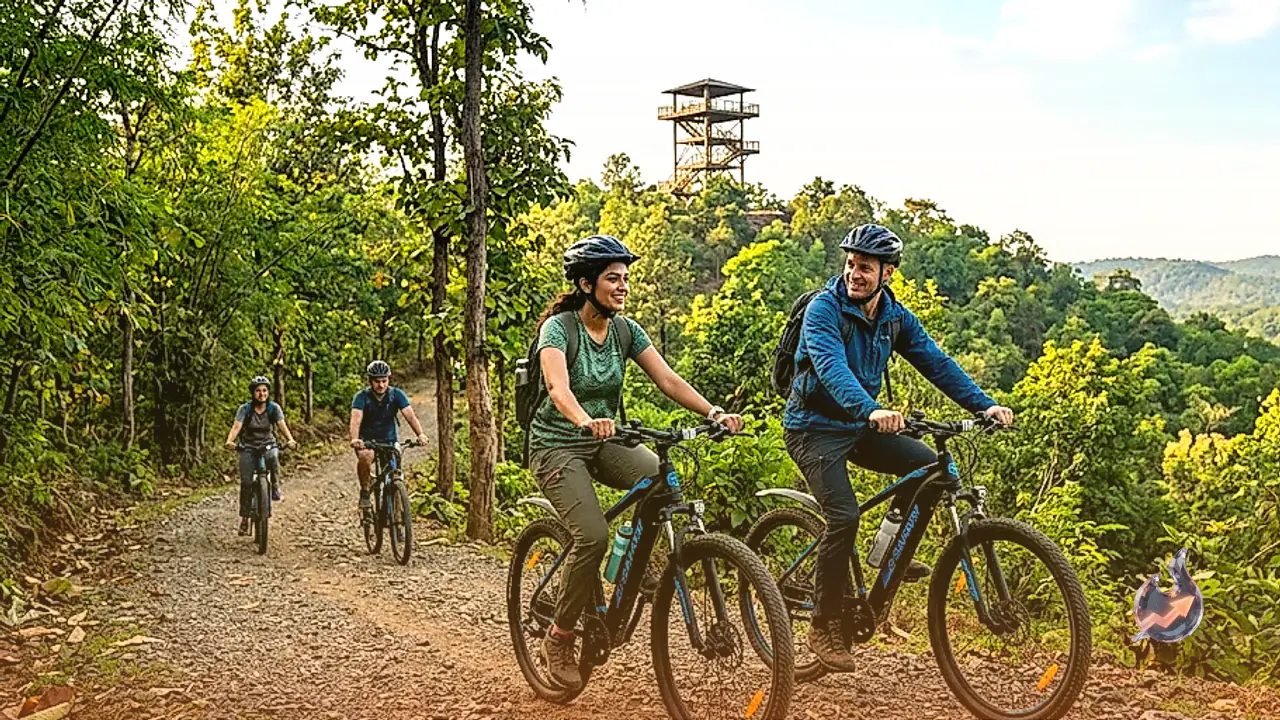
A dedicated nature trail weaves through the rugged terrain, allowing pedestrians to traverse the rocky hillsides and native undergrowth on foot. For those seeking panoramic vistas, an elevated watch tower provides sweeping, unobstructed views of the surrounding hills and dense green cover stretching across the horizon.
Zero-Emission Mobility and Essential Visitor Amenities
To allow guests to navigate the sprawling landscape effortlessly without harming the delicate surroundings, the forest department introduced a fleet of pollution-free electric cycles. These e-cycles enable tourists to cover extensive distances across the park quietly and comfortably without producing exhaust emissions or disturbing local fauna.
On-site facilities have been planned to support day-long family outings. Dedicated vehicle parking is available directly inside the premises. Visitors also have access to modern clean restrooms and water coolers dispensing purified drinking water. The environment is tailored to cater to diverse groups, including families with young children, academic student groups, couples, and avid naturalists seeking a peaceful outdoor escape.
Operating Hours, Entry Fees, and Vehicle Regulations
Because the park sits merely 18 kilometers from Satna, it provides a practical day-trip destination for residents of the city and nearby towns. The park operates under strict forest department guidelines and remains open daily from 8:00 AM to 6:00 PM. A categorized eco-tourism fee structure has been introduced to suit different modes of transit
- Pedestrian Visitors: Individuals exploring the developed zones on foot are charged an entry ticket of just 10 rupees.
- Two-Wheeler Access: Visitors arriving on motorcycles or scooters pay a consolidated fee of 25 rupees including the vehicle. In accordance with Regional Transport Office rules, a maximum of two occupants are permitted per two-wheeler.
- Four-Wheeler Vehicles: Cars and private four-wheelers incur an entry charge of 100 rupees, accommodating up to 6 passengers.
- Mini Buses: Passenger vans and mini buses carrying up to 20 people are admitted at 250 rupees.
- Large Passenger Buses: Full-sized tourist buses are charged 500 rupees, with passenger capacity governed by the vehicle's official transport permit.
Future Expansion Plans and Adventure Attractions
The current facilities at Naro Hills Biodiversity Park represent only the foundational phase of a larger vision. Deputy Ranger Satendra Shukla indicated that additional tourist and adventure facilities will be introduced progressively as further government funding becomes available. Planned enhancements on the horizon include the installation of a zip line and supplemental recreational infrastructure for adventure sports lovers. With its gentle balance of environmental education, low ticketing fees, and forested hillsides, the Barhata sanctuary is emerging as a premier regional getaway.