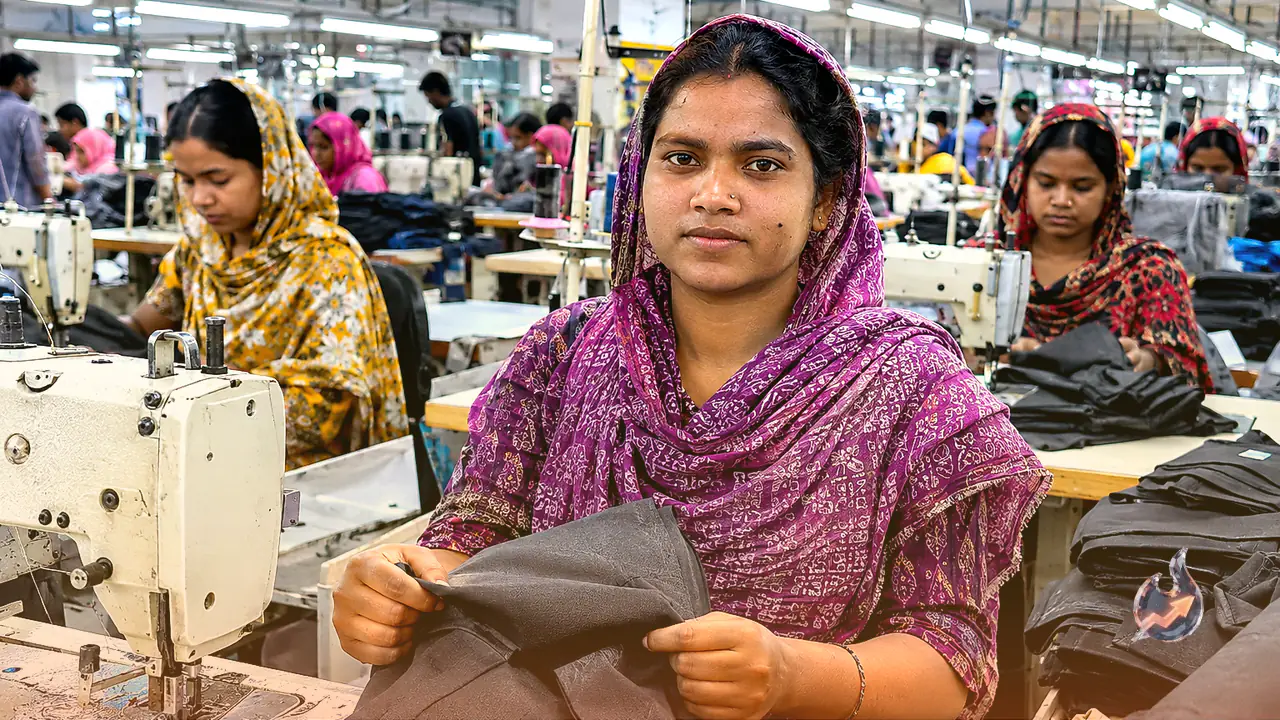

Garment workers in Bangladesh are set to receive a minimum monthly wage of Tk 17,000, a 36 per cent increase from the previous Tk 12,500 rate. The new amount is equivalent to USD 136. The decision followed weeks of protests that shut factories and interrupted production. Bangladesh is the world’s second-largest garment exporter after China, making the wage settlement consequential for both factory operations and export trade.
A 12-hour board meeting settled the rate
The Minimum Wage Board began its meeting in Dhaka’s Segunbagicha at 2 pm on Tuesday and continued until around 2 am on Wednesday. The discussions therefore lasted about 12 hours. Factory owners and workers’ representatives could not reach agreement, so the six-member board voted. Four members supported Tk 17,000, while two backed the workers’ final request of Tk 18,000.
Workers’ representative Babul Akhter described the split in the vote. The board set Tk 17,000 as the monthly minimum for fourth-grade workers, Tk 4,500 above the previous floor. Board sources said factory owners would not agree to go beyond Tk 17,000. The decision therefore fell short of the workers’ final demand, while still raising the existing minimum by a clear amount.
Higher pay is expected from December
The revised wage structure is expected to take effect from December 1. Workers are due to receive the updated pay in January. That schedule follows an earlier understanding between representatives of owners and workers. The immediate change is the adoption of a new wage rate from the stated date, with the higher payment expected to reach workers the following month.
Protests began in late October across major garment hubs. Workers pointed to rising costs for food, housing, transport and healthcare as reasons for seeking higher pay. Their initial demand was Tk 30,000, or USD 240, compared with the existing Tk 12,500 minimum. During negotiations, workers’ representatives reduced their opening figure of Tk 32,000 to Tk 22,000 and then to Tk 18,000.
A livelihood issue across a major export sector
More than four million people work in the garment industry. The sector accounts for over 80 per cent of Bangladesh’s export earnings. Extended factory stoppages can disrupt production plans and weaken overseas buyers’ confidence, with possible consequences for global apparel supply chains. Bangladesh supplies clothing brands including H&M, Zara and Gap.
The previous Tk 12,500 minimum was announced in November 2023 and took effect in December 2023. Several rounds of negotiations between owners and workers’ representatives preceded the latest decision. Their positions shifted during the talks, but an agreement did not emerge, leaving the board to settle the rate through a vote.
Higher grades have separate minimums
The new structure includes more than the Tk 17,000 floor for fourth-grade workers. The board also set monthly minimum wages for workers in the third, second and first grades. Each of those rates is above the new Tk 17,000 baseline. The available details do not specify the separate amounts for those grades. The tiered scale was intended to reduce disputes between workers and factories during a tense period.
Factory owners warned that unrest during the peak spring and summer production period could undermine shipment plans. They also raised the possibility of damage to overseas buyer confidence and order cancellations. The industry is contending with higher production costs and inflation, while facing tough competition in global markets. Meeting delivery schedules remains another pressure on factories as they manage those cost and market challenges.