





















A sharp rally in global crude oil prices, driven by geopolitical uncertainty around the Strait of Hormuz, has placed fresh upward pressure on energy markets. Brent crude touched the $101 per barrel mark on September 10, 2026, posing challenges for petroleum refiners and fuel marketing companies. Crude oil acts as a primary cost driver when state-run oil companies review tariffs for domestic cooking gas and automotive fuels. While retail prices for residential cooking gas remained unchanged on Thursday, recent upward revisions in commercial LPG and CNG rates continue to impact commercial users and commuters nationwide.
Domestic and Commercial LPG Cylinder Rates Across Cities
Retail prices for 14.2 kg domestic LPG cylinders have remained frozen across Indian states since June 7, 2026. As of September 10, Noida records the most economical domestic cylinder price at Rs 939.50, whereas Patna records the highest retail price at Rs 1,031.50 per cylinder. In the national capital, New Delhi, a 14.2 kg domestic cylinder costs Rs 942. Rates in other key metro hubs stand at Rs 968 in Kolkata, Rs 941.50 in Mumbai, and Rs 957.50 in Chennai. Elsewhere, domestic cylinders sell for Rs 944.50 in Bangalore, Rs 950.50 in Gurgaon, Rs 951.50 in Chandigarh, Rs 951 in Thiruvananthapuram, Rs 945.50 in Jaipur, Rs 968 in Bhubaneswar, Rs 979.50 in Lucknow, and Rs 994 in Hyderabad.
In contrast, 19 kg commercial LPG cylinders underwent price increases ranging from Rs 9.50 to Rs 11.50 per cylinder on September 1, 2026, with prices holding steady on Thursday. Commercial gas cylinders in New Delhi and Noida stand at Rs 2,747.50. The rate is Rs 2,884 in Kolkata, Rs 2,701 in Mumbai, Rs 2,916.50 in Chennai, and Rs 2,831 in Bangalore. Additionally, commercial cylinders cost Rs 2,764.50 in Gurgaon, Rs 2,769.50 in Chandigarh, Rs 2,776 in Jaipur, Rs 2,784 in Thiruvananthapuram, Rs 2,870 in Lucknow, Rs 2,919 in Bhubaneswar, Rs 2,996 in Hyderabad, and reach a peak of Rs 3,029 in Patna.
Understanding LPG Cylinder Sizes and Usage Categories
Liquefied Petroleum Gas in India is distributed in three main residential and commercial pack sizes. The compact 5 kg cylinder caters predominantly to migrant workers, university students, and tenant households lacking permanent address proofs. The standard 14.2 kg cylinder serves as the primary domestic cooking solution across the country. Official data from Indian Oil indicates that domestic cylinders account for roughly 90% of total gas volume distributed nationwide.
Commercial operations rely on 19 kg cylinders to fulfill energy needs in eateries, hotels, restaurants, food stalls, shopping malls, and small manufacturing units. For large-scale industrial heating and heavy commercial cooking demands, oil marketing companies also supply specialized 47.5 kg and 425 kg Jumbo industrial cylinders.
Piped Natural Gas (PNG) Tariff Breakdown
Piped Natural Gas, delivered directly to kitchens and commercial spaces via network pipelines, saw a selective rate increase in September 2026. Mahanagar Gas revised PNG tariffs upward by Re 1 per SCM in Mumbai, bringing the current rate to Rs 51.50 per SCM. In New Delhi, PNG is priced at Rs 49.59 per SCM. Rates in other urban areas remain at Rs 50 in Kolkata and Chennai, Rs 53 in Bangalore, Rs 48.40 in Gurgaon, Rs 49.45 in Noida, Rs 45.33 in Bhubaneswar, Rs 54.70 in Chandigarh, Rs 51 in Hyderabad, Rs 49.50 in Jaipur, Rs 56.50 in Lucknow, Rs 49.44 in Patna, and Rs 51 in Thiruvananthapuram.
Compressed Natural Gas (CNG) Rates for Motorists
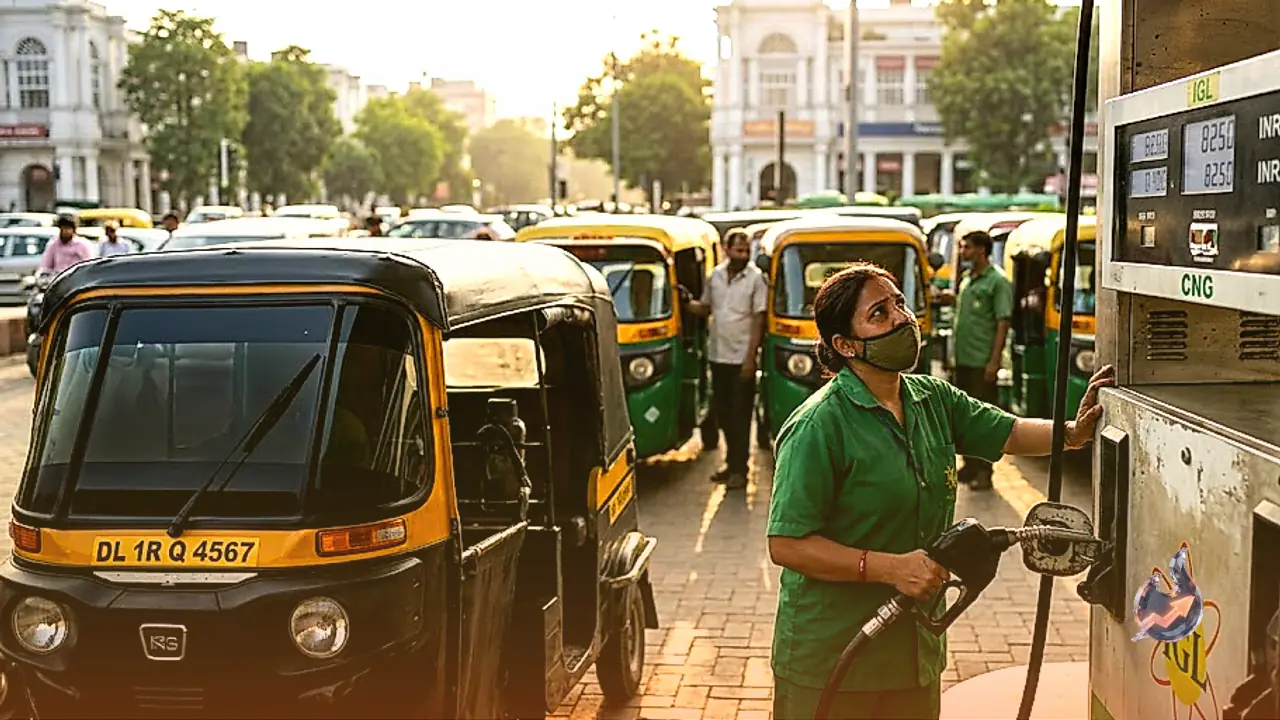
Automotive CNG prices have recently been revised upward by up to Rs 2 per kg across major metropolitan centers including Delhi, Mumbai, and Meerut. The current CNG retail price across New Delhi and the wider NCR region stands at Rs 86.98 per kg. Motorists in Mumbai pay Rs 88 per kg following a Rs 2 increase, while Meerut reports Rs 93.50 per kg. CNG retails at Rs 97.50 in Chennai and Rs 97 in Bangalore. Hyderabad records the highest CNG price nationwide at Rs 112 per kg. Other regional rates include Mathura at Rs 100, Firozabad at Rs 99, Bharatpur and Dewas at Rs 97.50, Sonipat at Rs 94, and Rewari at Rs 91.59 per kg.
Key Technical Differences: LPG vs PNG vs CNG
Clear functional and structural differences set CNG, PNG, and LPG apart. CNG (Compressed Natural Gas) is compressed gas used primarily as an eco-friendly vehicle fuel. It is dispensed at dedicated filling stations into high-pressure automotive cylinders. Because it is lighter than air, any leaked gas disperses rapidly into the atmosphere.
PNG (Piped Natural Gas) is natural gas distributed through a network of underground pipes directly into residential kitchens and commercial establishments. It provides an uninterrupted fuel supply without requiring physical cylinder storage on premises. LPG (Liquefied Petroleum Gas), meanwhile, consists of propane and butane stored under pressure as a liquid in heavy steel cylinders or tanks. Primarily used for portable domestic cooking and industrial heating, LPG vapor is denser than air and tends to settle near floor levels if a leak occurs.