























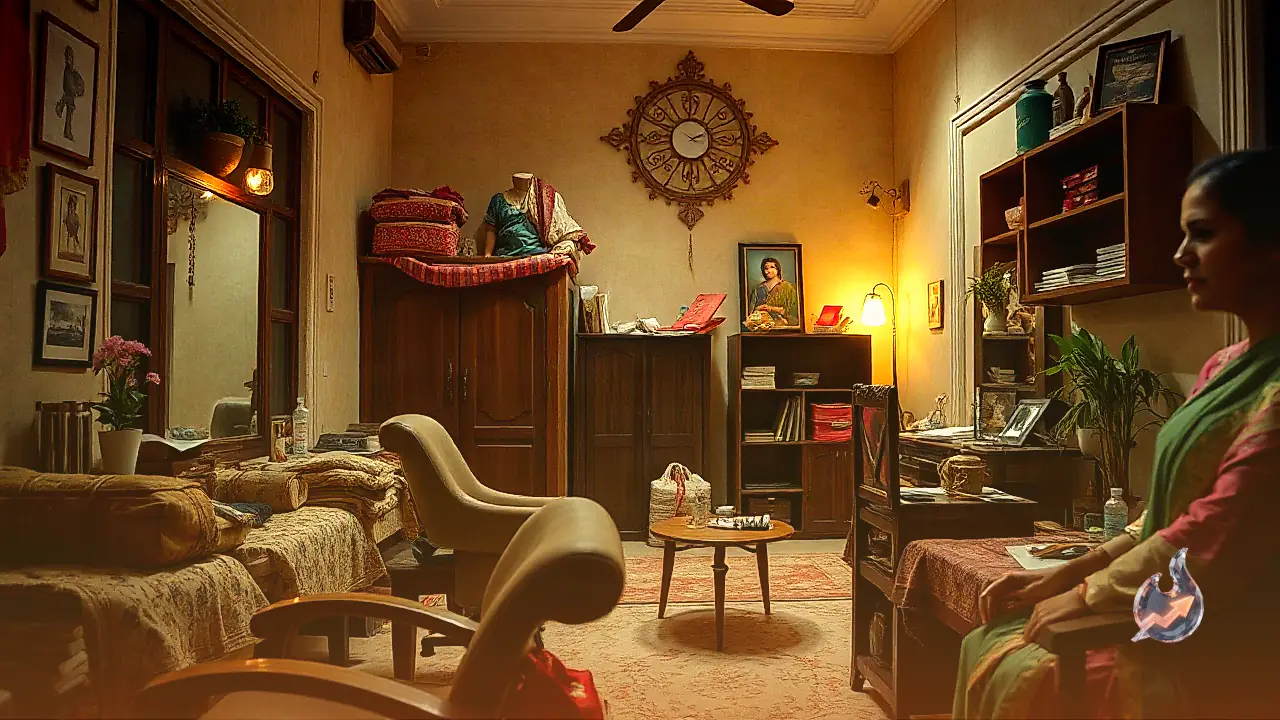

For women residing in rural areas and small towns who aspire to establish their own independent livelihood, the beauty and personal grooming sector presents a viable path forward. Setting up such a venture does not mandate leasing an expensive commercial space in a busy market or committing large amounts of capital upfront. A spare room or a clean, dedicated corner within one's home can serve as an effective workstation. By offering essential cosmetic and grooming services to women living in the immediate neighbourhood, a steady clientele can be built step by step over time.
Building a Compact Home Salon with Modest Outlay
Starting small allows entrepreneurs to test the waters while managing operational risk. Industry expert Savita Mishra points out that launching a home-based mini beauty salon serves as a practical business concept for women who wish to generate income without stepping far away from their households. She advises against taking on heavy debt or committing funds to expansive commercial setups at the initial stage. Instead, dedicating a single residential room, ensuring it remains clean, welcoming, and well-arranged, is sufficient to launch the initiative.
During the opening phase, the service catalogue can focus on everyday essentials that nearby residents frequently require, including threading, facials, waxing, basic haircuts, henna application, and simple event makeup. Once customer trust is established and daily footfall increases, the proprietor can gradually introduce specialised treatments and premium beauty solutions. This progressive approach keeps initial risk low and aligns service additions with actual market demand.
Budget Breakdown for the 20,000 to 50,000 Rupee Range
When commercial rent is completely avoided by utilising domestic space, the basic infrastructure and inventory for a compact salon can be procured within an estimated budget of 20,000 to 50,000 rupees. This financial envelope is adequate to cover the core tools and initial consumables needed to service walk-in clients. Key purchases typically include
- One or two clear, good-quality wall mirrors
- A comfortable client chair alongside a functional service table
- A compact storage rack or modular cabinet to keep beauty supplies neatly arranged
- Essential facial kits, cleansers, bleaches, creams, and basic makeup cosmetics
- Threading thread, waxing warmers, strips, scissors, and basic hair-styling equipment
Total expenditure may fluctuate within or slightly beyond the 20,000 to 50,000 rupee bracket depending on room dimensions, regional pricing of supplies, and the specific brands chosen. A sound operational strategy involves procuring only the indispensable essentials at the start. As regular cash flow develops from daily client bookings, additional tools and diverse inventory lines can be integrated without straining working capital.
Financial Support via the Mukhyamantri Yuva Udyami Scheme
Aspiring entrepreneurs who possess the requisite styling skills but face cash shortages can turn to state-backed financing avenues. The Uttar Pradesh administration's Mukhyamantri Yuva Udyami Vikas Abhiyan Yojana serves as a key financial program designed to support emerging ventures of this nature.
According to Deputy Commissioner of District Industries Neha Singh, the first phase of this initiative provides business loans of up to 5 lakh rupees. A major feature of the scheme is a 100 percent interest subsidy on credit amounts up to 5 lakh rupees for a tenure of four years, relieving borrowers of borrowing costs during the critical gestation period. Furthermore, the initiative incorporates a 10 percent margin money subsidy. Prospective applicants must review eligibility parameters, documentation guidelines, and procedural formalities directly with the concerned district industries department prior to submitting their loan paperwork.
Neighbourhood Networking and Word-of-Mouth Promotion
A home salon established in a village or township benefits directly from close-knit local relationships. Costly commercial advertisements or billboards are entirely unnecessary in the early months. The most effective promotional strategy begins by informing friends, neighbours, extended family members, and local acquaintances about the services on offer. In suburban and rural communities, high service standards, personal hygiene, and courteous conduct naturally turn satisfied patrons into brand advocates who recommend the salon to their own social circles.
Revenue can be substantially boosted by timing promotions with local calendars. Festive periods such as wedding seasons, regional gatherings, and festivals offer prime opportunities to market bundled service packages. For instance, combining henna work, facial treatments, and hair dressing into a single bundled price attracts cost-conscious patrons. Additionally, maintaining contact lists on WhatsApp enables proprietors to share new pricing packages, seasonal discounts, and scheduling availability directly with local residents at zero promotional cost.
Projected Revenue and Monthly Earnings Model
Financial returns in the personal grooming trade depend heavily on three continuous variables: client traffic, ticket size per service, and the hours spent working each week. A baseline operational projection illustrates the commercial potential
- Assuming an average daily attendance of 5 clients
- With an average service ticket size of 250 rupees per client
- Daily gross turnover reaches approximately 1,250 rupees
- Operating for 25 days in a calendar month yields an estimated gross monthly revenue of 31,250 rupees
This numerical breakdown provides an illustrative benchmark rather than a fixed income guarantee. Actual net earnings will vary depending on regional competitive rates, the specific service mix requested, seasonal spikes during celebrations, and daily operational overheads. With disciplined practice and solid customer relationships, a home-based studio can mature into a dependable, self-sustaining micro-enterprise.