



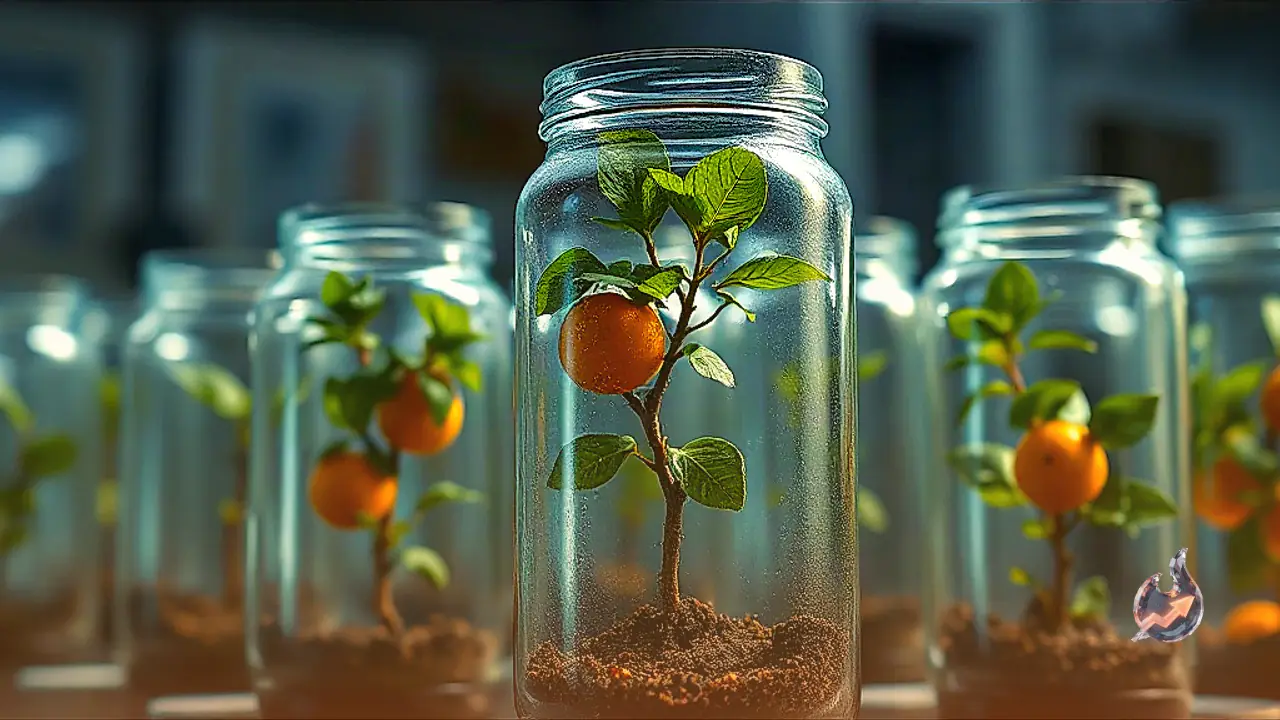


















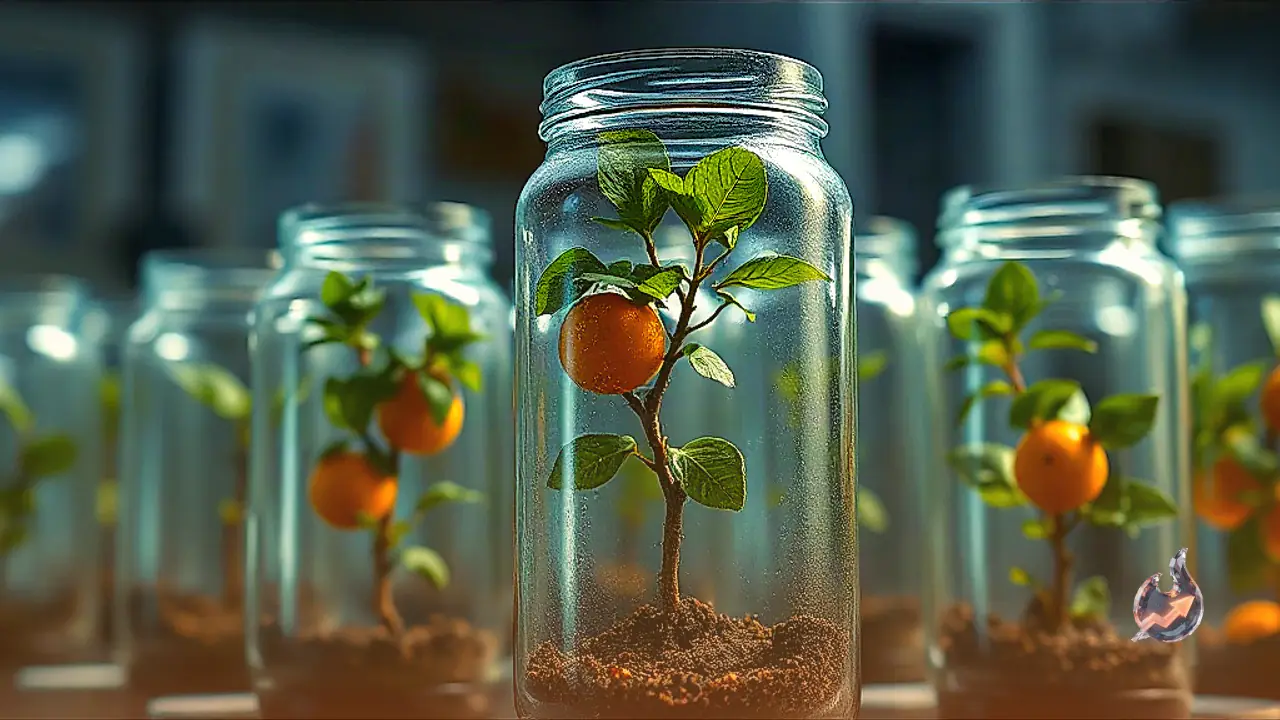

Desert farming in arid environments has long remained hostage to seasonal limitations, harsh weather shifts, and the recurring scarcity of healthy planting material. Overcoming these natural obstacles, agricultural researchers and postgraduate students at Swami Keshwanand Rajasthan Agricultural University in Bikaner have achieved a breakthrough after three years of focused lab work. Inside the university's plant tissue culture facility, healthy and disease-free saplings of mulberry and lemon have been successfully cultivated under sterile, artificially regulated environmental parameters. Alongside these fruit crops, promising experimental runs are currently underway on rose plants and peelu, an ecologically vital native shrub of Western Rajasthan. Cultivated under strictly monitored micro-conditions, these lab-grown saplings possess natural resistance to common pathogens and exhibit markedly faster vegetative growth compared to seedlings raised through conventional open-air nurseries.
The Biological Framework of Plant Propagation from Microscopic Explants
Tissue culture, or micropropagation, is an advanced horticultural science that regenerates an entire, structurally complete plant from an exceptionally tiny fragment of donor plant tissue. Assistant Professor Dr. Vikas Sharma explained that the laboratory workflow begins by isolating a minuscule portion of a donor plant's leaf, shoot tip, stem segment, or root tissue, an element termed an explant in botanical practice. This micro-sample is introduced into a tailored synthetic nutrient substrate where balanced organic compounds, essential macro-elements, and micronutrients stimulate controlled cellular division. Over a succession of weeks, this isolated living tissue differentiates into shoots, leaves, and eventually an autonomous root system.
A primary commercial advantage of this micropropagation method is its remarkable spatial efficiency. Traditional field-based nursery systems require extensive acreage, regular ground irrigation, and constant weather protection to nurse seedlings, whereas the university's tissue culture room currently nurtures 500 to 700 saplings concurrently in a compact footprint of glass jars. In the coming seasons, as the protocol scales toward commercial throughput, it promises to supply local farmers and commercial nursery owners with high-volume, pest-free planting stock uninterrupted by seasonal weather shifts.
Sterilization Protocols and the Synthetic Chemistry of MS Media
Absolute sterility forms the operational backbone of all micropropagation procedures, as even a stray airborne spore can overwhelm a culture vessel. Before any plant fragment encounters the nutrient medium, all operational tools, glass containers, and nutrient formulations undergo rigorous high-pressure sterilization inside autoclave machinery. Technicians concurrently subject the harvested explant to chemical decontamination baths to purge external bacteria, fungal spores, and viral contaminants before placing it into the glass jars.
Each jar contains a specialized synthetic substrate known scientifically as MS media. This solid or semi-solid jelly-like formulation holds all the critical mineral salts, vitamins, sugars, and micronutrients that a developing plant would typically absorb from topsoil through its root hairs. Thanks to this precisely formulated artificial chemistry, the plant does not require a single speck of natural dirt, drawing complete metabolic sustenance from the gel within the sealed, contamination-proof glass enclosure.
Engineered Photosynthesis and Targeted Root Induction
Beyond liquid and solid nutrients, plants require continuous illumination to fuel photosynthetic activity and cellular expansion. Under standard outdoor farming conditions, solar radiation drives this metabolic cycle, but inside an indoor tissue culture lab, researchers replicate solar wavelengths using specialized artificial lighting fixtures. This customized spectrum enables the growing explants to perform photosynthesis efficiently within their sealed glass enclosures without exposure to fluctuating outdoor sunlight.
Within the nutrient vessels, the explant initially responds by sprouting minute green buds. Over subsequent weeks, these buds steadily elongate into recognizable stems and functional foliage. Once the plantlet reaches an optimal height, technicians transfer it into a second specialized chemical formulation designated as rooting media. This medium contains specific hormonal regulators that stimulate rapid, healthy root growth. Dr. Vikas Sharma noted that several plant batches have developed dense, vigorous root networks during this stage. These robust root structures provide an enormous survival advantage once transplanted into sandy desert soil, enabling the plant to scavenge deep-lying soil moisture and optimize nutrient intake during severe dry spells.
The Hardening Phase: Transitioning from Laboratory to Field Soil
Saplings raised inside pristine, temperature-regulated cleanrooms cannot be transplanted directly into the open desert sun, as the sudden shift in atmospheric humidity and thermal stress would cause fatal shock. To safeguard their survival, the lab subjects all rooted plantlets to a gradual adaptation routine known as hardening. Technicians remove the saplings from the sterile glass jars and replant them inside a climate-controlled greenhouse. Within the greenhouse, the juvenile plants gradually adapt to natural airflow, varying humidity levels, and unfiltered sunlight.
Only after the plantlets develop sufficient structural cuticle layers and demonstrate environmental stability inside the greenhouse are they cleared for transfer to outdoor nurseries or open agricultural fields. In terms of overall project duration, propagating a field-ready sapling through tissue culture typically requires four to six months from initial explant isolation to finished plantlet. When initiating experiments on previously unmapped wild species, the developmental and standardization process can span six to seven months. The overwhelming virtue of this timeline remains its total climate independence, enabling year-round mass propagation irrespective of harsh winter frosts or blistering summer winds.
Overcoming Initial Contamination and Preserving Endangered Desert Species
The journey toward viable tissue culture at Swami Keshwanand Rajasthan Agricultural University began roughly three years ago. The early phases presented severe technical obstacles to the research team, as recurrent fungal outbreaks and bacterial contamination repeatedly destroyed experimental batches. Refusing to abandon the project, the faculty and student researchers refined their sterilization practices, adjusted ambient moisture controls, and perfected their nutrient balances. Today, their persistent refinement has yielded standardized, thriving protocols for mulberry and various citrus varieties such as lemon, alongside encouraging progress on decorative roses and indigenous peelu shrubs.
At present, the university finances and executes these micropropagation experiments through internal academic resources, but leadership is preparing to scale the initiative across the arid zone. Western Rajasthan is home to numerous valuable indigenous desert plants that suffer from slow natural germination rates and face habitat degradation. The university plans to submit comprehensive project proposals to state and central government bodies to secure funding for native plant conservation via tissue culture. With government backing, the laboratory aims to multiply its production volume and bring dozens of endangered desert flora into mass micropropagation. Once clinical trials and standardization milestones conclude, these high-grade, disease-free plants will be distributed directly to regional farmers, commercial horticulturists, and desert greening initiatives.