




















Sardhana in western Uttar Pradesh has long functioned as a high-stakes electoral barometer in Meerut district. As political parties begin formulating their groundwork for the 2027 state assembly polls, the historical dynamics of this assembly seat are back under intense scrutiny. Over the course of the past three decades, four distinct parties—Janata Dal, the Bharatiya Janata Party, the Bahujan Samaj Party, and the Samajwadi Party—have each tasted triumph here. The BJP has been the most dominant outfit, clinching victory five times between 1991 and 2022. However, the 2022 assembly elections disrupted the BJP's dominance when Samajwadi Party candidate Atul Pradhan ousted two-time incumbent Sangeet Som, setting the stage for an intense battle in 2027.
The Early 1990s: Janata Dal's 1991 Triumph and BJP's 1993 Rebound
The modern electoral history of Sardhana began in 1991 with a decisive victory for Janata Dal candidate Vijay Pal Singh Tomar. Tomar secured 36,418 votes, comfortably defeating his nearest challenger, Surendra Singh of the Janata Party, who garnered 27,232 votes. That contest concluded with a winning margin of 9,186 votes, while the BJP nominee Ravindra Pundir finished back in third place.
The political ground shifted rapidly two years later during the 1993 midterm elections. The BJP re-nominated Prof. Ravindra Pundir, who successfully mobilized the electorate to secure 48,280 votes. In doing so, he unseated Janata Dal's Vijay Pal Singh Tomar, who managed 39,159 votes. Pundir sealed his first victory by a margin of 9,121 votes, marking the beginning of an era of BJP strength across the constituency.
The 1996 Nail-Biter and Continued BJP Hold in 2002
The 1996 assembly election in Sardhana remains on record as the most fiercely contested battle in the constituency's recent history. Prof. Ravindra Pundir contested once again under the BJP flag, facing an aggressive challenge from Bahujan Samaj Party nominee Harpal Saini. When the ballots were tallied, Pundir secured 37,552 votes against Saini's 36,531. Pundir retained his seat by a wafer-thin margin of just 1,021 votes, making it the closest race between 1991 and 2022.
By 2002, the BJP retained its faith in Prof. Ravindra Pundir for a third consecutive term. Official tallies recorded 51,282 votes for Pundir, while BSP's Harpal Saini once again finished as the runner-up with 41,737 votes. Pundir expanded his margin of victory to 9,545 votes, reinforcing the BJP's organizational grip on the seat.
2007: BSP Disrupts the Streak as Dynamics Fragment
The 2007 election altered Sardhana's established political trajectory when the Bahujan Samaj Party broke the BJP's winning run. BSP nominee Chandraveer Singh polled 37,469 votes, defeating Rashtriya Lok Dal candidate Tabassum Begum, who finished second with 28,134 votes. Singh secured the seat by a margin of 9,335 votes.
The election proved particularly difficult for the BJP, whose candidate Vijay Pal Singh Tomar fell to third position with only 28,026 votes. Meanwhile, former legislator Prof. Ravindra Pundir switched allegiance to contest on a Samajwadi Party ticket, ending up in fourth place with 22,756 votes.
Sangeet Som's Ascendancy in 2012 and Record-Setting 2017 Run
Following delimitation, the 2012 election heralded the arrival of Sangeet Singh Som on the BJP ticket. Som captured 62,438 votes to emerge victorious, defeating Haji Mohammad Yaqoob of the RLD by 12,274 votes. Yaqoob finished with 50,164 votes. The race also marked the emergence of Samajwadi Party candidate Atul Pradhan, who finished third with a respectable tally of 48,023 votes.
The 2017 assembly poll transformed into a direct, polarized contest between Sangeet Som and Atul Pradhan. Som retained the seat in commanding fashion, polling 97,921 votes compared to Pradhan's 76,296. Som's winning margin of 21,625 votes stands as the largest margin of victory in Sardhana since 1991. The BSP candidate, Hafiz Imran Yaqoob, trailed in third place with 57,239 votes.
Pradhan's 2022 Breakthrough and the Stakes for 2027
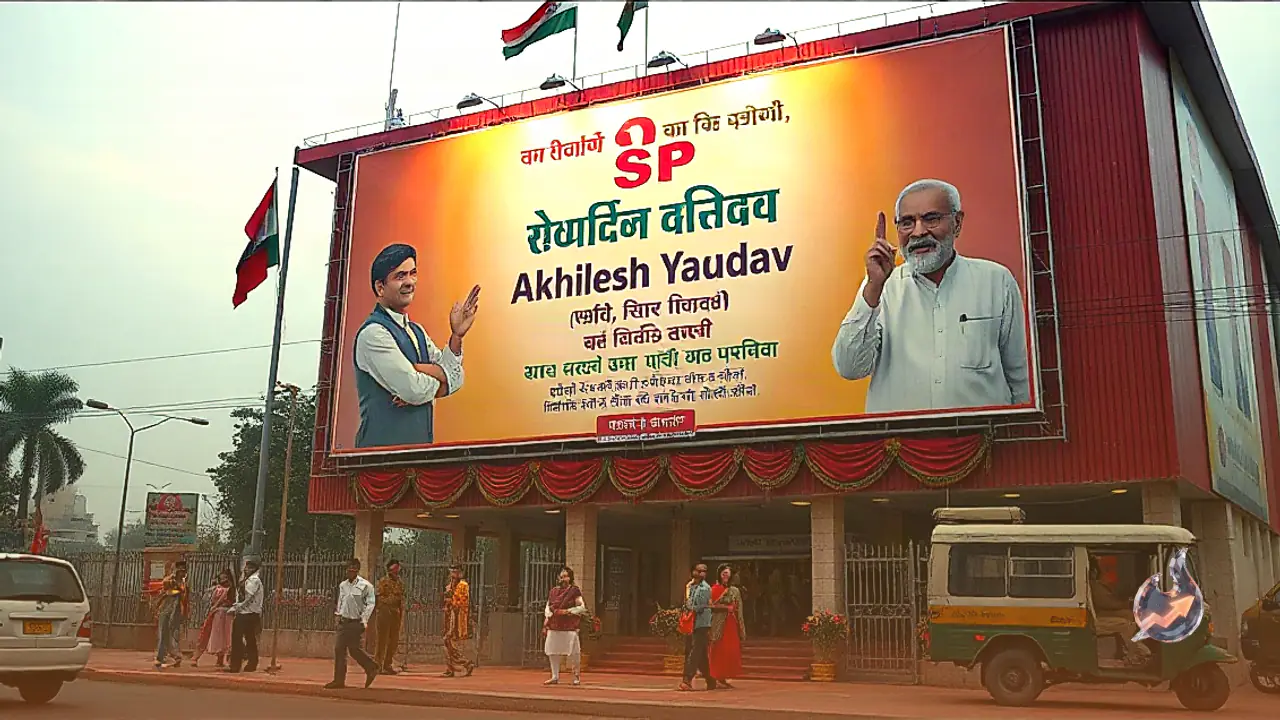
In 2022, Atul Pradhan mounted his third consecutive campaign for the seat on the Samajwadi Party ticket and finally broke through. Pradhan garnered an impressive 1,18,573 votes, defeating incumbent Sangeet Som, who polled 1,00,373 votes. The margin of victory for Pradhan was 18,200 votes. The BSP's Sanjeev Dhama was reduced to a distant third position, managing only 18,140 votes.
Demographically, Sardhana is shaped by substantial voting blocs comprising Muslims, Jats, Gujjars, Rajputs, and Scheduled Caste communities. Across eight assembly elections spanning from 1991 to 2022, the BJP has secured victory on five occasions: 1993, 1996, 2002, 2012, and 2017. Conversely, Janata Dal in 1991, BSP in 2007, and SP in 2022 have demonstrated that the seat remains contestable.
The growth of Atul Pradhan's personal vote share—from 48,023 votes in 2012 to 1,18,573 votes in 2022—underscores a substantial structural shift in local allegiance. Heading toward 2027, the contest to reclaim or retain Sardhana will hinge on candidate selection, multi-cornered vote divisions, and how effectively the BJP and Samajwadi Party consolidate their core community coalitions.