






















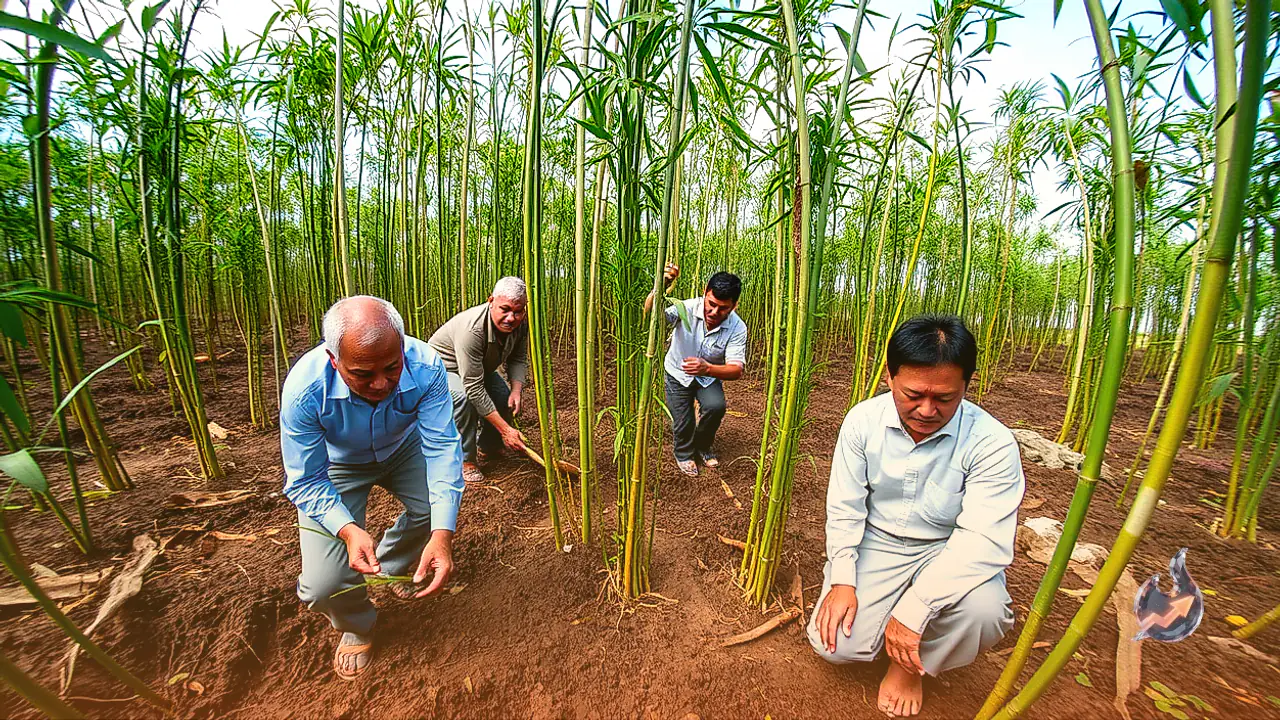

Unused agricultural acreage or vacant plots of land often sit neglected without generating any economic return. Transforming such idle land by planting bamboo can quickly turn unproductive plots into active sources of revenue. What makes this agricultural venture particularly attractive is the minimal financial outlay required at the beginning, coupled with the potential to yield steady financial returns year after year.
The Logic Behind the Green Gold Label
Bamboo is increasingly referred to as green gold across commercial circles because it combines substantial financial rewards with positive ecological contributions. Unlike conventional timber trees, harvesting bamboo does not require felling the entire tree down to its root system. Harvesters simply cut mature stalks, which allows fresh shoots to regenerate naturally from the very same root cluster. This self-renewing capability ensures a continuous harvesting cycle with remarkably low operational complexity.
Minimal Sensitivity to Soil and Weather Fluctuations
Cultivating bamboo shields growers from frequent anxieties surrounding volatile weather patterns and particular soil chemistry. The crop thrives across diverse terrains, demonstrating robust growth in sandy stretches as well as ordinary farmland soil. Its resilient root system anchors securely into the ground and withstands severe water shortages without wilting. Because it tolerates harsh conditions so effectively, bamboo functions as a remarkably low-risk investment for agricultural property owners.
Expanding Applications Across Modern Industries
The traditional perception that bamboo is useful only for weaving basic baskets or building temporary huts is entirely outdated. Today, industrial manufacturing utilizes bamboo extensively across premium furniture production, architectural flooring, paper mills, textile manufacturing, and heavy construction projects. Sustained demand across both domestic and overseas markets allows producers to generate substantial annual revenues from their plantations.
Rapid Maturation and Multi-Generational Longevity
While standard timber trees take decades to mature, bamboo shoots reach impressive heights within merely a few months. A single plantation maintains an exceptionally long productive lifespan of approximately 40 to 50 years. This longevity makes it a dependable crop capable of providing steady financial support across multiple generations. India hosts dozens of distinct bamboo varieties suited to specialized commercial uses. Additionally, the plant absorbs harmful atmospheric gases and releases higher levels of oxygen, playing a vital role in cleaning the surrounding air.