






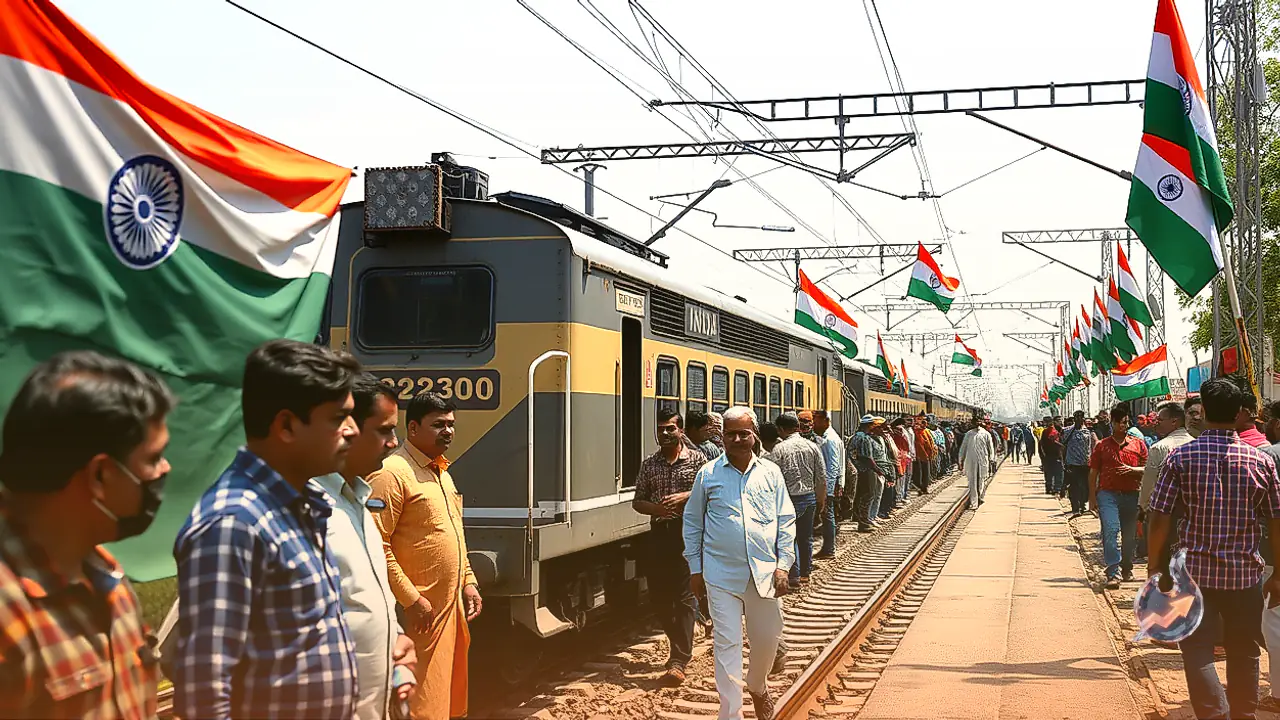















Sonipat, a vital urban centre adjoining Delhi, has marked a significant transport milestone with the introduction of green rail technology. Prime Minister Narendra Modi flagged off India's maiden indigenous hydrogen-powered train, named 'Namo Green Rail', from the Jind railway station to connect with Sonipat. Operating across an 89-kilometre railway stretch between Jind and Sonipat, the advanced zero-emission service highlights the modernisation of domestic passenger transport. Beyond rail innovation, the launch is set to exert a transformative influence on regional real estate and economic activity across the corridor.
Emerging Logistics and Housing Destination in NCR
Positioned right along the border of Delhi, Sonipat has rapidly evolved into a preferred warehousing, commercial, and residential hub within the National Capital Region. Property market analysts emphasise that robust, future-ready mass transit infrastructure forms the backbone of sustained municipal expansion. Having already captured interest due to its close proximity to the capital, the addition of clean-fuel rail connectivity gives property developers and prospective homeowners renewed confidence in the local market.
Three Pillars Underpinning Strategic Connectivity
Sonipat's sustained momentum rests upon an expanding multimodal transport grid. The key elements that provide the region with its structural advantage include
- Direct Road Access to Delhi: Broad highway networks ensure seamless daily commuting and quick movement of goods across the border.
- Kundli Manesar Palwal Expressway: The operational KMP expressway allows heavy commercial freight to bypass Delhi while linking key industrial clusters across Haryana.
- Proposed Delhi-Panipat RRTS Corridor: The planned Regional Rapid Transit System promises high-speed regional travel that will drastically curtail travel durations in the coming years.
The introduction of the hydrogen-powered train on this network functions as an additional catalyst, reinforcing the area's reputation as a well-connected satellite hub.
Reactions From Developers and Industry Executives
Corporate leaders within the construction and infrastructure sectors welcomed the operational rollout of the green rail service. Rajat Bokolia, Chief Executive Officer of Newstone, observed, "Better connectivity is always the strong foundation of economic and real estate development in any region." He pointed out that smoother commutes on the Jind-Sonipat section are poised to spur commercial activities alongside fresh housing absorption.
Sharing an optimistic outlook, Rahul Singla, Director at Mapsko Group, stated, "Better and modern connectivity gives new momentum to any city's development and its positive impact is visible on both residential demand and investment." He added that prospective buyers exploring NCR can now view Sonipat as an accessible, stress-free residential choice with improved links to surrounding urban hubs.
Anticipated Upside in Housing Demand and Land Values
Urban planning analysts note that working professionals systematically gravitate towards localities that ensure rapid, dependable transit to employment districts. The streamlined connection between Jind and Sonipat is set to benefit daily commuters travelling for work, education, or trade. As commute times decrease and transit experiences improve, demand for housing units and plotted land developments along the stretch typically sees an upward price repricing.
Furthermore, contemporary transit nodes tend to draw corporate offices, logistics parks, and tertiary service providers into adjacent belts. Such economic growth directly assists integrated township projects, planned plotted developments, and affordable housing ventures currently underway in Sonipat. Large-scale developers and institutional funds frequently deploy capital into corridors supported by long-term government infrastructure commitments.
Green Infrastructure and Long-Term Horizon
Deploying hydrogen-powered locomotives signals a concerted national transition towards sustainable urban mobility. Cities equipped with green mobility solutions frequently enjoy enhanced global standing, rendering them appealing targets for domestic conglomerates and foreign direct investment looking for sustainable industrial environments.
At the same time, experts note that the macro impact of infrastructure additions unfolds gradually rather than overnight. The extent of capital appreciation will correlate with how swiftly manufacturing investments arrive and whether allied mega-projects like the Delhi-Panipat RRTS meet their projected implementation timelines. If scheduled transit and industrial corridors proceed on track, Sonipat is well placed to consolidate its position among northern India's premier real estate destinations.