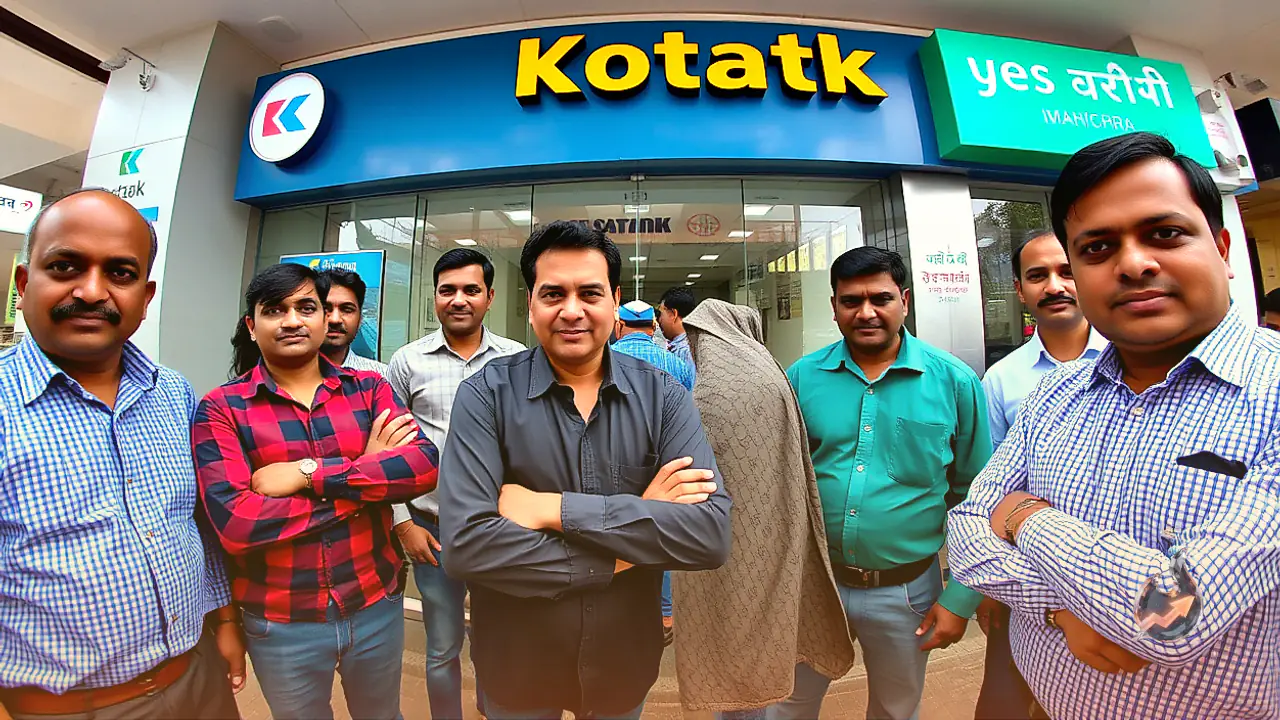























In a coordinated effort to protect unitholder value during regulatory and legal shifts, major asset managers have enacted temporary restrictions on fresh capital inflows. Kotak Mahindra Asset Management Company has suspended fresh subscriptions across two of its debt mutual fund offerings. The decision was prompted by valuation dynamics and market uncertainty surrounding Yes Bank Additional Tier 1 (AT1) bonds held within those specific portfolios. Notably, the asset manager took action on Thursday prior to the Supreme Court delivering its ruling on the matter later that day.
Impacted Kotak Debt Schemes and Bond History
The two schemes affected by the subscription freeze are the Kotak Medium Term Fund and the Kotak Credit Risk Fund. Both mutual fund portfolios carry exposure to Yes Bank AT1 bonds. Following the financial reconstruction of Yes Bank in March 2020, the asset management company had marked the value of these instruments down to zero as part of a complete write-off. However, the subsequent judgment by the Supreme Court restored these bonds, fundamentally altering the recovery trajectory and asset balance calculations.
Explaining the rationale behind freezing capital entries, Kotak Mahindra AMC noted that it proactively suspended subscriptions in both schemes as a prudent measure to safeguard unit holders. The fund management house added that it is actively reviewing the full text of the judicial verdict to map out the appropriate subsequent steps. Any future policy or portfolio adjustments will strictly depend on this ongoing comprehensive legal and financial evaluation.
Safeguarding NAV Fairness and Existing Investors
This is not the first time Kotak Mahindra AMC has implemented such tactical restrictions during periods of asset revaluation. The fund house emphasized that unitholder interests remain central to its operational decisions and confirmed that the current halt is strictly temporary. In fixed-income mutual funds, when written-down assets face potential restoration, rapid net asset value adjustments can emerge. Permitting unrestricted inflows during such transitional windows could allow new entrants to dilute prospective gains that rightly belong to legacy unitholders who endured the initial write-down period.
Tata Mutual Fund Restricts Flows into Gold ETF FoF
In a parallel move within the mutual fund sector, Tata Mutual Fund announced strict limits on fresh inflows into the Tata Gold ETF Fund of Fund. Beginning October 16, the fund house will temporarily restrict fresh lump-sum allocations, additional lump-sum purchases, switch-ins, portfolio top-ups, and new registrations for Systematic Investment Plans (SIP) and Systematic Transfer Plans (STP). The management confirmed that these operational caps are intended to be temporary.
Crucially for established unit holders, Tata Mutual Fund clarified that existing SIP and STP commitments will continue to run without interruption. These scheduled deductions will be processed at the applicable NAV on their designated execution dates. Furthermore, liquidity channels remain unobstructed: existing unitholders retain full freedom to submit redemption requests or initiate switch-outs. Similarly, pre-registered Systematic Withdrawal Plans (SWP) will proceed as usual, guaranteeing that investors seeking regular liquidity distributions face no administrative delays.
Strategic Pause in Fresh Portfolio Allocations
Both asset management companies have characterized these protocols as prudent and temporary mechanisms to balance incoming capital flows against market realities. While Kotak's swift response centers on valuation mechanics following the Supreme Court judgment on Yes Bank AT1 bonds, Tata Mutual Fund's restrictions on the Tata Gold ETF Fund of Fund take effect from October 16 until further notice. Throughout these interventions, normal redemption pathways and execution of existing systematic transactions ensure that investor liquidity is preserved without compromising fund integrity.