






















Tensions across the Middle East have escalated once again as the Saudi Arabian foreign ministry pointed an accusing finger at the government in Tehran, alleging that it is deliberately encouraging an aggressive resurgence in attacks by the Houthi movement in Yemen. Rayed Krimly, deputy minister for public diplomacy at the Saudi foreign ministry, stated that Riyadh sees no indication of Iran being willing to make the necessary concessions required to de-escalate its broader confrontation with the United States. Krimly delivered these remarks in the wake of an intense campaign of aerial strikes spanning more than a week that targeted several vital Saudi installations, shaking regional stability and injecting fresh volatility into global commercial corridors.
Devastating Raids on Key Infrastructure and Civilian Toll
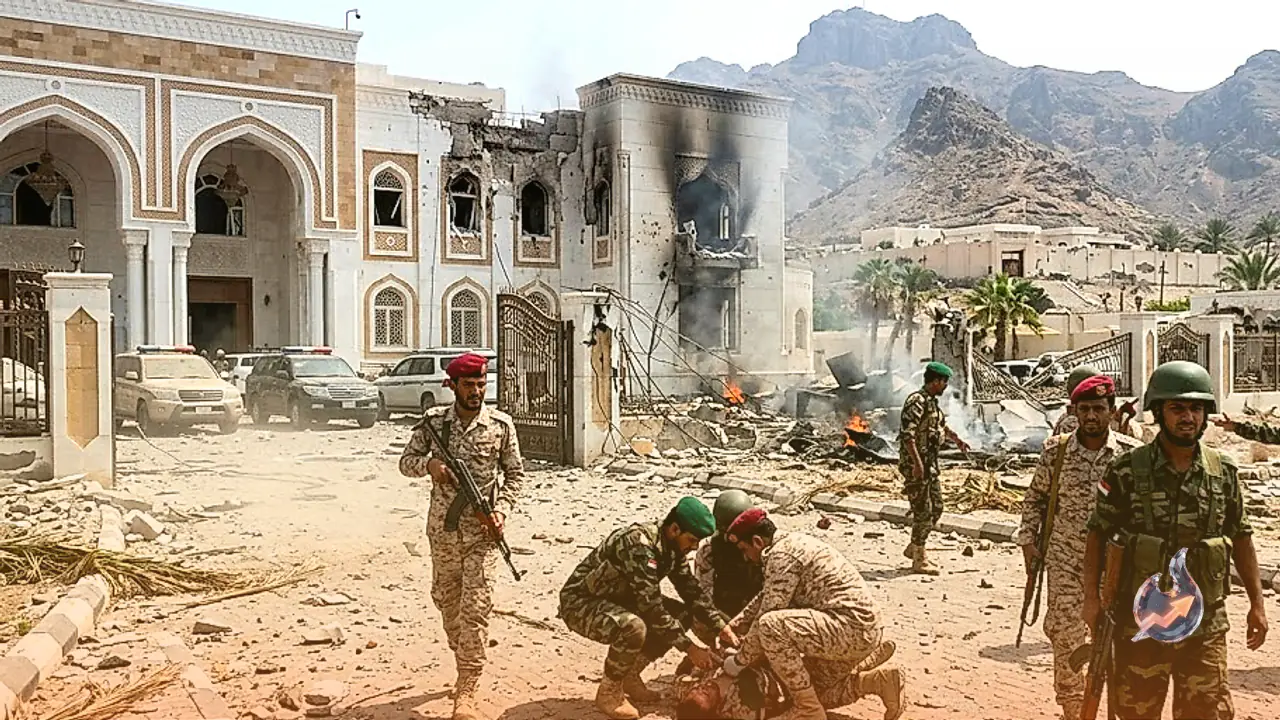
The latest barrage of strikes hit major economic and transport hubs inside Saudi Arabia, chief among them King Khalid International Airport in the capital city of Riyadh, the corporate headquarters of state petroleum giant Aramco, as well as multiple other aviation, petrochemical, and military facilities. Rayed Krimly confirmed that at least 19 individuals, including foreign nationals, lost their lives in the course of these assaults. Senior Saudi officials have openly characterized these fatalities as war crimes committed against non-combatants and critical infrastructure. Underscoring the intensity of the offensive, a spokesperson for the Saudi-led military coalition revealed that King Khalid International Airport alone was subjected to 20 separate Houthi attacks over the course of this single month.
This sharp military escalation has laid bare the persistent tactical difficulties Saudi Arabia encounters when attempting to intercept and neutralize incoming projectiles launched from adjacent Yemeni territory. Beyond the immediate physical destruction, the crisis has applied substantial pressure to international financial and commodity markets, where institutional traders are closely monitoring escalating perils along vital global maritime and energy routes. Krimly explained that these worsening threats have reinforced Saudi Arabia's diplomatic overtures to long-standing partners, including the United States, for reinforced defensive and military assistance. These latest strikes are unfolding against the backdrop of an expansive, multi-front confrontation involving Iranian influence across the wider region.
Derailed Oman Peace Talks and Territorial Gains along the Red Sea
In his briefing, Rayed Krimly disclosed that Saudi Arabia had actively sought to defuse the escalating crisis by initiating direct diplomatic engagements with the Houthis in Oman. Saudi diplomatic officials noted that an invitation had been extended several weeks prior, structured around a constructive agenda to resolve outstanding grievances and bring a permanent halt to cross-border hostilities. Nevertheless, the Houthi leadership chose to reject the proposed summit outright. In the immediate aftermath of this diplomatic refusal, the insurgent faction launched an aggressive military push along Yemen's critical Red Sea coastal perimeter.
This decisive operational advance allowed the Houthis to seize control of valuable strategic ground adjacent to the Bab el-Mandeb Strait, a vital chokepoint for international commercial shipping that functions as the primary alternative conduit to the Strait of Hormuz. In direct response to the insurgent advance, the Saudi-led coalition initiated a massive counter-offensive earlier this month inside Yemen, aiming to roll back rebel positions and regain sovereignty over the captured territory. The renewed fighting has severely strained diplomatic equilibrium between Saudi Arabia and Iran, creating sharp friction even after both nations took steps to restore formal relations under high-profile bilateral frameworks.
Beijing Agreement Breaches and Arming of Militias
Rayed Krimly voiced sharp skepticism regarding Tehran's strategic intentions, asserting that the escalation by the Houthis at this later stage of the conflict is directly encouraged by Iran. He argued that Iranian authorities continue to supply the Houthi militia with lethal hardware, tactical training, and continuous logistical backing. According to the Saudi deputy minister, these activities represent an unambiguous violation of multiple United Nations Security Council resolutions. Furthermore, he noted that they contradict the core commitments undertaken by Iran under the landmark Beijing agreement, which had facilitated the restoration of diplomatic relations between Riyadh and Tehran following seven years of severed ties.
Addressing regional diplomacy, Krimly clarified that Riyadh has never solicited Iranian mediation, despite repeated statements from Tehran professing support for diplomatic dialogue. He emphasized that the kingdom maintains its own direct lines of communication with the Houthis, explaining that Oman serves purely as a facilitator of these exchanges rather than an arbitrator. Concurrently, Saudi authorities continue to preserve bilateral communication channels directly with Tehran. During the recent period of intense airport bombardment, the foreign ministers of both Saudi Arabia and Iran held at least one direct telephone conference to discuss the emerging crisis.
Deadlocked Nuclear Talks and Maritime Transit Negotiations
Turning to the overarching geopolitical conflict involving Iran, Rayed Krimly confirmed that Saudi Arabia remains supportive of mediation channels coordinated by Qatar and Pakistan, which are designed to keep vital communications active between Washington and Tehran. He explained that these intermediaries have been focusing on two critical bargaining tracks. The first track seeks to establish reliable protocols for safe commercial passage through the Strait of Hormuz, in direct exchange for the dismantling of the comprehensive US naval blockade that restricts Iranian coastal ports and blocks its petroleum exports.
The second pillar of negotiation involves formulating a structured, transparent framework for comprehensive discussions regarding Iran's controversial nuclear development program. However, Krimly expressed deep frustration with what he described as deliberate Iranian procrastination during these multi-party negotiations. He observed that on both fronts, the Iranian delegation takes an exceptionally long time to deliver substantive counterproposals to the diplomatic mediators, and that the materials they eventually present fall far short of minimum requirements for progress.
Krimly detailed how Iranian negotiators frequently pivot toward proposing temporary, stopgap measures concerning the Strait of Hormuz, only to demand secondary provisional terms on tangential matters. This repetitive cycle, he noted, consumes weeks and months in fruitless diplomatic exchanges. He concluded that Tehran appears fundamentally unwilling or unable to forge the internal consensus necessary to agree upon durable compromises that could unlock a lasting, peaceful settlement. Iranian government representatives did not immediately issue public responses to requests for comment regarding these accusations.
Suspected Foreign Components and Regional Defense Pacts
Beyond regional actors, Rayed Krimly raised concerns regarding indirect external assistance, remarking that Saudi Arabia believes both China and Russia have connections to the logistical and technical backing flowing to Iran and the Houthis. While stopping short of outlining exhaustive technical proof, Krimly remarked that elements of Iranian and Houthi military capabilities, as well as operational intelligence, trace back to entities inside Russia or China, including commercial channels. He stressed that Saudi Arabia discusses these security concerns on a regular and ongoing basis with both Beijing and Moscow, and intends to maintain that frank dialogue.
These warnings follow separate investigative findings published this week indicating that Houthi forces are actively attempting to assemble an advanced medium-range ballistic missile system utilizing components sourced from China. Throughout this turbulence, Krimly noted that Saudi Arabia continues to coordinate closely with fellow member nations of the Gulf Cooperation Council, including the United Arab Emirates. While the UAE was originally an indispensable operational partner in the Saudi-led coalition in Yemen, it formally withdrew its active participation several months ago following policy disagreements.
Concluding his remarks, the Saudi deputy minister pointed to the recent mutual defense pact signed by the kingdom alongside Pakistan and Turkey. Krimly refrained from outlining the exact military or operational commitments those partner nations might deploy should cross-border attacks persist. The kingdom's public stance signals a dual-track strategy: thoroughly re-evaluating defensive contingencies against aerial threats emerging from Yemen, while simultaneously maintaining strategic diplomatic communication with Tehran and neighboring regional states.