























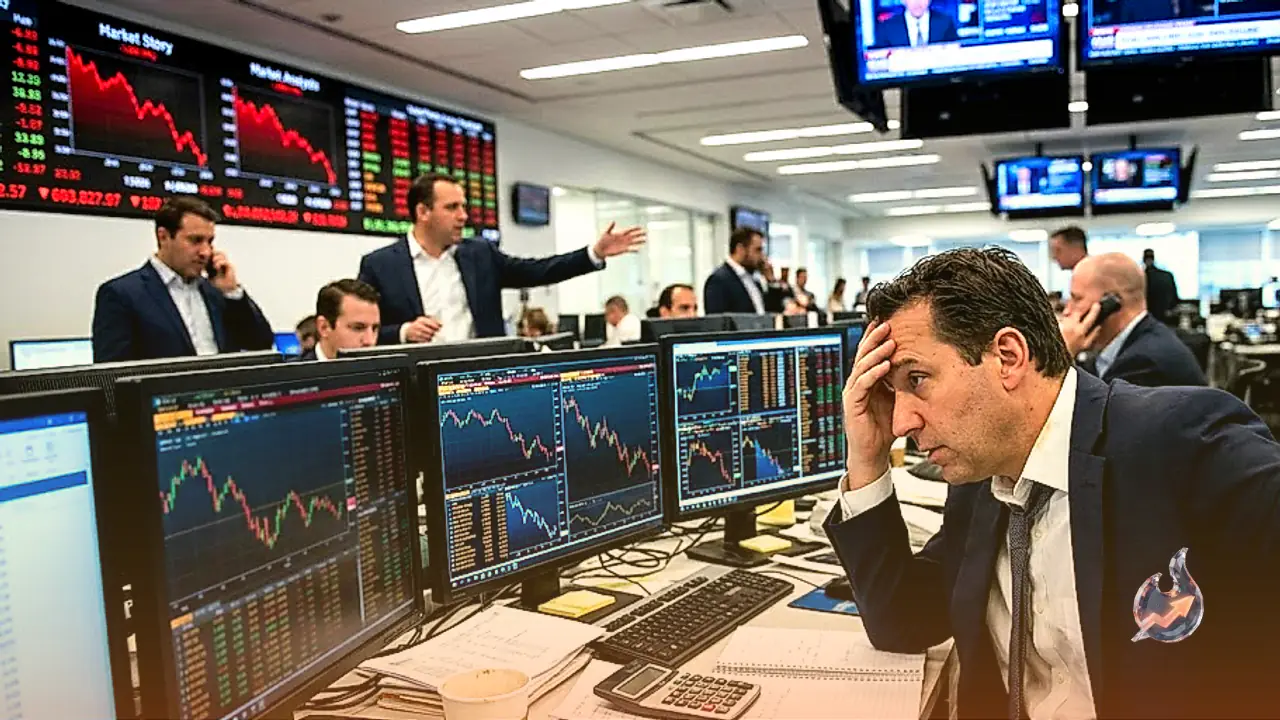

Precious metals continue to navigate a phase of heightened volatility and downward price adjustments across domestic and overseas exchanges. Both gold and silver have experienced steady declines throughout the current month, prompting investors, jewelers, and market participants to reassess their short-term positioning. The broader weakness in bullion stems from a complex interplay of macroeconomic developments, notably the persistent inflation readings in major economies, the lingering prospect of tight central bank policies, and shifting foreign exchange dynamics that directly impact bullion valuation in regional markets.
Current Retail Prices for Gold and Silver
In physical retail counters, spot quotations across various purities reflect the recent cooling in prices. For the highest purity tier, 24-carat gold stands at Rs 1,47,660 per 10 grams. Wholesale and bulk transactions peg the value of 100 grams of 24-carat gold at Rs 14,76,600. For intermediate retail quantities, an 8-gram sovereign unit trades at Rs 1,18,128, while a single gram is valued at Rs 14,766.
The standard benchmark for traditional jewelry fabrication, 22-carat gold, commands a price of Rs 1,35,350 per 10 grams. Those purchasing 100 grams of this category must disburse Rs 13,53,500. Smaller denominations within the 22-carat bracket see 8 grams quoted at Rs 1,08,280, alongside an individual gram rate of Rs 13,535.
For consumers seeking accessible luxury and lightweight modern ornaments, 18-carat gold offers an entry point. The rate for 10 grams of 18-carat gold is positioned at Rs 1,10,740. A larger allocation of 100 grams requires Rs 11,07,400. In terms of smaller fractions, an 8-gram weight is listed at Rs 88,592, and the base price for 1 gram stands at Rs 11,074.
Physical silver quotations have similarly aligned with the prevailing downward adjustments. In the domestic physical space, 1 kilogram of silver is priced at Rs 2.30 lakh. For retail denominations, 100 grams of silver stands at Rs 23,000, while 10 grams trades at Rs 2,300. The smaller standard retail weights of 8 grams and 1 gram are priced at Rs 1,840 and Rs 230 respectively.
Gold Silver Ratio Expands Amid Industrial Metal Lag
Performance metrics reveal that both metals have struggled since the start of October, with gold declining by more than 1 percent and silver tumbling by over 2 percent. According to Ponmudi R, chief executive officer of Enrich Money, precious metals faced persistent headwinds as firmer inflation readings and widespread anticipation of additional monetary tightening curtailed the appeal of non-yielding assets. While Federal Reserve Chair Kevin Warsh communicated confidence in the underlying strength of the United States economy, his commentary provided minimal visibility regarding the trajectory of future policy decisions.
Market participants have continued to discount a considerable probability of a policy rate hike materializing in December. This heightened expectation has rendered bullion assets exceptionally vulnerable to fluctuations in United States Treasury yields and the broad movement of the dollar index. Silver experienced particularly acute underperformance relative to its yellow peer, sliding down toward the $57 to $58 per ounce corridor and representing an outright retrenchment of approximately 6 percent.
Ponmudi highlighted that this relative underperformance caused the gold-silver ratio to widen to approximately 72. Silver remains uniquely sensitive not only to changes in real yields but also to moderating global growth expectations and softer industrial demand profiles, which collectively explain its steeper losses during the recent selloff.
Weekly Closes Across Futures and Spot Bourses
On commodity derivatives bourses, domestic futures mirrored the softer global undertone. The MCX gold contract concluded the preceding trading week near the Rs 1.48 lakh milestone. Simultaneously, the MCX silver contract settled at Rs 2,11,418 per kilogram, reflecting localized inventory adjustments alongside overseas cues.
Within the international spot arena, gold weakened to hover near $4,166 per ounce, failing to maintain upward momentum. Concurrently, spot silver remained pinned below the critical benchmark of $57 per ounce. The lack of fresh buying appetite across major trading hubs highlights the prevailing caution among institutional bullion desks.
Monetary Policy Trajectory and Currency Pressures
Traders and money managers remain deeply focused on deciphering the Federal Reserve's policy roadmap. A string of better-than-expected economic indicators from the United States has reinforced market sentiment that interest rates could stay elevated or climb further before year-end. Figures compiled by Trading Economics indicate that derivatives markets are currently pricing a 72 percent likelihood that the Federal Reserve will maintain interest rates at their existing range during the current month. Conversely, the probability of a rate hike taking place in December has surged to 92 percent.
Ponmudi pointed out that the directional trend for gold during the week spanning October 19 to October 23 will primarily rest on whether robust demand for fixed-income paper can keep Treasury yields and the greenback suppressed. Should bond yields ease, gold could find temporary footing. However, if elevated consumer price index prints and rate hike bets continue to gather steam, fresh bouts of liquidation may emerge. Speeches scheduled by Fed Chair Kevin Warsh toward the end of the trading week are poised to be scrutinized for guidance on monetary policy settings.
At the local level, currency intervention played a direct role in softening domestic metal rates. Sustained interventions by the Reserve Bank of India to limit dollar demand supported a steady appreciation in the Indian rupee over five consecutive sessions. This pushed the USD/INR currency exchange rate toward the Rs 95 boundary. Because a firmer domestic currency reduces the landed cost of dollar-denominated imports, it exacerbated the weakness in local metal prices, causing domestic gold to record its fourth consecutive daily decline.
Technical Outlook for MCX and Spot Gold
Examining the technical structure for MCX gold, Ponmudi outlined immediate resistance in the band between Rs 1,48,000 and Rs 1,48,600, with a secondary resistance ceiling positioned between Rs 1,50,000 and Rs 1,50,700. Only a sustained breakout above this upper threshold would restore positive upward momentum. On the downside, critical support is clustered between Rs 1,45,300 and Rs 1,46,000. A violation below this safety net could trigger further declines toward Rs 1,43,000 to Rs 1,43,700.
The weekly candlestick chart for MCX gold formed a long lower shadow, indicating emergent buying support around the Rs 1,45,500 mark. Nevertheless, with the Relative Strength Index languishing below the 50 mark and the Moving Average Convergence Divergence indicator holding in negative territory, the structural bias remains defensive. A definitive move past Rs 1,50,700 remains mandatory to signal a sustainable turnaround.
In the spot gold market, immediate overhead resistance is positioned at $4,200, followed by a secondary zone spanning $4,270 to $4,300. A decisive push above these markers is required to spark renewed speculative buying. Immediate floor support lies at $4,170, and a failure to hold this level could expose prices to downside risks near $4,070 to $4,100. Spot gold has spent multiple weeks confined inside a tight corridor of $4,100 to $4,240, where an RSI near 43 and a flattened MACD illustrate market hesitation rather than an established directional trend.
Technical Roadmap for MCX and Spot Silver
For MCX silver, technical hurdles are concentrated at Rs 2,14,000 to Rs 2,15,000, followed by a stronger resistance barrier between Rs 2,19,000 and Rs 2,20,000. Bulls must reclaim these zones to neutralize current bearish sentiment. On the lower end, initial support is pegged at Rs 2,07,000 to Rs 2,08,000. Should selling pressure overwhelm this tier, downside projections point toward the Rs 2,00,000 to Rs 2,02,000 zone.
Daily charts for domestic silver capture a sharp single-day breakdown recorded on Wednesday. With the RSI hovering around 32, the contract is nearing oversold territory, while the MACD expands deeper into negative parameters. Combined with rupee resilience and subdued physical off-take, the technical posture remains fragile, though oversold dynamics might produce temporary consolidation around key supports.
On global charts, spot silver confronts immediate resistance at $57.50, followed by a broader barrier at $59.50 to $60.00. The metal needs to cross these zones to restore intermediate market stability. Downside support is located at $57.00, below which price discovery could slide toward $55.00 to $55.50 and eventually $53.50 to $54.00. While the weekly candle reflects heavy selling pressure via a wide bearish real body, the presence of a lower shadow alongside an RSI reading between 36 and 40 near oversold parameters suggests that a brief technical rebound cannot be ruled out despite overarching negative momentum.