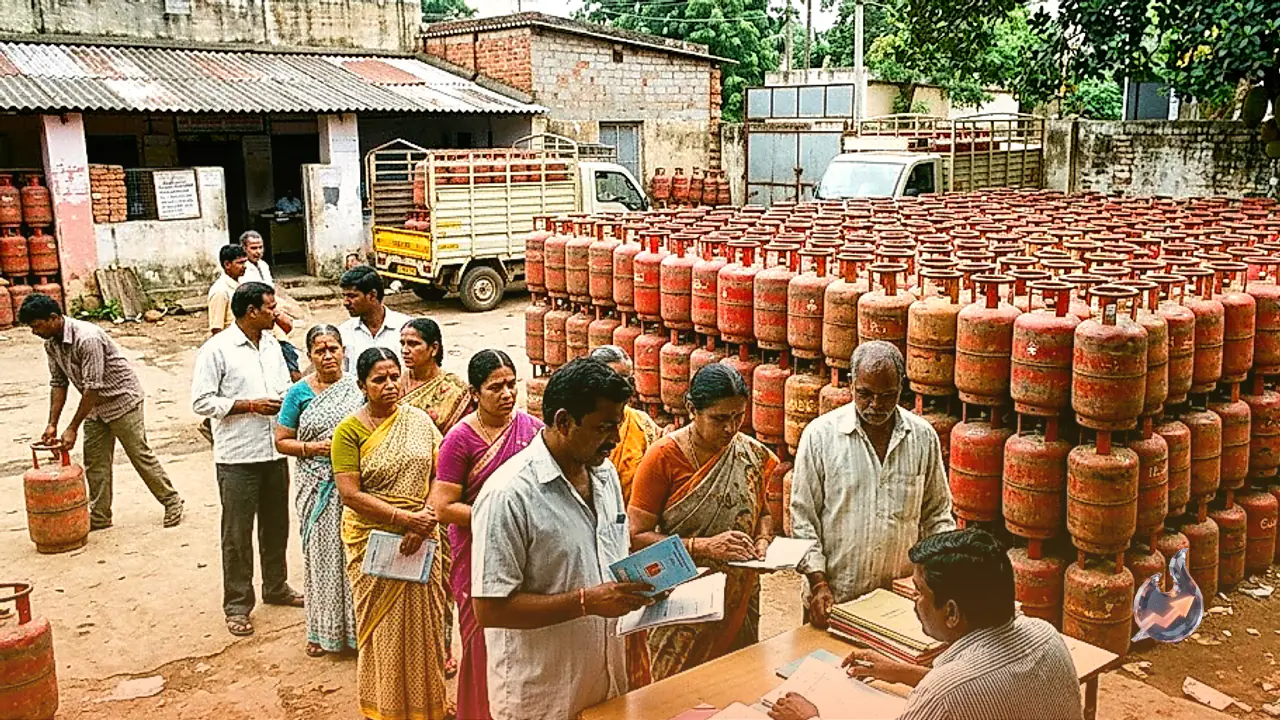
















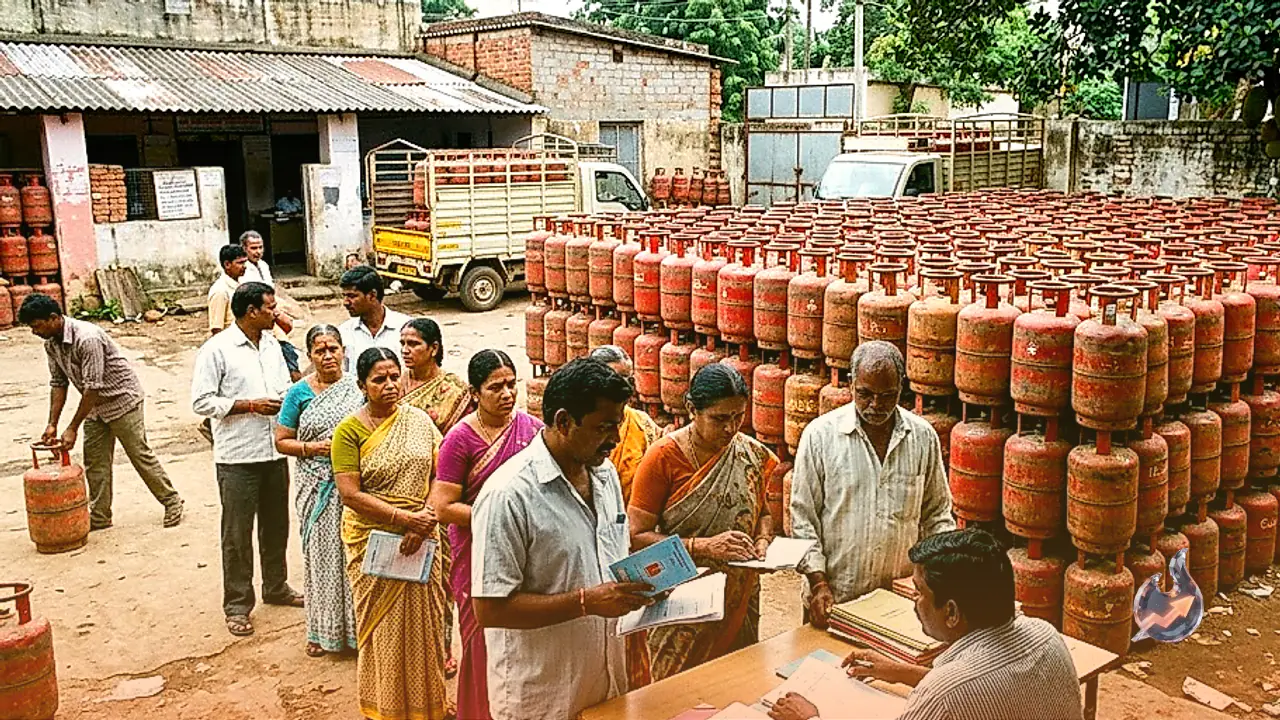

Across urban centers in Karnataka, tens of thousands of households are facing prolonged delays in securing standard domestic cooking gas cylinders. High rates of population growth, rapid urban expansion, and the constant influx of residents into newly created suburban colonies have generated a continuous surge in demand for clean fuel. Despite this urgent requirement, approximately 36,000 applications for new domestic LPG cylinder connections remain stuck across state distributors. The administrative suspension of new connection approvals over recent months has left working families, migrants, and lower income groups in cities like Bengaluru and Mysuru with limited immediate choices for their daily kitchen needs.
The mounting backlog affects newly established residential clusters, where modern pipeline infrastructure is still under construction and families rely entirely on bottled gas. Taking note of this worsening distribution bottleneck, Arshad addressed a formal communication to Union Minister Puri, emphasizing that rapid demographic shifts and urbanization in Karnataka have created an unprecedented requirement for household fuel. The communication pointed out that economically vulnerable households, migrant laborers, and low income workers represent the largest share of applicants waiting for domestic connections, leaving them exposed to severe household disruptions.
West Asia War and the Strait of Hormuz Supply Chokepoint
The origin of the current restriction traces back directly to global geopolitical conflicts that flared up in late February in West Asia. The escalation disrupted maritime fuel transport across the Strait of Hormuz, an indispensable international shipping artery through which approximately 20 percent of the world's commercial petroleum and gas volumes transit. Tanker movements and international supply agreements suffered severe logistics hurdles, prompting authorities to take defensive inventory measures to protect existing domestic consumers against severe product shortfalls.
To maintain continuity of supply for existing users and avert severe fuel shortages, authorities implemented an administrative freeze on approving new 14.2 kg domestic LPG connections. As a result of these restrictions, state oil marketing companies including Indian Oil, HPCL, and BPCL have kept fresh booking registrations closed. Standard domestic connections for 14.2 kg Indane Gas, HP Gas, and Bharat Gas have effectively ceased being issued since March 2026. While prospective consumers continue to submit applications online and at local agencies, the distribution network remains unable to clear the backlog until central directives are relaxed.
Ramping Up Domestic Refinery Volumes
In response to maritime transit obstacles, domestic energy producers have aggressively expanded their internal processing runs. Refineries across India have raised their liquefied petroleum gas output to an average rate of 44,000 tons per day. This performance represents an increase of nearly 20 percent compared to the daily average production recorded in August. However, this production push has primarily served to stabilize existing refill networks, leaving the resolution of Karnataka's 36,000 pending requests hanging in the balance until policy clarity emerges.
The ongoing pause has raised serious health and safety concerns. In his letter, Arshad expressed alarm that the prolonged unavailability of clean cooking gas could force vulnerable families to revert to primitive fuel alternatives. The return to firewood, kerosene, and charcoal carries grave social consequences: it drastically increases the daily domestic workload of women, generates severe indoor smoke pollution, and multiplies the incidence of respiratory illness. Additionally, open fire cooking in cramped, semi-urban tenements substantially raises the threat of domestic burns and accidental house fires.
Black Market Exploitation and Price Disparities
Prolonged restrictions on standard domestic connections have also raised fears of illegal trading and market exploitation. When legitimate distribution routes remain inaccessible, vulnerable consumers are often targeted by black-market operators selling fuel at inflated prices. For migrant laborers, contract workers, and daily wage earners residing on the fringes of Bengaluru, navigating bureaucratic hurdles without permanent local address documents makes obtaining clean fuel an uphill struggle.
Furthermore, standard economic disparities intensify the burden on families. Purchasing 5 kg mini cylinders on the commercial retail market results in a much higher cost per kilogram than obtaining standard subsidized or non-subsidized 14.2 kg domestic cylinders. Over the course of several months, relying entirely on smaller commercial bottles significantly drives up kitchen expenses, placing an unsustainable strain on the limited finances of middle class and economically weaker households.
Market Alternatives: The 5 kg Free Trade LPG Cylinders
Given the complete freeze on conventional 14.2 kg domestic connections, public oil marketing firms have highlighted the availability of 5 kg mini cylinders, commonly referred to as Chhotu cylinders, across retail networks. Distributed under the brand names Indane Chhotu, Bharat Gas Mini, and HP Gas Appu, these compact units can be purchased directly from authorized LPG distribution points. They are specifically configured to cater to mobile populations, including students, migrant workers, and families living in rented quarters without local identification papers.
- Zero Documentation Required: Because these 5 kg units belong to the Free Trade LPG category, consumers are exempt from producing local residence proofs or permanent documentation.
- Freedom from Identity Hurdles: Purchasers do not need to submit copies of their Aadhaar card, PAN card, or voter identification documents to make a counter purchase.
- No Upfront Security Deposits: Consumers bypass the heavy deposit amounts typically charged when establishing a standard domestic gas account.
- Immediate Refill Availability: The 5 kg Free Trade LPG cylinder can be refilled an unlimited number of times throughout the year, with counter exchanges typically completed in under 10 minutes.
Composite 10 kg Cylinders and Quick Delivery Apps
To provide modern alternatives with higher capacity, oil marketing companies have simultaneously expanded the availability of 10 kg smart composite cylinders, linking their availability with rapid delivery networks such as Swiggy Instamart. Indian Oil launched Indane XTRALITE NOW, a lightweight composite container that operates as a Free Trade LPG offering without standard domestic subsidies.
Similarly, HPCL introduced HP Navya across more than 100 cities nationwide to serve consumers who require manageable fuel containers. BPCL also markets Bharatgas Lite ZIP, an offering tailored for urban customers who value convenience, speed, and modern retail service standards. These composite cylinders feature translucent walls that allow users to visually inspect remaining gas levels, eliminating the uncertainty and heavy lifting associated with legacy steel bottles.
Navigating the Switch to Piped Natural Gas
In urban centers with expanding utility networks, transition to Piped Natural Gas represents the most permanent solution to bottled cylinder shortages. City gas distribution entities and oil marketing firms have been actively widening their underground pipeline reach across residential pockets.
- Assessing Local Feasibility: The foremost prerequisite for securing a piped supply is verifying that your residential building, apartment complex, or municipal layout has existing PNG pipeline infrastructure laid on the street.
- Submitting the Connection Request: If pipeline supply exists, prospective consumers can file an application online through the official portals of Indian Oil, HPCL, or BPCL, or approach their designated neighborhood LPG distributor to initiate the changeover.
- Surrendering the Cylinders: Securing a piped connection requires the formal surrender of existing LPG cylinders, along with payment of applicable installation and connection fees.
- Document Submission: Applicants must provide their original LPG subscription and transfer vouchers, consumer verification slips, security deposit receipts, and verified identity documents such as an Aadhaar card, passport, utility electricity bill, driving license, PAN card, or voter ID.
Until international supply corridors stabilize and oil marketing companies resume standard domestic approvals, expanding piped gas and mini cylinder networks remain the primary avenues to alleviate the severe fuel bottleneck across Karnataka.