




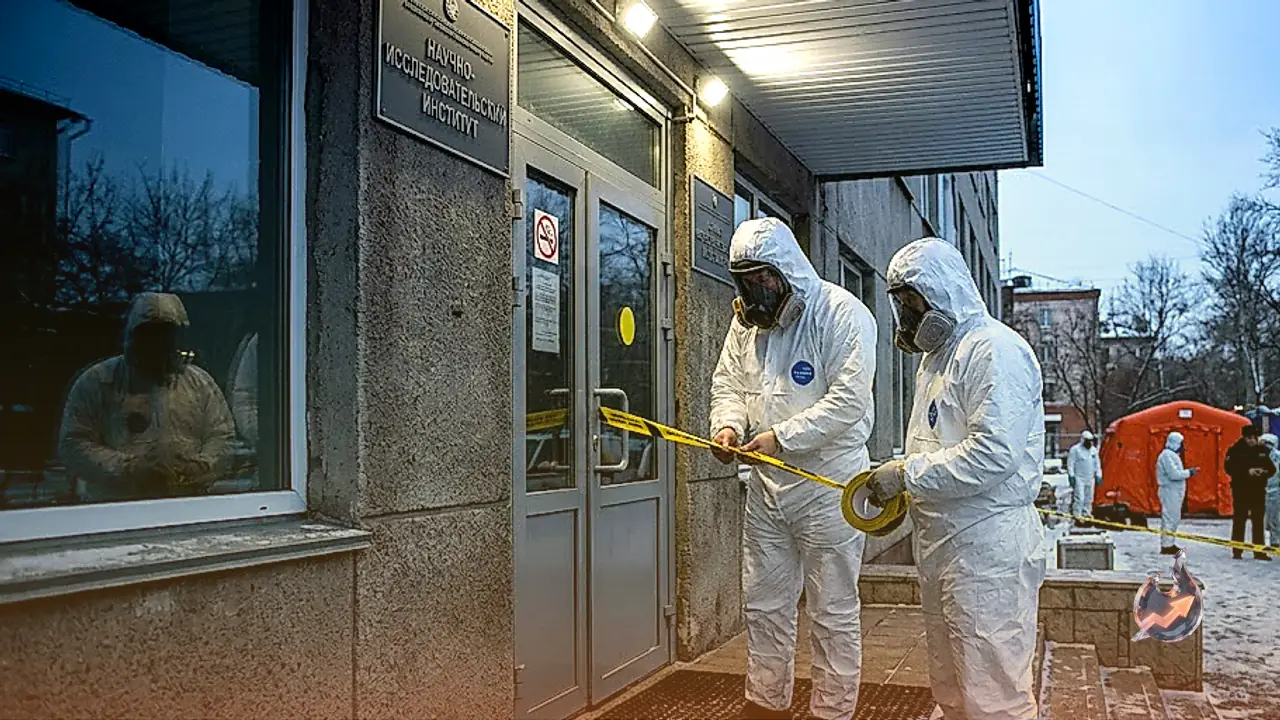



















Heightened biosecurity and public health monitoring have been triggered across international health channels following the death of a 28-year-old research technician in Irkutsk, located in Russia's Siberian region. The individual worked at a specialized anti-plague scientific facility, raising immediate concerns over potential exposure to deadly pathogens. While official bodies emphasize that no widespread community transmission has been verified, the perilous nature of pneumonic plague and reports involving laboratory contamination have prompted swift preventive protocols and watchful observation from officials in Washington, including the Trump administration.
Reported Containment Breach at Research Facility
According to accounts surrounding the development, Daria Shipilova, who served as a laboratory technician at the Irkutsk Anti-Plague Institute, fell critically ill after an incident on September 25. Reports indicate that a test tube holding pneumonic plague bacteria shattered during laboratory operations, potentially exposing her to the pathogen. Her physical condition deteriorated rapidly over the subsequent days, leading to her death on October 2. Because pneumonic plague represents the most lethal and communicable variant of the infection, the incident immediately prompted rigorous contact-tracing efforts across the Siberian territory.
Russian Public Health Agency Cites Unspecified Pneumonia
A notable divergence remains between circulating accounts of a laboratory accident and the formal statements released by domestic authorities. Rospotrebnadzor, the Russian government body overseeing consumer welfare and public health, stated that the deceased technician was diagnosed with pneumonia of unknown cause. Public health officials have withheld any formal confirmation attributing her death to plague. Furthermore, official laboratory findings indicated that diagnostic evaluations failed to identify any microorganisms tied to her specialized assignments at the research facility.
Precautionary Isolation and Clinical Protocols
Despite the lack of formal plague confirmation from domestic agencies, local authorities have moved aggressively to prevent potential transmission chains. Nearly 200 individuals identified as potential contacts of the technician have been placed in isolation or under close clinical observation. Concurrently, regional hospitals have instituted heightened operational protocols and isolation safeguards to intercept any developing respiratory symptoms early, ensuring that any potential secondary spread is identified immediately.
International Oversight and US Agency Review
The situation in Siberia is drawing close scrutiny outside Russia's borders. In Washington, an official within the Trump administration confirmed that federal agencies are fully briefed on the reports, actively tracking the situation, and reviewing available response options. The US State Department independently confirmed that it is tracking the suspected infection alongside the Centers for Disease Control and Prevention to evaluate any potential public health or biosafety ramifications.
Transmission Pathways and Clinical Variants of Yersinia Pestis
Plague is caused by the pathogenic bacterium Yersinia pestis, an organism typically hosted by small rodents and their dependent fleas. Humans generally contract the infection through vector bites, physical interaction with contaminated animal tissue, or, in the case of pulmonary manifestations, inhalation of respiratory droplets. Medical classification divides the illness into three primary presentations
- Bubonic plague: The most frequent clinical type, characterized by swollen, painful lymph nodes following an insect bite.
- Pneumonic plague: The most hazardous form, attacking lung tissue and capable of spreading directly between people through respiratory particles.
- Septicemic plague: Occurs when the pathogen multiplies within the bloodstream, causing systemic tissue damage and life-threatening complications.
The pneumonic iteration commands urgent attention because lung involvement enables airborne spread from person to person. Untreated cases can advance to fatal outcomes within a brief window, as noted by the World Health Organization. Nevertheless, contemporary medical protocols have altered survival outlooks considerably. If administered at the earliest onset of clinical symptoms, antibiotic regimens are exceptionally potent in neutralizing the infection. It is this balance of extreme virulence and therapeutic responsiveness that underpins the extensive containment actions in Siberia, despite the absence of proven community spread.
Pandemic History Versus Modern Outbreak Patterns
The bacterium Yersinia pestis has repeatedly altered human demographics over recorded history. The World Health Organization classifies three historic plague pandemics: the Plague of Justinian dating back to the sixth century, the devastating Black Death during the fourteenth century, and the third global pandemic originating in China in the late nineteenth century. The Black Death remains among the deadliest epidemiological catastrophes known, causing tens of millions of fatalities worldwide.
However, the global landscape has experienced a profound shift over the past 100 years, with no comparable worldwide plague pandemics taking place. Instead, recent history has been characterized by intermittent regional flare-ups and localized endemic activity. Madagascar, for instance, records plague cases nearly every year. A notable surge occurred there in 2017, generating more than 2,300 confirmed, probable, and suspected cases alongside upwards of 200 fatalities by November, with a heavy concentration of pneumonic cases.
Similarly, India experienced a significant outbreak scare in 1994 centered around Surat and Beed. Subsequent scientific evaluations, however, raised doubts regarding whether those infections stemmed definitively from Yersinia pestis, as the bacterium was not isolated during laboratory testing conducted at the time.
Current Status and Containment Outlook
At present, the event in Irkutsk stands as a suspected case under rigorous evaluation rather than the vanguard of a broader epidemic. Scientific attention remains focused on microbiological verification, ongoing contact monitoring, and validating whether the illness was directly caused by the laboratory incident. The development demonstrates that ancient microbial threats persist in specialized reservoirs, while simultaneously underscoring how modern diagnostic surveillance, rapid quarantine measures, and timely antimicrobial therapies prevent isolated exposures from escalating into global emergencies.