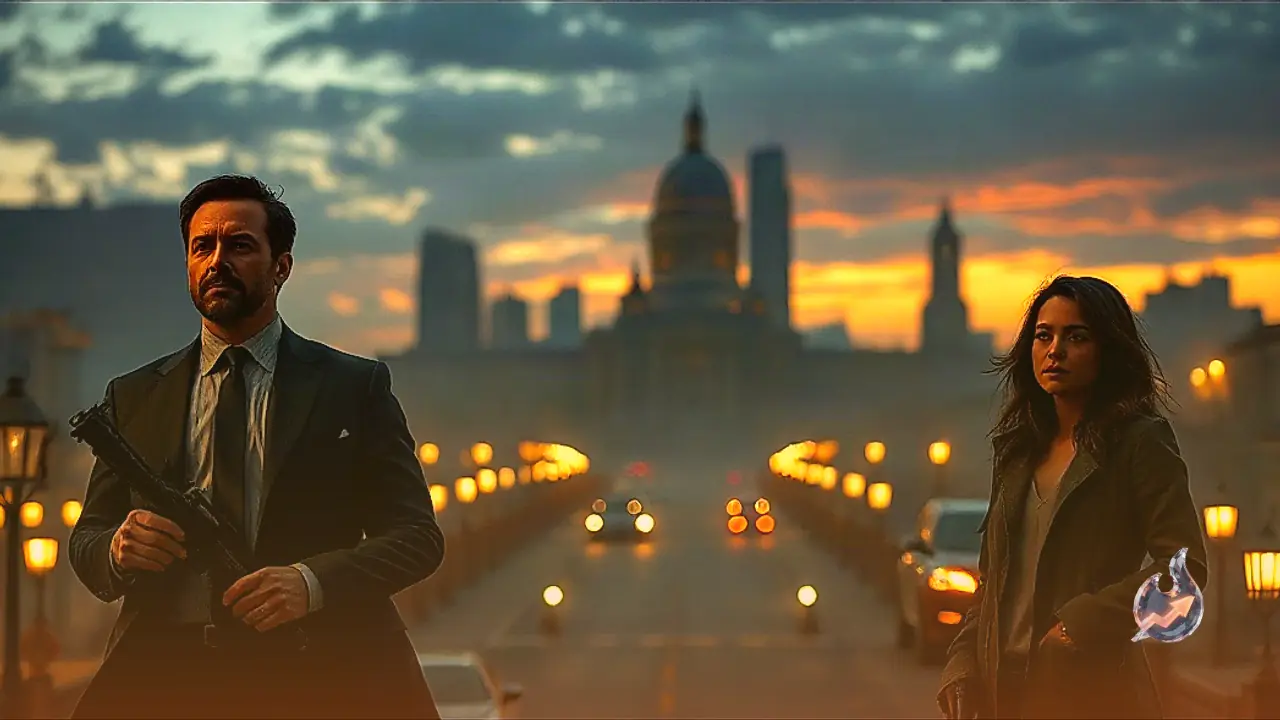























A closer look at this Daayra review reveals an ambitious courtroom and investigative drama that stumbles under the weight of its own narrative indecision. Directed by Meghna Gulzar, a filmmaker celebrated for handling difficult real-life subjects with acute sensitivity, the project tackles the deeply polarising 2019 Hyderabad encounter case. At its philosophical core, the film attempts to dissect the chasm dividing institutional justice from instant public retribution. However, what should have been a taut, morally challenging exploration of policing and public sentiment ends up feeling aimless, dragged down by an unfocused script and disjointed subplots.
The Core Conflict Between Heroism and Legality
The plot takes off from the horrifying reality of a brutal rape and murder investigation, confronting the darkness of the crime directly on paper through sombre visual staging. The narrative anchors itself to DCP Raman Kumar IPS, portrayed with understated intensity by Prithviraj Sukumaran. After fatally shooting the four suspects in an early morning encounter, Raman Kumar is instantly elevated to folk hero status by an impassioned public and a sensation-hungry media. In the collective mood of an impatient populace, he is the righteous protector who bypassed procedural delays to deliver absolute justice.
The procedural mechanism swings into motion following a wave of public interest litigation demanding accountability. The court tasks DCP Ajuni Kohli IPS, played by Kareena Kapoor Khan, with leading an impartial internal probe into whether Raman Kumar orchestrated a fabricated encounter and subverted the legal machinery. What starts as a sharp examination of summary justice soon begins to lose its footing. Instead of peeling back the complex ethical layers of the investigation, the story becomes entangled in repetitive debates, leaving viewers without a compelling emotional or thematic resolution.
Prithviraj Sukumaran Anchors While Kareena Kapoor Remains Sidelined
On the acting front, the film rests almost entirely upon Prithviraj Sukumaran. Moving past earlier underwhelming Hindi outings such as Naam Shabana, Bade Miyan Chote Miyan, and Sarzameen, Prithviraj demonstrates his formidable dramatic range in this outing. He inhabits the skin of a police officer wrestling internally with simmering rage, moral weariness, and creeping depression. His measured vocal delivery and subtle facial expressions convey the quiet turmoil of a public figure caught between societal applause and legal scrutiny.
Conversely, viewers expecting a substantial dynamic between the two leads will find Kareena Kapoor Khan drastically underutilised. Her screen time rarely transcends the boundaries of an extended cameo. Over the course of the entire runtime, she shares only a single major sequence with Prithviraj, which arrives right at the closing stages of the narrative. While Kareena delivers her lines with professional sincerity, the material gives her character so little agency and depth that virtually any performer could have stepped into the role. Relegating a marquee star to such peripheral duties stands out as one of the film's most glaring missteps.
Meghna Gulzar Strains to Recreate Narrative Tension
Meghna Gulzar, who previously demonstrated an exacting command over investigative tension in Talvar and delivered emotionally resonant storytelling in Raazi and Chhapaak, seems unable to find her directorial rhythm here. Social and legal friction of this nature was also recently explored by Anubhav Sinha in Assi. While Gulzar's thematic intentions are earnest, the execution overlooks the basic reality that even the most vital moral commentary falls flat without a tight, coherent storytelling framework.
In attempting to weigh the immediate catharsis of extrajudicial force against the tedious discipline of legal protocol, the movie forfeits its core thriller momentum. The pacing slackens frequently, lacking the cinematic edge and escalating stakes needed to keep an audience genuinely invested in the investigative outcome. Crucial narrative transitions feel abrupt rather than earned, preventing the drama from achieving the suffocating tension typical of top-tier procedural cinema.
Realistic Camera Framing Clashes With Flat Soundscapes
From a visual standpoint, the production adopts an appropriately stripped-down aesthetic to mirror the gravity of the subject matter. The camera work consciously rejects flashy transitions, high-contrast melodrama, or artificial flourishes. Bleak crime reconstruction zones, dimly lit precinct corridors, and the visible fatigue etched into the faces of the officers are captured with patient realism. Yet, crisp and grounded visual framing cannot compensate when the underlying writing lacks momentum.
A major shortcoming emerges in the sound design and background score, which are traditionally the heartbeat of any gripping thriller. The musical backdrop remains excessively quiet and sluggish throughout. Even during pivotal investigative confrontations where suspense should naturally peak, the score fails to inject the requisite atmospheric dread. In keeping with the sombre tone, the film avoids commercial song insertions entirely, a choice that makes thematic sense even as the ambient scoring fails to pick up the dramatic slack.
Overcrowded Subplots and the Final Verdict
The film's most damaging flaw lies in an overstuffed screenplay that insists on shoehorning multiple unrelated historical parallels. While the primary drama should have remained tightly locked onto the 2019 case, the script unnecessarily drags in narrative threads connected to the Nirbhaya case. These forced diversions split the narrative focus and dilute the central dilemma, leaving audiences disoriented. Had the makers pruned these redundant side journeys, the two-hour-plus runtime could have easily been sculpted into a lean, razor-sharp procedural.
For audiences seeking a truly visceral and unforgettable depiction of real-life criminal investigations, OTT productions like Delhi Crime remain the gold standard in modern Indian storytelling. Despite a powerhouse performance from Prithviraj Sukumaran and a laudable desire to question extrajudicial violence, Daayra falters due to a convoluted script, negligent character writing for Kareena Kapoor, and a lack of narrative drive. It settles as a frustratingly lukewarm effort, earning 1.5 stars out of 5.