






















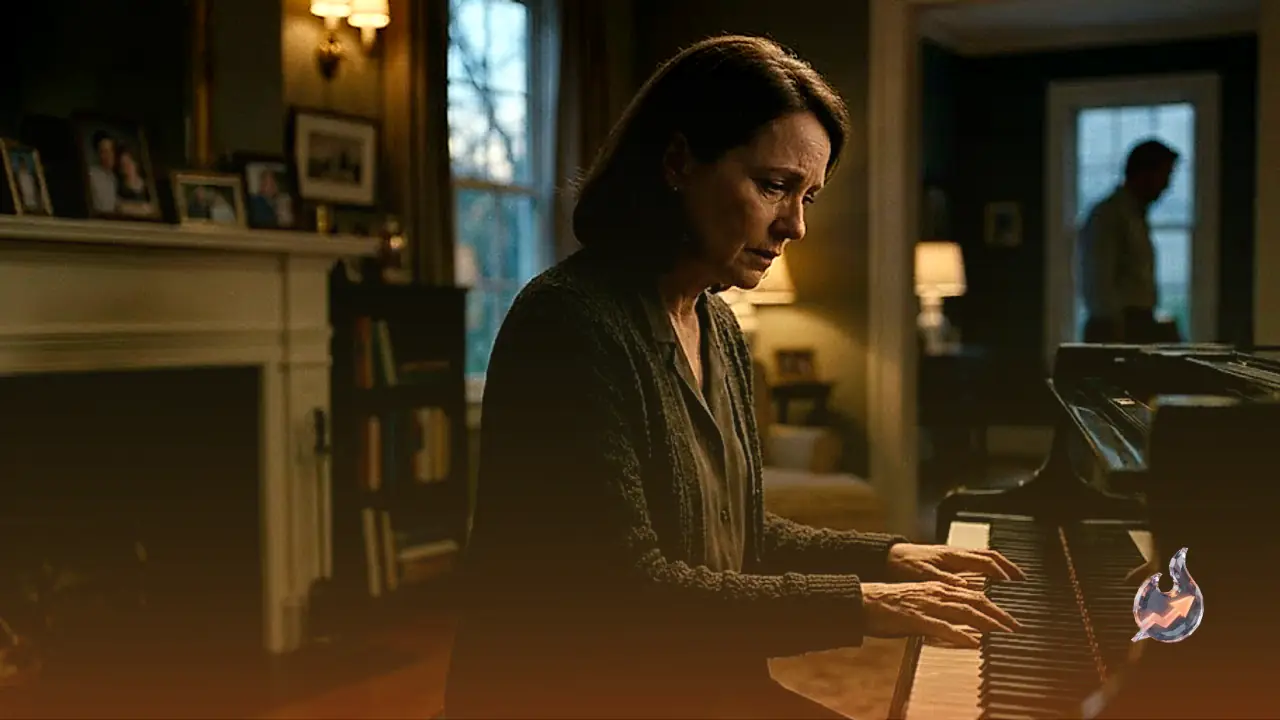

A striking portrait of sudden domestic devastation, this Gentle Monster review (2026) examines how quickly a secure life can dissolve into isolation and doubt. The drama opens inside a spacious rural residence near Munich, a place that initially seems to promise peace and stability for a young family. Here, Lea Seydoux plays Lucy, a soulful concert pianist who prepares a stripped-down rendition of the Charles & Eddie classic 'Would I Lie To You?'. Covering male-penned pop songs for sold-out audiences is central to her musical career, with The Cure's 'Boys Don't Cry' appearing later in the narrative. Yet these songs serve as subtle warnings of an agonizing betrayal waiting just around the corner.
The Sudden Collapse of an Idyllic Life
That fragile peace breaks violently when a special investigator named Elsa, portrayed by Jella Haase, arrives at the home accompanied by a dedicated investigative unit. They are investigating Lucy's husband, Philip (played by Laurence Rupp), over the suspected possession of child sexual-exploitation material. In an instant, the tranquil world Lucy built around her young son collapses into ruin. Deprived of certainty and safety, she is left entirely on her own to navigate the emotional debris of an unthinkable crime within her private sanctuary.
A Fractured Narrative and Dual Dilemmas
As the story unfolds, the focus divides between the central investigation and Elsa's troubled home life, which carries its own disturbing reality. Elsa lives under the same roof as her elderly father, a man who repeatedly harasses the family's live-in nurse. Observing Elsa's domestic dysfunction offers a parallel lens on predatory behavior, yet Elsa's insistence on keeping the nurse employed inside the home adds a murky moral layer to her personal judgment. While this subplot attempts to broaden the narrative commentary on male misconduct, shifting attention away from Lucy frequently dilutes the emotional momentum of the core crisis.
Seydoux's Compelling Performance and Direction
Whenever the story returns entirely to Lucy, Seydoux delivers a remarkably nuanced portrayal of a stunned woman trying to extricate herself from a catastrophic marriage. Writer-director Marie Kreutzer frequently holds the camera intimate and steady on Seydoux's distressed face, allowing waves of grief and shock to fill the screen as new facts emerge. Certain stylistic flourishes land heavily, such as the overt thematic resonance of Lucy's musical choices or a literal sequence placing her at a crossroads. Nevertheless, Seydoux anchors the production with raw vulnerability and panic. Haase offers steady support, though Elsa's shadowy perspective ultimately pulls focus from a harrowing ethical dilemma that offers no simple resolution.