




















A line spoken early in Danish director Nicolas Winding Refn's latest feature sets the stage for what is to come: a character worries about being seen as unrelatable. As explored in this Her Private Hell review (2026), that specific anxiety has clearly never troubled the auteur behind it. Across his career, relatable storytelling has rarely been the objective. His early Danish crime entries, such as Pusher and the volatile character study Bronson, thrived on unvarnished grit and grim energy. His breakout American feature, Drive, paired Ryan Gosling's quiet stoicism with bursts of uncompromising violence and ice-cold detachment. Since that creative peak, Refn has progressively retreated from mainstream narrative accessibility. From the grotesque fashion-world cannibalism of The Neon Demon to the surreal, unsettling rhythms of his streaming serial Copenhagen Cowboy, his work has consistently prioritized aesthetic isolation over emotional connection.
His latest outing, bearing the unabashedly self-important subtitle Her Private Hell By NWR, pushes that deliberate estrangement to its absolute breaking point. On the surface, the project operates as another metaphysical, psychosexual fairy tale soaked in lurid light. Yet rather than merely favoring style over substance, the film completely substitutes style for substance. More than any of the filmmaker's previous experiments, this production feels like the final dead end of a lifelong crusade to craft demanding, art-for-art's-sake cinema that refuses to abide by logic or narrative order.
A Hazy Metaphysical Nightmare in Neon Pink
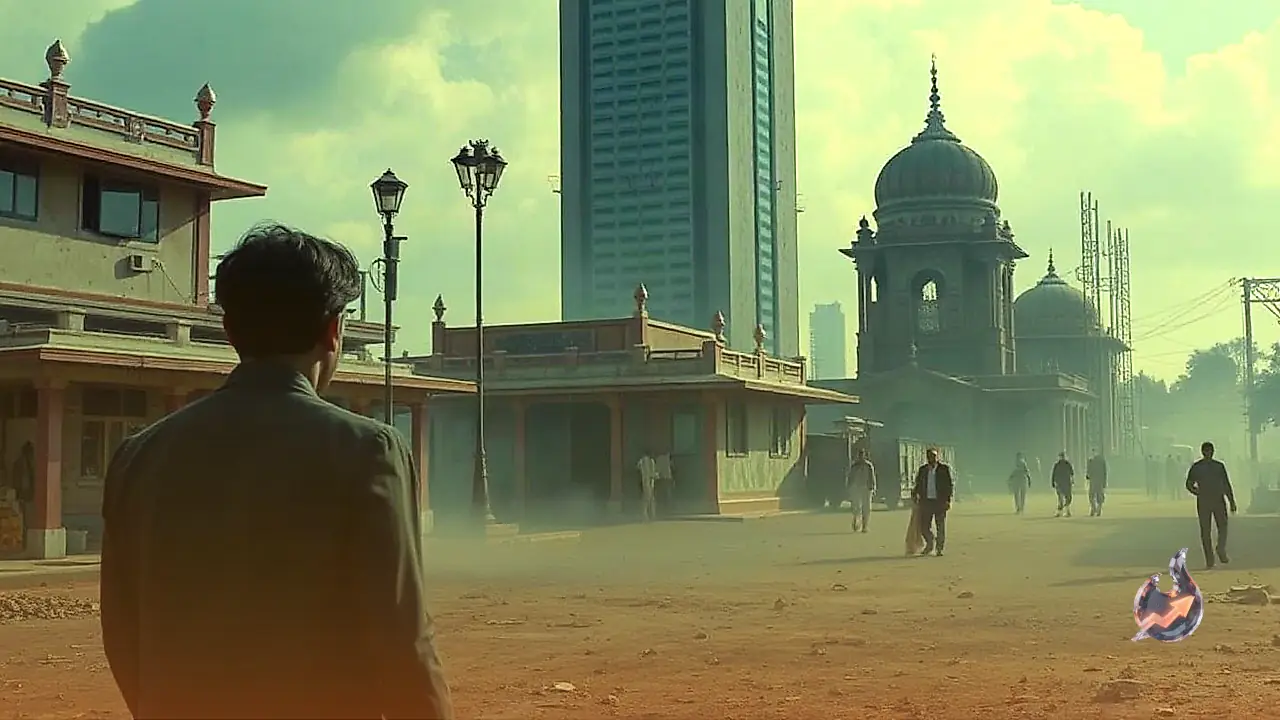
Echoing dynamics seen in both Drive and The Neon Demon, Refn once again places a fragile, melancholic young ingénue at the center of brutal emotional and physical ordeals. Stepping into that role is Gen-Z genre stalwart Sophie Thatcher, playing an actress named Elle. The story opens against the backdrop of an eerie, pink-tinged city cloaked in fog, instantly establishing the garish, saturated aesthetic of vintage Italian giallo cinema. Inside the sprawling lobby of a towering hotel, Elle crosses paths with an admirer named Hunter, portrayed by Kristine Froseth. Elle quickly brings her new acquaintance up to the lavish penthouse apartment of her icy, wicked stepmother, Dominique, played by Havana Rose Liu.
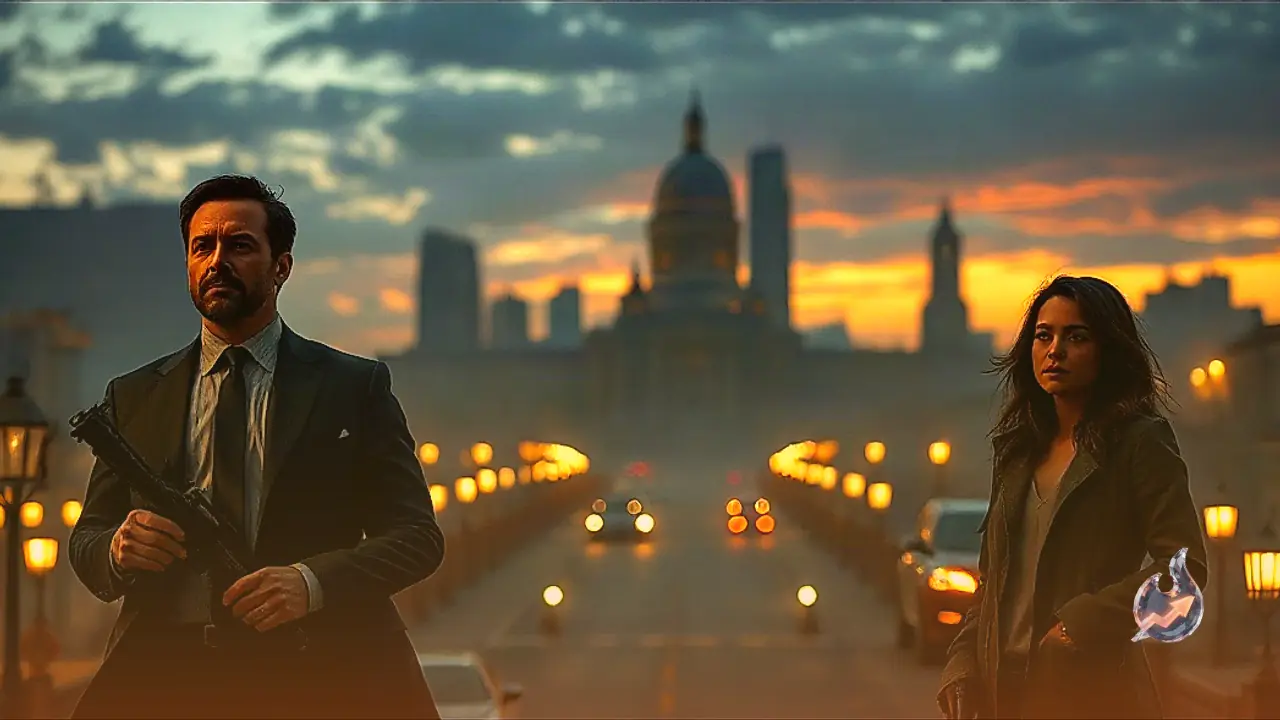
As the setting establishes itself, characters speak ominously of an evil mist rolling across the landscape, while rumors circulate about an otherworldly serial murderer known only as the Leatherman, an entity whose visage is described as an infinite abyss. Intersecting with these figures is Private K, an American soldier played by Charles Melton. Private K embodies the strong, brooding archetype, roaming the narrative on a solitary mission to avenge crimes committed against women. Even amid brutal, bone-crunching altercations, he somehow manages to keep his meticulously styled hair in pristine order.
Disjointed Allegory and Fractured Storylines
The film is not entirely devoid of narrative structure or thematic ambition. It constructs a hazy romantic triangle, weaves a graphic thread of retribution, and draws unmistakable inspiration from Hans Christian Andersen's grim tale The Darning Needle. A self-referential layer about the agony of filmmaking also runs underneath. Within the story, Elle is shooting an extravagant, highly stylized screen adaptation of an obscure science-fiction comic named Candy Floss, which resembles an over-designed, pretentious spin on Flash Gordon. At one point, a line explicitly equates movie production to going to war, suggesting that Refn is using the project to unpack his own creative neuroses.
Yet these disparate ideas never coalesce into a functioning whole. The storytelling choices drift into careless provocation and agonizing sluggishness rather than rewarding ambiguity. Creative threads are casually abandoned without payoff; Dougray Scott appears as Johnny Thunders amid portentous whispers, only to vanish almost immediately from the screen.
Aesthetic Glaze Over Human Characters
Far too frequently, the women inhabiting the frame are treated merely as mannequins meant to display elaborate wardrobes and pristine cosmetic styling. They are repeatedly arranged to pose directly into the lens, resembling models in an editorial spread rather than fleshed-out human beings driving a story. An unmistakable male gaze permeates the frames, superficially dressed up under the guise of female queer intimacy. Additionally, the camera indulges in a visual fetishization of Asian aesthetics, resurrecting a critique that previously dogged Refn during the release of Only God Forgives.
By the time the credits approach, it remains entirely ambiguous what core idea the director was attempting to explore. Is it an examination of cyclical trauma, a literalized fable of human degradation, or an abstract musing on mysterious atmospheric phenomena? The two-hour runtime drags so heavily that it feels twice as long, continually stumbling away from hypnotic art and settling firmly into unbearable tedium.
Immaculate Production Values Cannot Save an Empty Shell
The frustration is compounded by the fact that Refn remains a visual technician of the highest order, flanked by exceptional craftspeople. Gitte Malling provides monumental, ambitious production design, highlighted by an impressive modern deployment of miniature models. The sound design by Kristian Eidnes Andersen renders every creak of leather and snap of bone with shocking tactile clarity. Pino Donaggio contributes an expansive, operatic musical score that injects grandeur into the scenes, while cinematographer Magnus Nordenhof Jønck captures dazzling, ultra-saturated imagery that is impossible to look away from.
Yet all that remarkable technical mastery only emphasizes the profound emptiness at the center of the screen. Experiencing the movie feels very much like watching exquisitely crafted paint slowly dry on a wall. Calling the film a living hell would be an easy metaphor, but it would also be inaccurate: genuine hell would likely be far more entertaining than this.