
















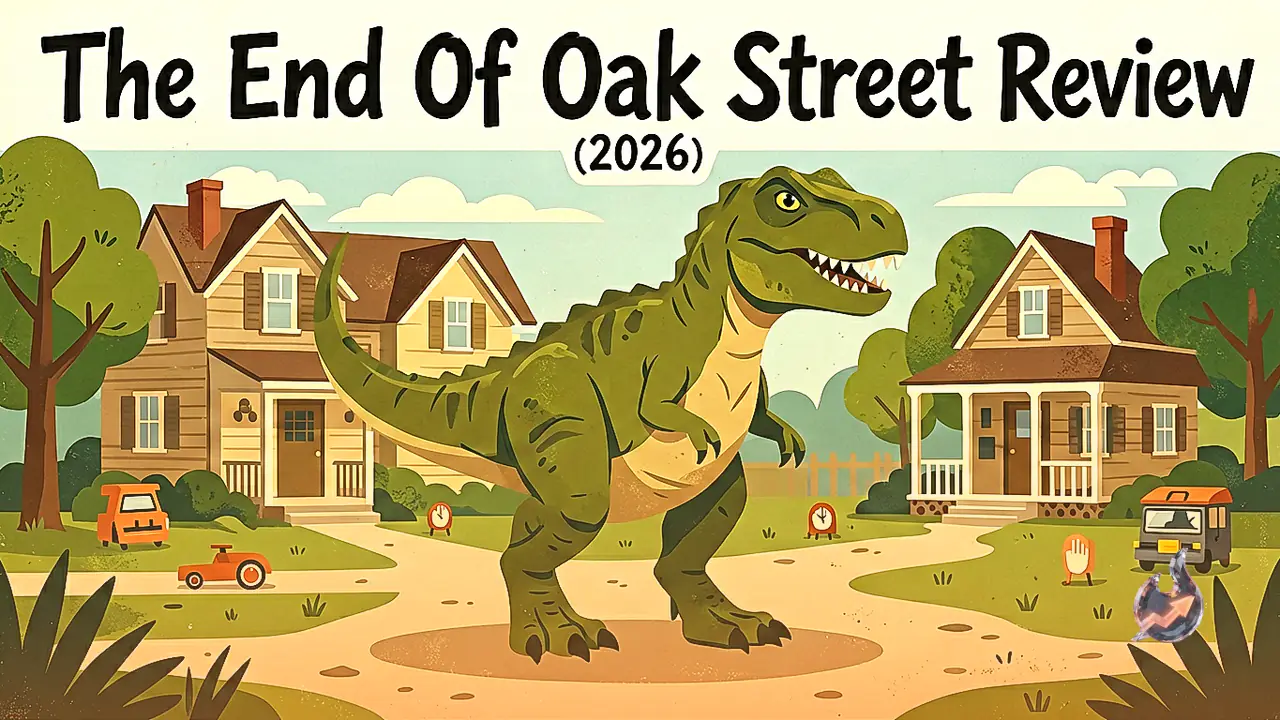

The End Of Oak Street review reveals filmmaker David Robert Mitchell stepping away from his indie roots to craft an ambitious, summer-blockbuster dinosaur adventure set in 1982. Mitchell's directorial path has been remarkably eclectic over the past decade and a half. He debuted with the quiet 2010 coming-of-age drama The Myth Of The American Sleepover, scored a massive indie success with the 2014 horror hit It Follows, and then surprised audiences in 2018 with Under The Silver Lake, an eccentric neo-noir mystery filled with bizarre visual touches like a nude owl-woman, a random skunk, a mysterious pirate, and a scene where Andrew Garfield shoves an egg into a child's mouth. Moving away from art-house surrealism, his newest venture fully embraces high-concept popcorn entertainment while retaining a strong cinematic identity.
A Suburban Family in Crisis
The story opens in 1982, depicting an idyllic-looking American suburb defined by perms, Polaroid cameras, white picket fences, and childhood playdates. At the center of the story is the Platt family, framed as a classic nuclear household and accompanied by a grand orchestral score composed by Michael Giacchino that echoes the classic musical style of John Williams. However, domestic peace is merely an illusion. The father, Greg, played by Ewan McGregor, has lost his job and turned to heavy drinking. The mother, Denise, portrayed by Anne Hathaway, is a deeply frustrated writer struggling with her creative ambitions. Their son Brian, played by Christian Convery, is secretly taking up smoking, while daughter Audrey, played by Maisy Stella, constantly worries about her parents' impending divorce while thoughtfully reciting quotes from astronomer Carl Sagan.
Time Warp and Feathered Dinosaurs
Personal domestic friction quickly gives way to existential terror when strange prehistoric plants spontaneously begin sprouting in the manicured front lawns of the neighborhood. Before the residents can process this botanical anomaly, the entire suburban neighborhood is mysteriously transported through time to a primeval era when giant dinosaurs roamed the landscape. In a welcome touch of scientific accuracy, these prehistoric creatures feature paleontologically correct feathers and fur rather than smooth reptilian skin.
Homage to Spielbergian Cinema
Audiences drawing parallels to classic creature features like Jurassic Park will find plenty of intentional echoes throughout the runtime. Mitchell openly channels the classic film grammar of Steven Spielberg, incorporating signature tropes like young kids riding bicycles across suburban streets, a fractured family unit forced to bond under extreme pressure, terrifying close encounters with mysterious glowing lights, and a towering T-Rex commanding top billing. There is even a nod to iconic creature-feature moments involving massive piles of dinosaur droppings. Crucially, the movie manages to deliver tenser and more suspenseful dinosaur set-pieces than many recent entries in the Jurassic franchise. Technical execution is handled with great craft, featuring deliberate visual framing and split-diopter shots reminiscent of 1970s and 1980s New Hollywood auteur cinema. Supported by high-quality CGI effects, the presentation authentically captures the look and atmosphere of a genuine 1980s period production.
Absurd Plot Choices and Emotional Core
The narrative does not shy away from outright absurdity. The film never attempts to explain the scientific mechanics or cause behind why the dinosaurs arrived or how the time portal operates, relying instead on viewers accepting the premise on its own playful, action-packed terms. Logical consistency occasionally breaks down, particularly when the Platt family engages in deeply irrational decisions, such as embarking on a near-suicidal rescue attempt for their pet dog, leaping off house roofs, or attempting to strike a massive T-Rex with a tiny household hammer. Nevertheless, these logical gaps are grounded by genuine, convincing character development. By exploring suburban anxiety through the chaotic backdrop of the Cretaceous period, the movie crafts an engaging balance of emotional heart and summer spectacle.