


















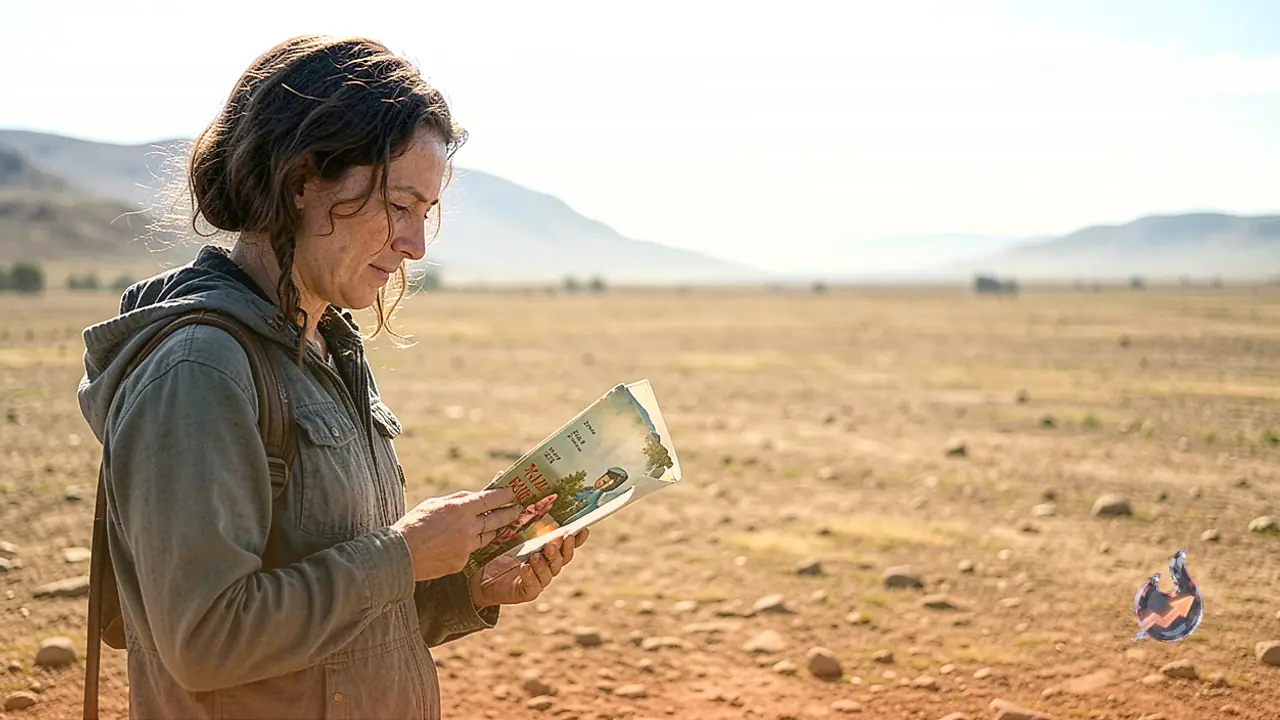

It feels like a peculiar moment to release a motion picture centered on an affable machine yearning for a human bond, given the widespread fatigue surrounding artificial intelligence. Yet this unusual narrative, adapted from a novel by Kazuo Ishiguro, speaks far more profoundly about humanity than about technology itself. While little within Taika Waititi's cinematic vision feels entirely groundbreaking, there is undeniable appeal in the quest undertaken by Jenna Ortega's Klara to comprehend human behavior and discover her rightful place in the universe.
From Retail Display to a Complex Household
Audiences are first introduced to Klara inside a retail establishment where she anxiously awaits purchase, petitioning the morning sun for the arrival of her designated human companion. After observing the external world through glass panels in an attempt to grasp affection, existence, and mortality, she finally secures a permanent residence alongside Josie, portrayed by Mia Tharia, and her mother Chrissie, played by Amy Adams. Within this new environment, however, Klara encounters genuine grief and discovers that her celestial appeals cannot mend every fracture.
Echoes of Melancholy and Dystopian Undertones
Josie's domestic circle is profoundly shaped by bereavement, a recurring motif across fictional explorations of sentient machinery and human loss. This melancholic undercurrent mirrors the thematic weight found in Kazuo Ishiguro's previous literary works, yet Klara's inherent innocence elevates the material closer to a traditional fable. Waititi's aesthetic choices construct a picturesque landscape surrounded by golden agricultural fields, evoking a storybook atmosphere, even if fleeting glimpses of a war-torn metropolis suggest a darker reality lingering just beyond the horizon.
Balancing Whimsy With Uneven Tone
The filmmaker, historically adept at chronicling the journeys of societal outsiders, manages to keep the narrative whimsical rather than overly sentimental as Klara strives to bring joy to Josie and her mother. Despite this steady hand, the overall rhythm of the production remains somewhat uneven. Broad comedic beats involving Josie's difficult peers sit alongside gentler moments of humor derived from Klara's observations, while deeper tragedies lurk beneath the surface until sudden flashes of intensity disrupt the gentle fable.