























A breakout entry that first drew notice at Sundance, Padraic McKinley's feature debut arrives as a deliberate throwback to the hard-bitten survival cinema of the 1970s, which forms the centerpiece of this 'The Weight review' (2026). Evoking the rugged outdoor grit seen in Robert Redford's Jeremiah Johnson or The Last Hard Men, the film sets its sights on an uncompromising struggle against nature. While the overall dramatic impact lands somewhat lighter than its solemn title implies, and the narrative frequently adheres to conventional genre tracks, the picture functions as a compelling showcase for the remarkable range of Ethan Hawke.
A Desperate Deal in Depression-Era Chains
The story introduces Murphy, an impoverished automotive mechanic sliding rapidly into destitution. Stripped of his livelihood and shelter, an altercation with law enforcement leads directly to a sentence at an unforgiving penal labour camp. Before departing, he leaves his young daughter Penny with a firm promise: “When I get out, I’m gonna come get you.” That single pledge keeps his spirits alive amidst the brutality of camp life. Four months later, Murphy finds himself chained among fellow convicts, swinging sledgehammers against solid stone to pave an isolated road.
His tentative relationship with the camp's authoritarian warden, Clancy, brings forth an unexpected proposition that offers an escape from endless manual labour. The federal government has begun confiscating private gold supplies, and Black Hawk Mine stands as the next target in line. Clancy offers Murphy complete personal freedom if he agrees to shepherd a convoy of prisoners across 50 miles of untamed backcountry, transporting the confiscated gold bullion directly to an assigned drop-off location. Murphy accepts, launching a classic men-on-a-mission journey draped in the dust of the Great Depression.
Trekking Across the Menacing Oregon Wilderness
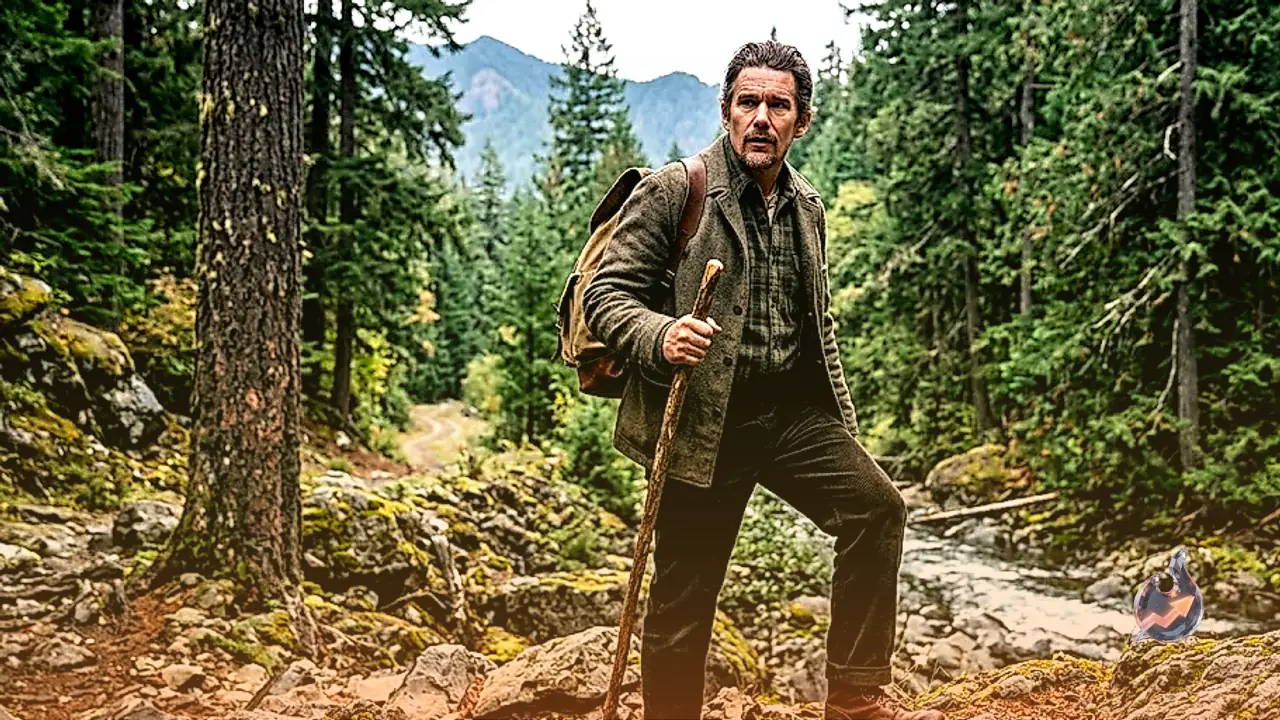
After an uneven opening act that takes its time settling on an overarching tone, the picture hits its stride once the trek plunges deep into the wilderness of Oregon. As Murphy attempts to manage the volatile frictions within his crew while navigating the elements, the towering pine trees begin to mirror the psychological confines of prison bars. The journey unfolds through a series of hazardous hurdles, including deadly shoot-outs against roaming vagrants, dodging crashing timber in a treacherous downriver log run, and a precarious passage across a creaking rope bridge that consciously echoes the suspense of William Friedkin's Sorcerer.
McKinley stages these survival set pieces with stripped-down physical realism, occasionally hinting at a stylistic flair suited for psychological horror. In one standout moment bathed in the stark flash of a lightning storm, the merciless killing of an injured crew member lands with genuine dread and moral coldness.
The Burden of Regret and the Ensemble Cast
As the party presses forward, the thematic significance of the film's title shifts beyond the physical weight of the gold. It gradually reveals itself as the emotional freight each convict carries, surfaced through conversations on the trail. Despite the ensemble nature of the expedition, only two supporting figures leave a distinct mark: the untrustworthy schemer Rankin, portrayed with sharp edges by Austin Amelio, and the runaway indigenous traveler Anna, played by Julia Jones, whose compelling presence is somewhat blunted by a superfluous romantic subplot.
Russell Crowe appears in a brief yet dominant capacity as Clancy, delivering an intimidating, tobacco-spitting performance that builds on his darker recent character roles. Though featured heavily on promotional billings, his role primarily serves as a framing device for Murphy's arduous trek. Ultimately, the film belongs entirely to Ethan Hawke, whose weathered facial features and deeply expressive eyes lend authentic gravitas to the world-weary protagonist. The only jarring misstep arrives during the end credits, where a lighthearted cast roll-call set to upbeat Lynyrd Skynyrd tunes abruptly disrupts the story's grim, hard-won desolation.