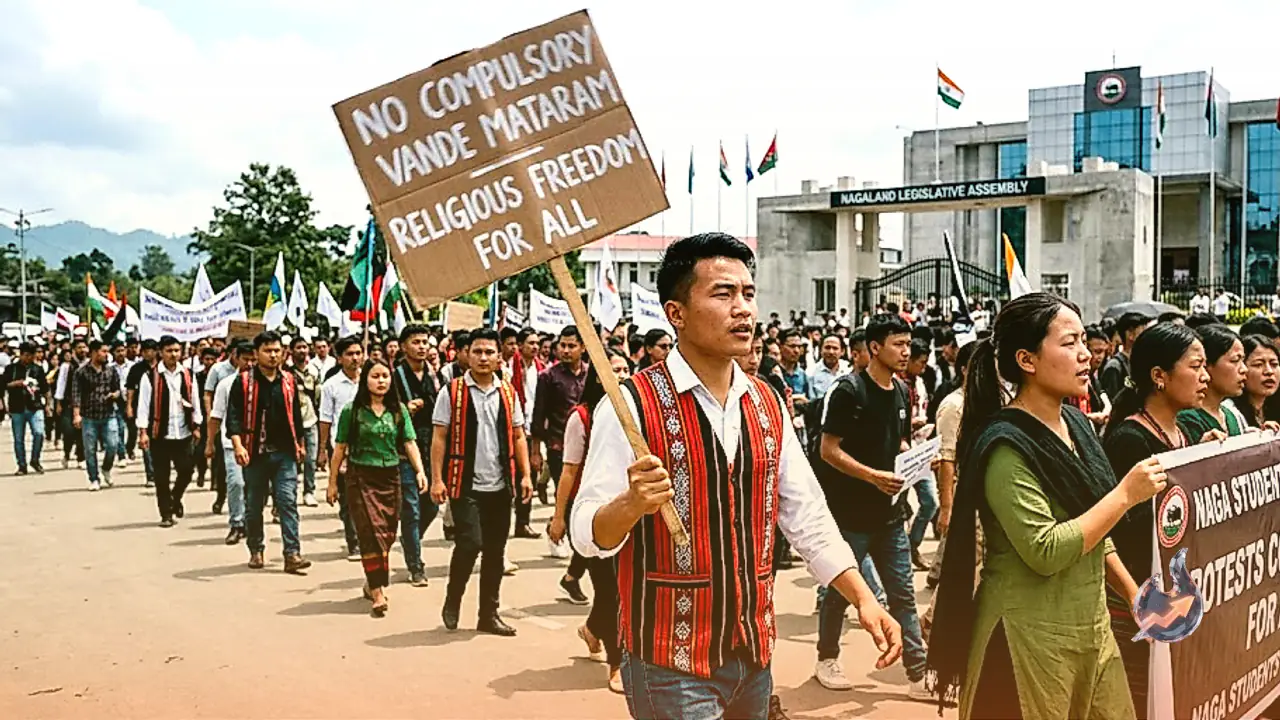






















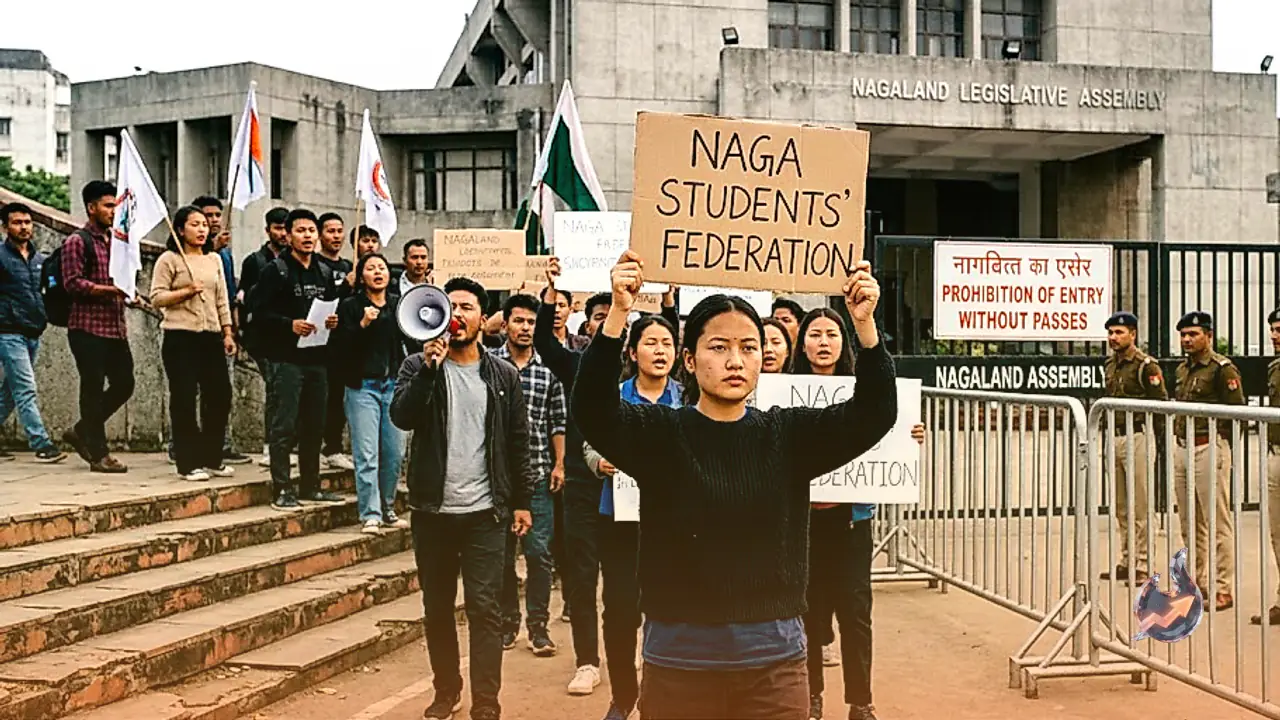

Demonstrations staged by the Naga Students’ Federation (NSF) outside the Nagaland Legislative Assembly complex in Kohima entered their second consecutive day on Thursday, as students continued their stand against the mandatory singing of Vande Mataram. The ongoing agitation persisted even as the state government issued a formal appeal to the student leadership urging them to call off the protest. The issue triggered noticeable debate within the legislative complex during daily proceedings, sparking wide-ranging discussions among lawmakers, tribal leadership, civil society organizations, and religious authorities across the state.
Zero Hour Discussions and State Government Appeals
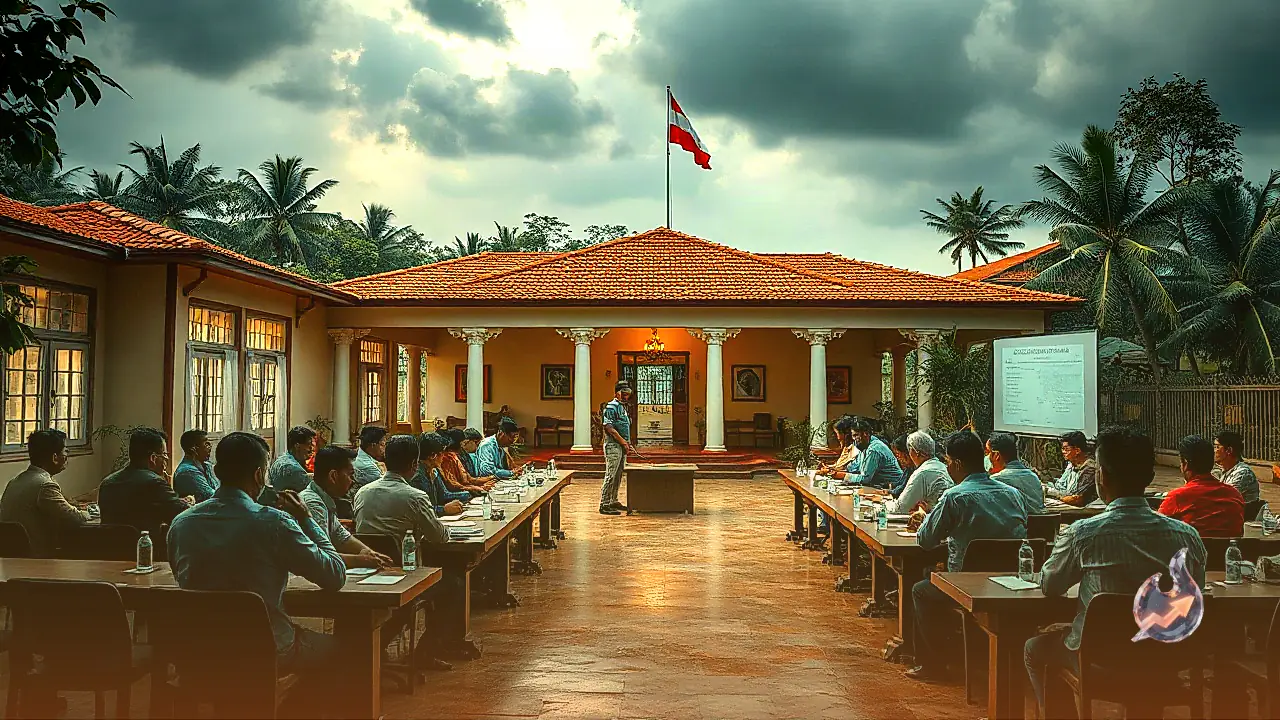
Inside the Assembly chamber, the contentious issue was brought up during Zero Hour by NPF legislator Achumbemo Kikon. Speaking in his capacity as a lawmaker and drawing upon his experience as a former president of the NSF, Kikon stressed that the debate extends beyond any single constituency and carries broad implications for the entire state of Nagaland. He appealed directly to the demonstrating students to suspend their agitation and allow the matter to be evaluated through proper constitutional procedures. Kikon noted that the state administration has carefully recorded the reservations expressed by representatives from diverse political spectrums, tribal institutions, Church organizations, civil society bodies, and the student federation itself.
Union Directives, Article 371A, and Constitutional Scrutiny
The origin of the friction traces back to an executive directive issued on January 28 by the Union Ministry of Home Affairs. That order called for compulsory recitations of Vande Mataram upon the arrival of key VVIPs at national functions, a rule that extends to the Governor's official arrival at the state Assembly. To address the resulting local concerns, Nagaland authorities constituted a high-level committee chaired by Parliamentary Affairs Minister KG Kenye. The panel was tasked with examining how central parliamentary enactments apply within Nagaland, specifically taking into account the special constitutional protections guaranteed under Article 371A of the Indian Constitution.
Enactment of New Law Shifts Legal Position
Parliamentary Affairs Minister KG Kenye provided an operational update on the committee's work, informing the house that members had gathered twice, once in May and again in June, and were prepared to deliver their report. However, the legal landscape underwent a structural shift after the Prevention of Insults to National Honour (Amendment) Act, 2026 received Presidential assent. Characterizing the topic as highly sensitive and contentious, Kenye explained that what initially began as an executive directive has now been codified by Parliament into statutory law. The minister stated that the committee is currently awaiting official publication of the amendment in the Gazette of India before scrutinizing its specific clauses and submitting a final report to the Assembly.
Hymns, Legislative Demands, and Parliamentary Solidarity
Outside the Assembly premises, student demonstrators maintained their physical presence for a second day, incorporating religious hymns into their peaceful gathering. Protesters sang well-known Christian devotional songs, including "When the Roll Is Called Up Yonder", "Onward, Christian Soldiers", and "I Have Decided to Follow Jesus". Leadership from the NSF affirmed that the demonstration will remain active until the Nagaland Legislative Assembly adopts an official resolution opposing mandatory Vande Mataram recitations. Support for the students also came from Nagaland's lone Lok Sabha MP, S Supongmeren Jamir, who visited the protest venue to express solidarity and promised to highlight the state's concerns with central leadership in New Delhi.