




















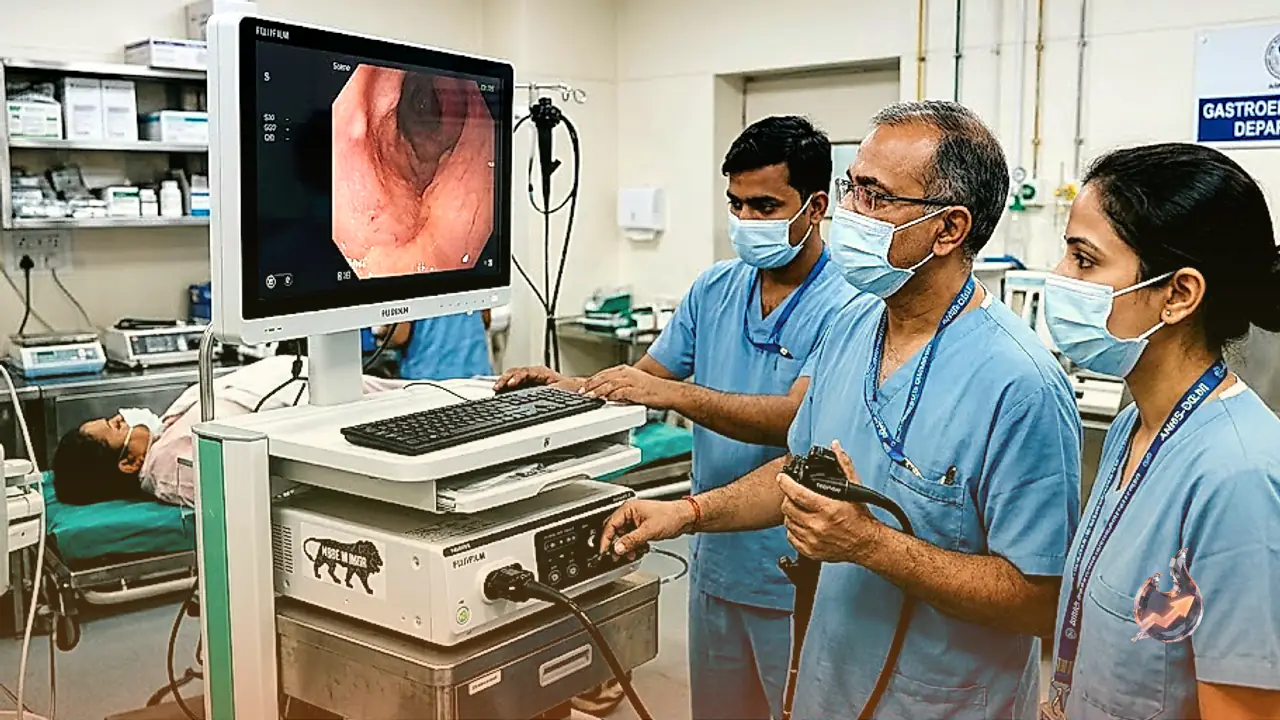

The All India Institute of Medical Sciences (AIIMS) in New Delhi has integrated its first domestically manufactured endoscopy system, marking a significant milestone in India's medical manufacturing sector. The advanced device, installed in the Gastroenterology department, was produced under the 'Make in India' initiative by the Japanese multinational Fujifilm India, which recently set up its manufacturing facility in the country.
A Major Boost for Domestic Healthcare Infrastructure
In alignment with the national 'Make in India' campaign, Fujifilm India has established a state-of-the-art manufacturing unit in Jodhpur, Rajasthan, to assemble high-precision medical diagnostic systems. Following the commencement of operations at this new facility, the company has donated its newly manufactured EP-6000 endoscopy system to AIIMS New Delhi. This donation is intended to support the treatment of underprivileged patients who visit the premier institute for advanced healthcare services. Equipped with next-generation imaging technology, the diagnostic system enables medical professionals to view the digestive tract, stomach, and intestines with superior clarity and precision, facilitating early and accurate detection of various gastrointestinal disorders.
Hospital Leadership Welcomes High-Tech Local Production
The introduction of the domestically produced machine has been widely welcomed by the administrative and clinical leadership at AIIMS. Expressing his satisfaction with this development, AIIMS Director Professor Nikhil Tandon highlighted the institute's commitment to adopting cutting-edge medical technologies. Professor Nikhil Tandon stated, "We are pleased that an endoscopy manufacturing plant has now been set up in India." He added that this domestically manufactured machine would significantly bolster the hospital's diagnostic capacity, allowing the department to serve a much larger volume of patients efficiently.
Historically, premier Indian healthcare facilities have depended almost entirely on imported medical diagnostic systems for complex procedures like endoscopy. The Head of the Gastroenterology Department, Dr. Pramod Garg, emphasized that this new system would greatly enhance the department's diagnostic capabilities. Dr. Pramod Garg noted, "This system will strengthen our department's capabilities and make the treatment of a larger number of patients much easier."
Fostering Self-Reliance in Advanced Medical Devices
This initiative represents a long-term strategic commitment by international manufacturers to invest in India's local assembly and supply chain. Highlighting this vision, the head of Fujifilm India, Wada San, reiterated the company's focus on delivering high-quality products and services to the Indian market. Wada San remarked, "Our company will continue to work towards providing better healthcare facilities in India over the long term."
The integration of this system is viewed as a landmark event by medical education and communication experts at the institute. Explaining the dual importance of this development, the In-charge of the PIC Media Cell, Professor Rima Dada, pointed out that this transition addresses two critical aspects of modern Indian healthcare. First, it showcases India's growing capability to produce high-tech medical instruments locally under the 'Make in India' drive. Second, having such advanced diagnostic tools available at a major public hospital like AIIMS will directly elevate the standard of patient care. Professor Rima Dada observed, "Under the Make in India initiative, advanced medical equipment is now being manufactured right within our country." This marks a major shift from the traditional practice of importing these costly machines from overseas.
How Endoscopy Technology Works and Benefits Patients
Endoscopy is a crucial, minimally invasive medical procedure that allows doctors to examine the internal organs of the human body without resorting to major surgical interventions. It is primarily used to inspect the esophagus, stomach, and neighboring parts of the digestive system. During the procedure, a thin, flexible tube called an endoscope is carefully inserted through the patient's mouth down into the stomach. This tube is equipped with a miniature high-definition camera and a light source at its tip, which transmits real-time, high-resolution visual feeds of the internal digestive lining directly to a monitor. Using these detailed images, clinicians can quickly identify and diagnose internal issues such as ulcers, inflammation, bleeding, or abnormal growths. With the deployment of this new locally manufactured machine, the diagnostic accuracy is expected to rise, directly benefiting thousands of patients who rely on AIIMS for affordable and timely medical interventions.