























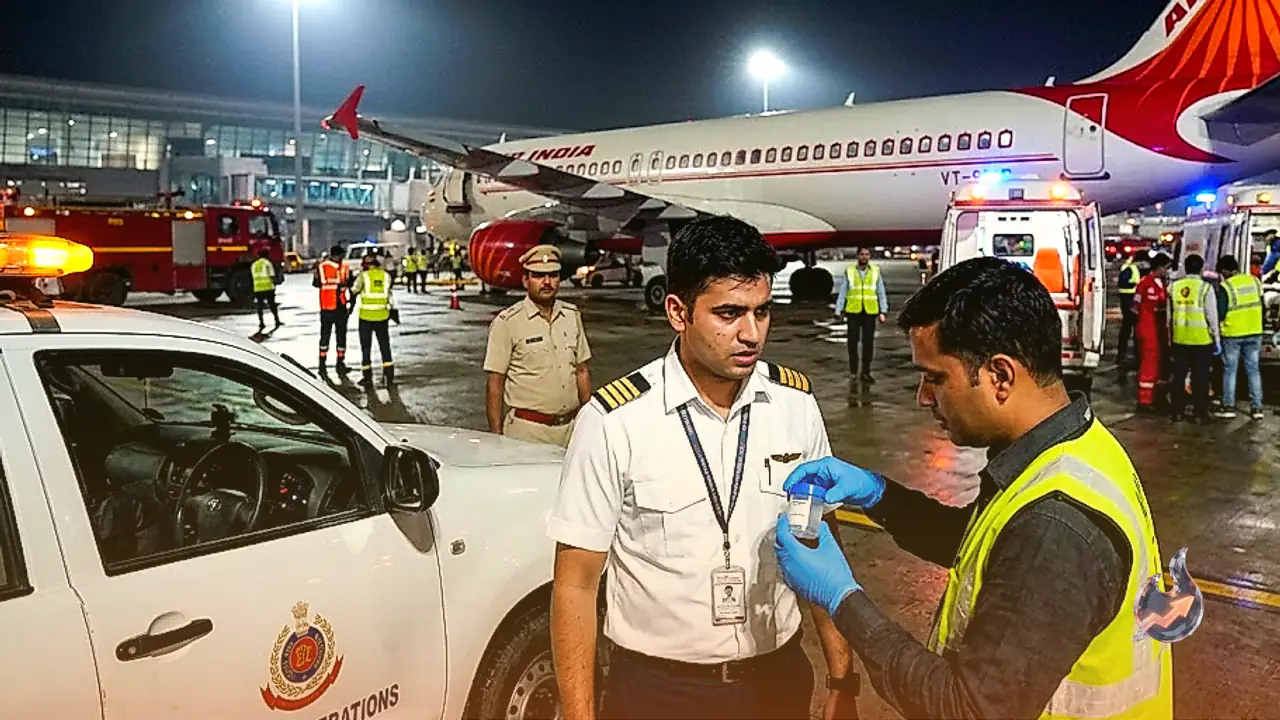

An Air India flight operating from Phuket to New Delhi faced a severe high-altitude technical emergency on August 4, 2026. The aircraft, an Airbus A320-251N carrying flight number AI-2379, suffered a sequential loss of pressure across all three of its hydraulic systems while cruising at 36,000 feet. The sudden system drop triggered automated disconnects and sharp altitude oscillations, injuring several passengers and crew members. Adding to the gravity of the incident, preliminary findings by the Aircraft Accident Investigation Bureau (AAIB) revealed that the pilot-in-command tested non-negative during a post-flight confirmatory test for psychoactive substances, raising sharp safety questions across the aviation domain.
Sequence of Events During the High-Altitude Emergency
The flight had departed Phuket bound for Delhi with 145 individuals on board, comprising 137 passengers, 6 cabin crew personnel, and 2 flight deck pilots. While maintaining its designated cruising altitude of FL360 (approximately 36,000 feet), the cockpit registered an unexpected pressure drop in the Green hydraulic system. Within seconds, the Blue and Yellow hydraulic networks also experienced pressure degradation. Because aircraft flight controls rely fundamentally on hydraulic power, this simultaneous triple failure posed an immediate danger to flight safety.
The pressure drop prompted the autopilot to disengage automatically, accompanied by a brief stall warning in the cockpit. Due to the disturbance in flight control dynamics, the aircraft underwent sudden altitude fluctuations. Flight parameters indicated that the aircraft climbed rapidly by 372 feet before dropping approximately 292 feet. Fortunately, all three hydraulic systems recovered within seconds, restoring normal flight control capabilities. The flight crew then proceeded to Delhi, landing the aircraft safely at its destination.
Cabin Impact and Medical Assistance at Delhi Airport
At the time of the sudden movement, the seat belt sign was switched off. As a consequence of the sharp violent jolts, multiple passengers and cabin crew members were thrown from their positions. Upon landing at Delhi Airport on August 4, medical teams evaluated 24 individuals, consisting of 20 passengers and 4 cabin crew members. Following initial assessment, 20 people were discharged after receiving treatment for minor injuries, while 4 individuals required hospital admission for further care.
The interior structure of the cabin also sustained visible physical damage during the altitude fluctuations. Inspection reports documented impact damage to overhead storage bins, ceiling panels, handrails, and emergency exit door handles. The force of the movements was strong enough to detach structural fittings inside the passenger cabin.
Pilot Substance Test and Regulatory Recommendations
As part of post-incident protocols, investigative authorities subjected the flight's pilot-in-command to a screening for psychoactive substances, which returned a non-negative result upon confirmatory testing. The AAIB highlighted this result as a matter of critical concern and issued an interim recommendation to the Directorate General of Civil Aviation (DGCA) to enforce stricter preventive measures against psychoactive substance abuse by aviation personnel.
However, the AAIB clarified that this drug test result has not yet been designated as the direct cause of the flight incident. Technical investigations into mechanical, operational, and system-level factors are continuing independently.
Technical Assessment and Maintenance History
Investigative documentation revealed that prior to the flight, the aircraft was operating under a Minimum Equipment List (MEL) provision concerning an item associated with the Power Transfer Unit (PTU). The investigation has not yet established whether this maintenance status contributed directly to the simultaneous pressure drop across the Green, Blue, and Yellow hydraulic networks at cruising altitude.
Environmental factors have been largely ruled out. Investigation records confirmed that no adverse weather conditions or atmospheric turbulence were reported by either the flight crew or Air Traffic Control (ATC) prior to or during the occurrence. Consequently, severe weather is not currently considered a contributing factor to the loss of hydraulic pressure.
Black Box Recovery and Ongoing Airbus Examination
To establish the exact sequence of technical events, the AAIB successfully retrieved data from both onboard flight recorders: the Cockpit Voice Recorder (CVR) and the Digital Flight Data Recorder (DFDR). Technical experts from aircraft manufacturer Airbus have also inspected the plane directly in Delhi to assist with the investigation.
Engineers have removed relevant hydraulic components and collected fluid samples for detailed laboratory analysis. These technical tests aim to clarify why all three hydraulic channels suffered pressure loss simultaneously at 36,000 feet. While the preliminary report outlines critical initial findings, the final conclusions will be released once the AAIB completes its comprehensive investigation.