






















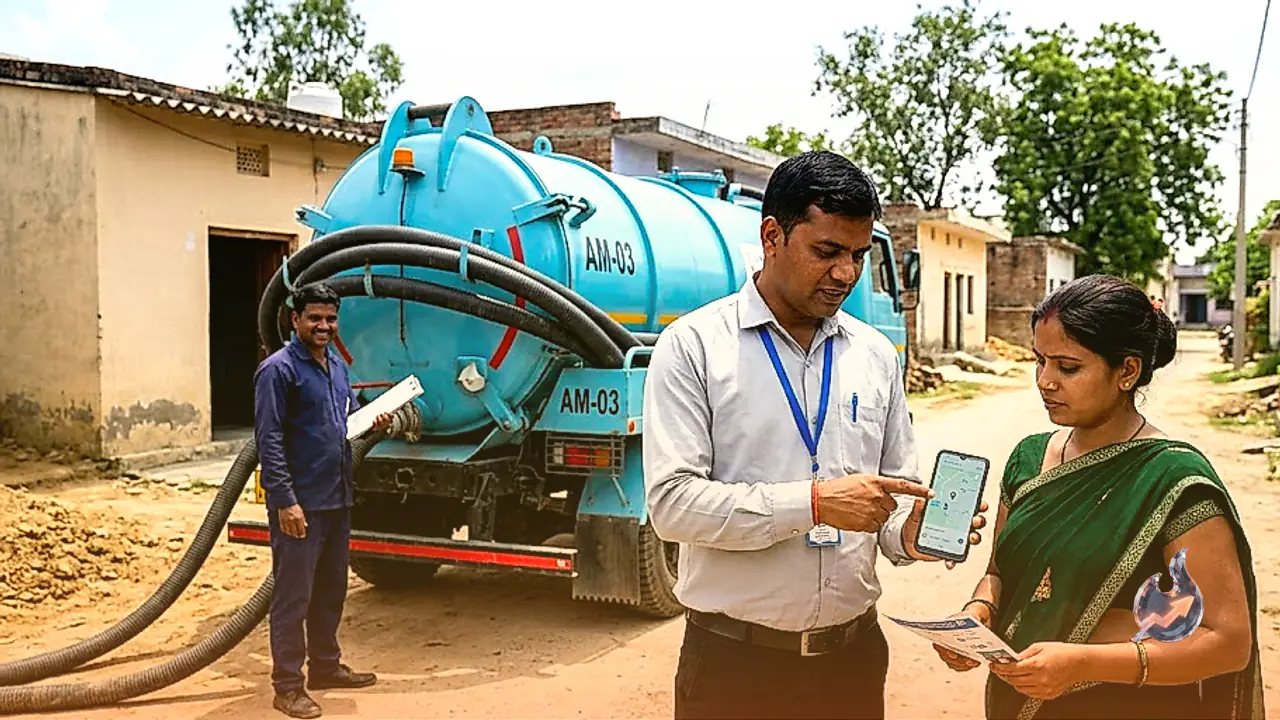

In a major boost to sanitation and digital governance, the district administration in Amethi, Uttar Pradesh, has introduced an on-demand digital tracking and dispatch system for septage tank cleaning. Implemented under the Digital India initiative by the Amethi District Panchayat Raj Officer (DPRO) office, this service operates on the operational model of popular ride-hailing platforms like Ola and Uber, as well as emergency services like Dial 112. The initiative aims to provide accessible, transparent, and affordable sanitation services to rural and urban residents while ending the unregulated disposal of fecal waste in open areas.
Centralised Control Room at Vikas Bhawan
To ensure seamless coordination and live monitoring, a centralized control room has been set up at Vikas Bhawan in Amethi. Citizens and institutions needing toilet tank cleaning services can easily log a request using a dedicated toll-free telephone number or a specialized mobile application. Upon receiving a booking, the control room system automatically identifies the applicant's location and dispatches the nearest available registered sanitation vehicle to the site. This real-time dispatch mechanism ensures rapid response times and eliminates long waiting periods for households.
Addressing Overcharging and Environmental Hazards
Previously, the septage management sector in the district functioned largely without direct departmental oversight. Private sanitation vehicle operators frequently exploited households by demanding exorbitant, arbitrary fees. More critically, after emptying septic tanks, many operators disposed of untreated human waste in open fields, roadside drains, and vacant plots. This unscientific dumping created severe public health hazards, contaminated local soil and water sources, and led to the outbreak of infectious diseases across surrounding communities.
Scientific Treatment at the Benipur FSTC Facility
To completely eliminate open waste dumping, the department has designated the Fecal Sludge Treatment Center (FSTC) plant located in Benipur, within the Amethi block, as the official treatment site. Under the new protocol, all collected fecal sludge must be transported directly to the Benipur FSTC plant for safe processing and scientific disposal. This closed-loop treatment process ensures that waste is systematically neutralized without causing environmental pollution or posing health risks to nearby populations.
17 Vehicles Registered and Strict Enforcement Rules
DPRO Manoj Tyagi highlighted that the department has successfully registered 17 septage cleaning vehicles in the initial phase of the rollout. Each registered vehicle is integrated into the Digital India tracking framework and fitted with digital location devices monitored live from the central control room. Service seekers will pay a standardized fee and fixed rental rate determined by the administration, guaranteeing pricing transparency. Furthermore, the DPRO warned that operating an unregistered septage cleaning vehicle in rural or urban areas is strictly prohibited, and any violators caught carrying out unauthorized cleaning operations will face severe legal and departmental action.