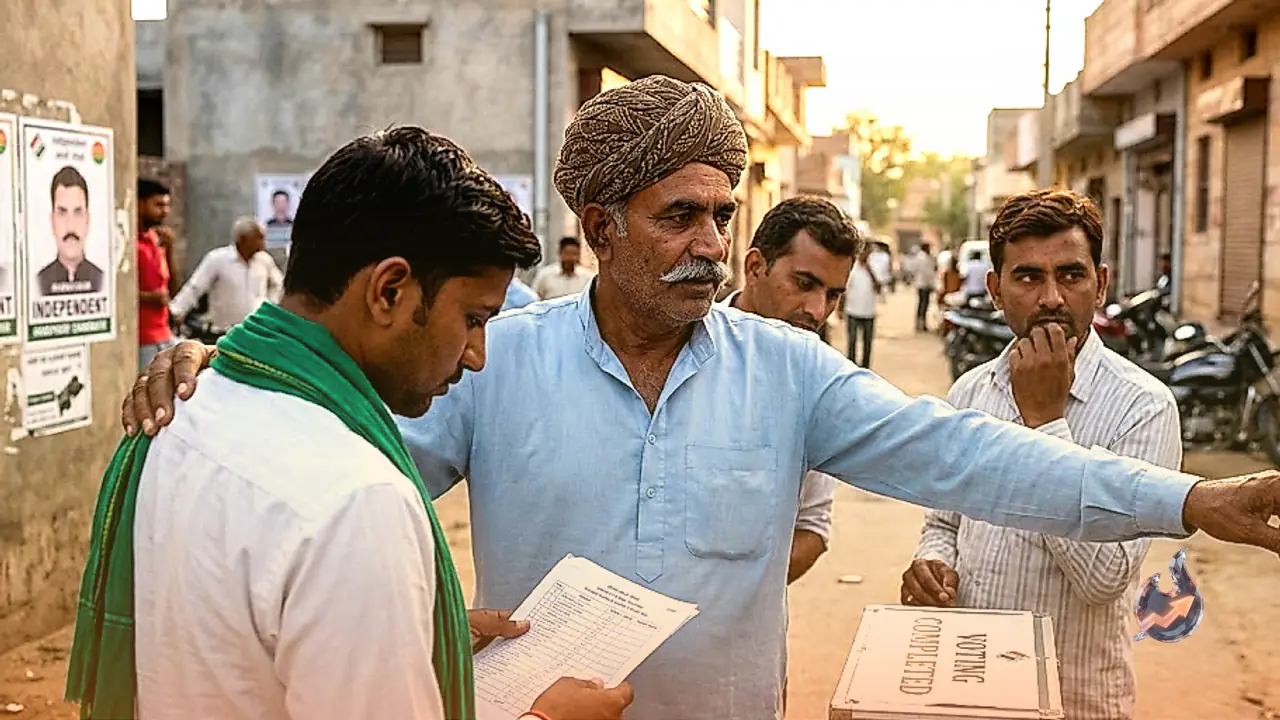






















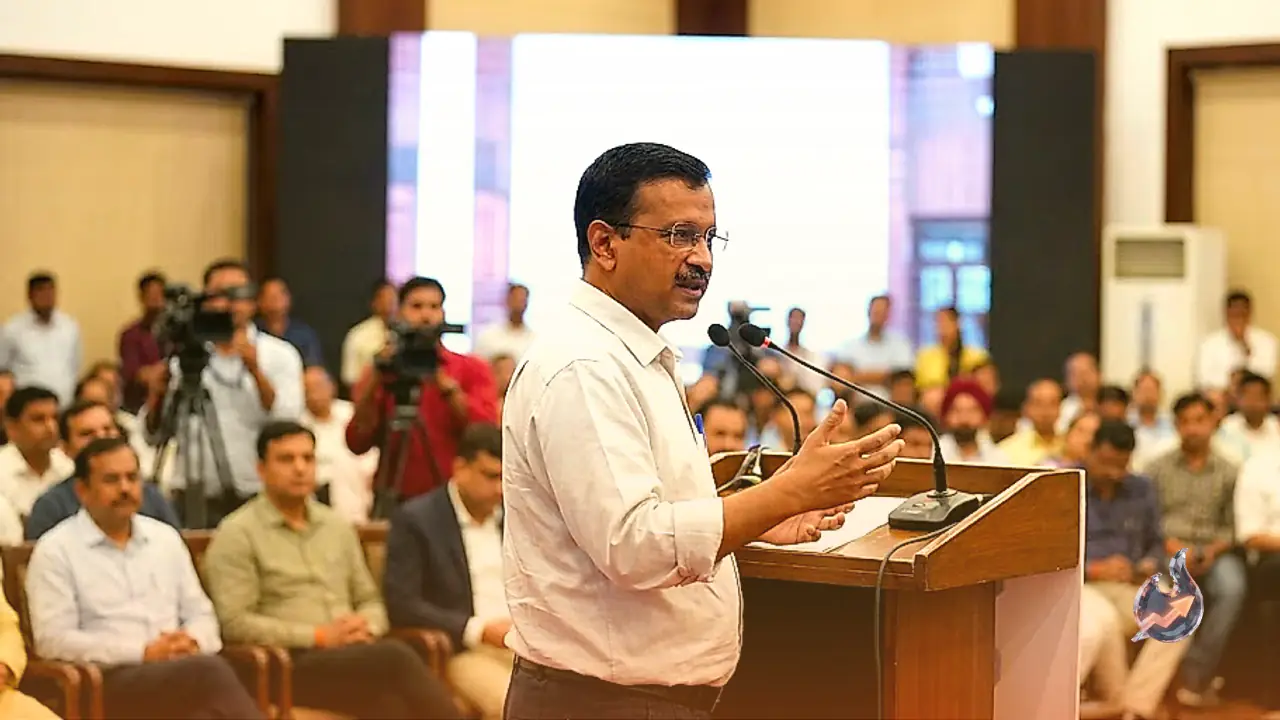

At the National Townhall Against E-20 organized by the Aam Aadmi Party at the Constitution Club in New Delhi, Arvind Kejriwal presented three core demands to the central government on behalf of citizens across the nation. He urged the government to mandate that petrol stations provide vehicle owners with a clear choice between E-20 and pure unblended petrol. Furthermore, he insisted that E-20 fuel must be priced lower than pure petrol and that the retail price of petrol across the country should be capped below 84 rupees per liter.
Three Major Demands on Fuel Blending and Price Structure
Addressing the national gathering convened to address mounting public dissatisfaction over E-20 blended fuel, Arvind Kejriwal strongly criticized the central government's policy framework. He emphasized that forcing blended fuel on consumers without providing an alternative is fundamentally unfair. Currently, petrol stations across the country offer no pure petrol option, leaving motorists with no choice but to use blended fuel regardless of their vehicle's technical compatibility.
Analyzing the economics of fuel pricing, he highlighted that before applying taxes, pure petrol costs approximately 50 rupees per liter, while ethanol costs around 70 rupees per liter. Consequently, ethanol remains more expensive than pure petrol even before blending. In addition, because ethanol possesses a lower calorific value than pure petrol, vehicles experience a noticeable reduction in fuel efficiency. This imposes a double financial burden on drivers, justifying the demand to reduce retail petrol prices below 84 rupees per liter and offer E-20 at a significantly discounted rate.
US Ethanol Imports and Impact of the 100 Billion Dollar Trade Deal
Arvind Kejriwal alleged that the central government is pushing ethanol consumption on Indian citizens primarily to satisfy Donald Trump and fulfill foreign trade obligations. The United States currently stands as the world's largest producer of ethanol. Citing trade figures, he noted that India imported 1 billion liters of ethanol from the United States during the previous year.
Following the nationwide implementation of E-20 fuel, India's ethanol imports from the United States are projected to rise fivefold compared to last year, reaching 5 billion liters annually. Recent research reveals that a bilateral trade agreement signed between India and the United States obligates India to purchase 100 billion dollars worth of goods from American suppliers over a five-year period. Arvind Kejriwal asserted that public interests and vehicle safety in India are being compromised to meet these commercial trade commitments.
Warning for Vehicle Owners and Push Towards Electric Mobility
Issuing a direct appeal to citizens across India, Arvind Kejriwal strongly advised prospective vehicle buyers to pause purchasing petrol or diesel vehicles altogether. He recommended holding off on vehicle purchases until automobile manufacturers in India begin producing vehicles equipped with E-100 compliant engines.
Extending his warning to diesel vehicles, he revealed that the government plans to introduce similar blending measures into diesel fuel in the future. As a result, purchasing Electric Vehicles (EV) represents the only reliable choice for consumers at present. He cautioned that while the government claims higher blends such as E-25, E-30, and E-40 are merely under study and not immediate, this represents a strategy to wait until public resistance subsides before imposing higher blend ratios that could permanently damage engines.
Survey of 45,000 Drivers Highlights Engine Damage Concerns
Highlighting widespread consumer grievances, Arvind Kejriwal cited data from a comprehensive nationwide survey conducted by an independent organization called LocalCircles, which surveyed 45,000 active vehicle owners across India.
The survey findings revealed that 67 percent of respondents experienced a significant decline in fuel mileage after using E-20 fuel. Furthermore, 45 percent of vehicle owners reported severe engine malfunctions or mechanical failures. Noting that over 700,000 citizens have connected to support this cause, he challenged central ministers who label E-20 as completely safe and dismiss critics as anti-national, asking them to address the documented evidence provided by tens of thousands of affected drivers.
Demand for Scientific Evidence and Transparency on Degrees
Challenging the central government's assertions, Arvind Kejriwal demanded that any scientific studies, engineering evaluations, or official reports proving the safety of E-20 fuel be made public. He asserted that verbal assurances from ministers cannot substitute for empirical research data.
Reflecting on educational qualifications and transparency, he mentioned that his own engineering degree from IIT Kharagpur was requested through a Right to Information (RTI) application and duly provided by the institute. Conversely, when he requested to inspect Prime Minister Narendra Modi's educational degree, a criminal prosecution was initiated against him in Gujarat, where a trial is currently ongoing. He emphasized that national policy decisions affecting millions of citizens must be backed by open scientific dialogue.
Automakers' Silent Response and Risks for Pre-2023 Vehicles
To investigate the technical risks associated with blended fuel, Arvind Kejriwal wrote formal inquiries to 29 major two-wheeler and four-wheeler automobile manufacturers operating in India. The letters posed two specific questions to the manufacturers.
First, whether vehicles produced prior to 2023 can safely run on E-20 fuel without suffering damage or mileage loss. Second, whether automakers would provide written commitments to compensate vehicle owners in the event of engine damage or reduced performance. While no manufacturer submitted a written response, senior executives from 9 automobile companies privately confirmed during detailed discussions that pre-2023 vehicles were engineered for E-10 standards and are not equipped to handle E-20 fuel safely.
Economic Reality of Ethanol: Mileage Drops and Environmental Toll
Arvind Kejriwal further dismantled claims regarding the broader economic and environmental benefits of ethanol blending. Dismissing government assertions that ethanol blending conserves foreign exchange reserves, he stated that detailed calculations demonstrate no net foreign exchange savings are being achieved.
Moreover, local farming communities have gained no financial benefit from ethanol expansion. Instead, areas surrounding ethanol production plants have suffered severe environmental degradation, with groundwater depleted and land ruined within a 20-kilometer radius of these facilities. He questioned why the central government continues to force ethanol adoption across the nation when it fails to benefit consumers, farmers, or the environment.