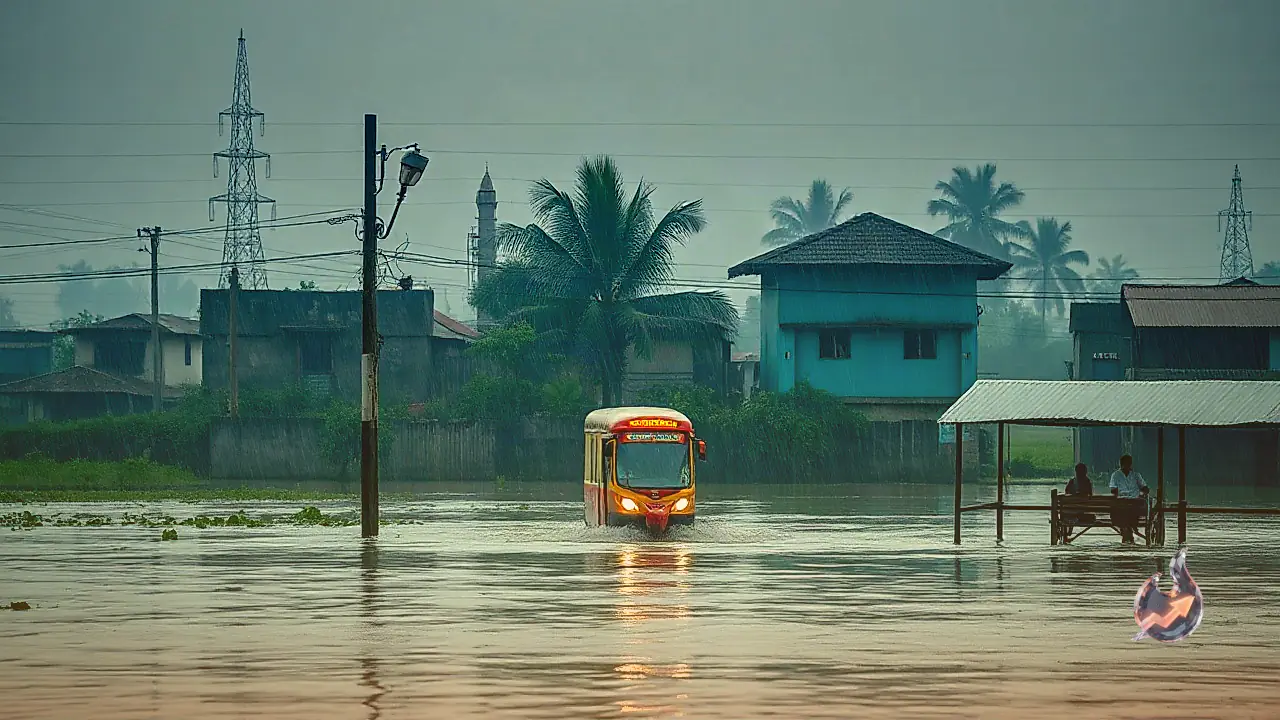







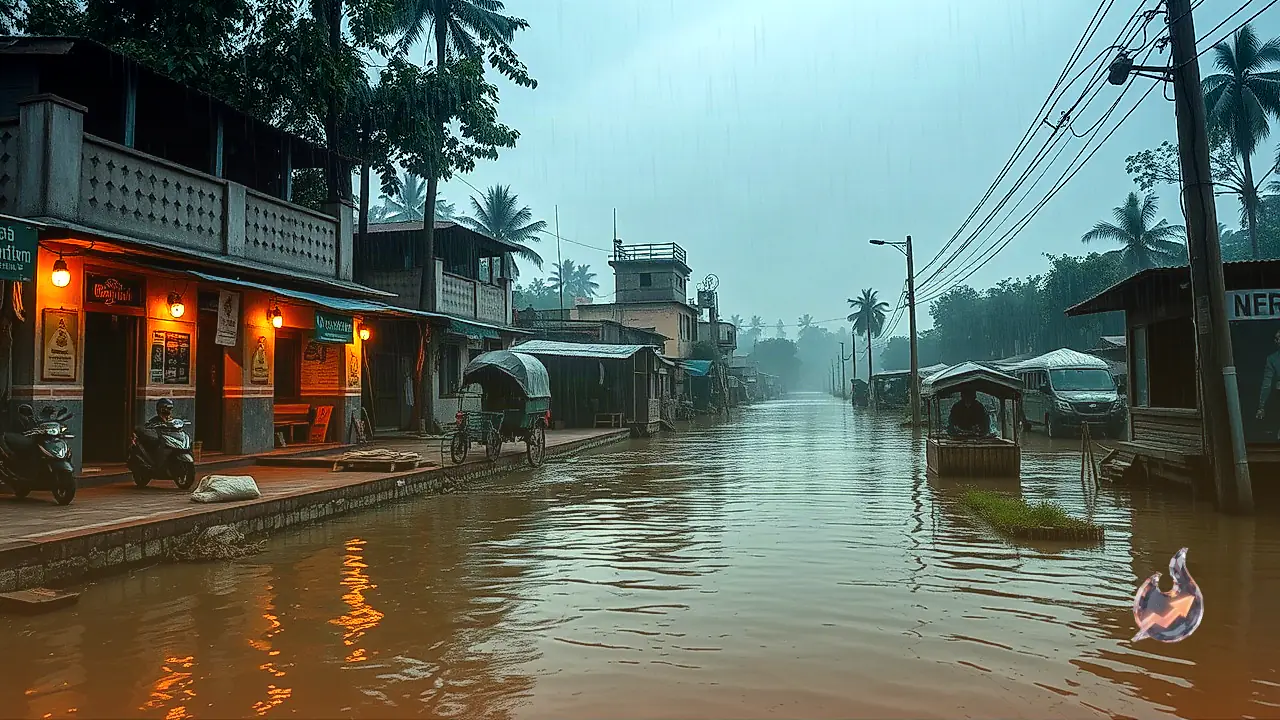














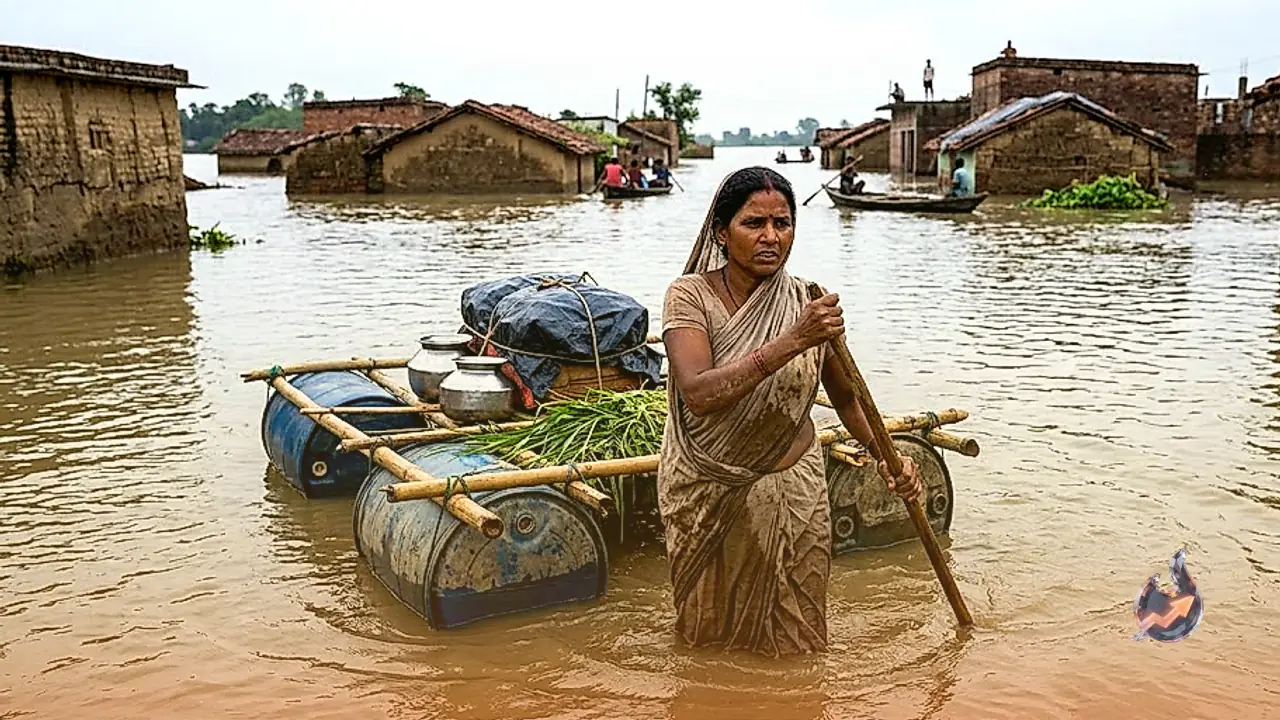

Heavy inundation triggered by surging river levels has devastated rural communities in the Chandauli district of Uttar Pradesh. Nagahi village, situated within the Baburi region, has been severely affected as rising water levels in the Ganga river combined with an overflow from the Chandraprabha river to surround the settlement. The dual river rise has effectively isolated Nagahi, transforming several neighborhoods into marooned islands. Floodwaters have breached residential houses, compelling villagers to abandon their homes and seek temporary refuge on elevated grounds, embankments, and rooftops. The sudden displacement has sparked an urgent crisis for children, women, the elderly, and domestic livestock, who are now enduring severe shortages of food, shelter, and basic amenities.
Submerged Access Paths Cut Off Connectivity, Raising Nighttime Emergency Concerns
As floodwaters continue to expand across Nagahi, primary access routes connecting the village to surrounding areas have been submerged or completely washed out. Local residents are forced to wade through deep, fast-moving water currents to perform essential daily tasks. While navigating the submerged paths remains somewhat manageable during daylight hours, the situation turns precarious once night falls. Villagers expressed deep anxiety regarding potential medical emergencies or immediate needs after dark, noting that transporting a sick family member or procuring emergency supplies is virtually impossible under current conditions.
According to local residents, the water levels spiked with alarming speed, leaving little time for precautionary measures. The rapid influx forced numerous families to evacuate their homes in the middle of the night. Fleeing the rising waters, several households gathered their goats, cattle, and basic belongings, fleeing toward higher ground and roadside embankments to avoid being trapped inside their inundated dwellings.
Laxmina Devi's Plight: Inundated Kitchens Leave Families Unable to Prepare Daily Meals
The flood has severely disrupted household meal preparation and daily nutrition across the village. Laxmina Devi, an affected resident, shared her plight, stating that securing food and clean drinking water has become an overwhelming challenge. With floodwaters submerging every room of her home, finding a dry spot to light a stove has become impossible. As a consequence, her family was forced to relocate alongside their livestock to seek temporary shelter elsewhere.
Laxmina Devi explained that stored dry fodder, animal feed, and household grain reserves were completely ruined after being submerged in water. Her primary concern now centers on how to prepare meals and ensure regular food for her family members under such constrained conditions. Many other villagers are facing identical hardships, relying on the goodwill of neighbors with elevated concrete structures or resorting to cooking on open makeshift hearths situated on elevated mounds. The inundation has completely halted normal daily life across the community.
Waters Inundate Homes at 9 AM: Nandlal Reports Destruction of Appliances and Furniture
Nandlal, another resident of Nagahi village, detailed the extent of financial loss caused by the sudden flooding. He recounted that floodwaters poured into his house at approximately 9:00 AM, rapidly submerging household items before his family could move them to safety. Major domestic appliances and furniture items, including a metal trunk, bed, air cooler, and refrigerator, sustained severe water damage.
Nandlal noted that residents are currently relying solely on narrow elevated strips of land and wading through waterlogged pathways to move around the village. Although water levels have shown slight recedence in select spots, normalcy remains far out of reach as vast portions of the village remain heavily waterlogged.
Vulnerable Children and Domestic Livestock Face Severe Health and Hunger Risks
The ongoing flood situation has placed young children and livestock in an exceptionally vulnerable position. Children are currently residing under temporary tarpaulin sheets on elevated grounds surrounded by standing water. Parents are deeply worried about their health, as exposure to contaminated water increases the risk of waterborne diseases, alongside difficulties in sourcing clean food and drinking water.
Domestic animals are equally impacted by the crisis. While several families managed to rescue their cows and goats and bring them to elevated locations, procuring dry fodder has become nearly impossible due to widespread submergence of surrounding fields and storage facilities. Livestock owners are struggling to find dry space and adequate feed for their animals, exacerbating the distress across the village.
Ramavanti and Kalindi Devi Appeal for Administrative Support, Food, and Fodder Relief
Expressing her grief, Ramavanti Devi stated that the flood has impacted both her residential property and agricultural land. Submerged fields have brought farming activities to a complete standstill, while inundated living quarters have made basic tasks like cooking nearly impossible. She appealed to local administrative authorities for immediate relief assistance. Residents emphasized that families lacking the resources or nearby elevated structures to relocate are suffering the most severe hardship.
Kalindi Devi and other women from the village echoed these concerns, emphasizing that floodwaters remain stagnant around residential clusters. While families are currently managing to prepare food on elevated platforms, any further increase in river water levels could push the situation into a full-scale humanitarian catastrophe. The situation in Nagahi underscores the urgent need for emergency relief, including packaged food, potable water, animal fodder, tarpaulins, and rescue boats. Villagers have urged the administration to deploy relief materials and medical teams without delay.