


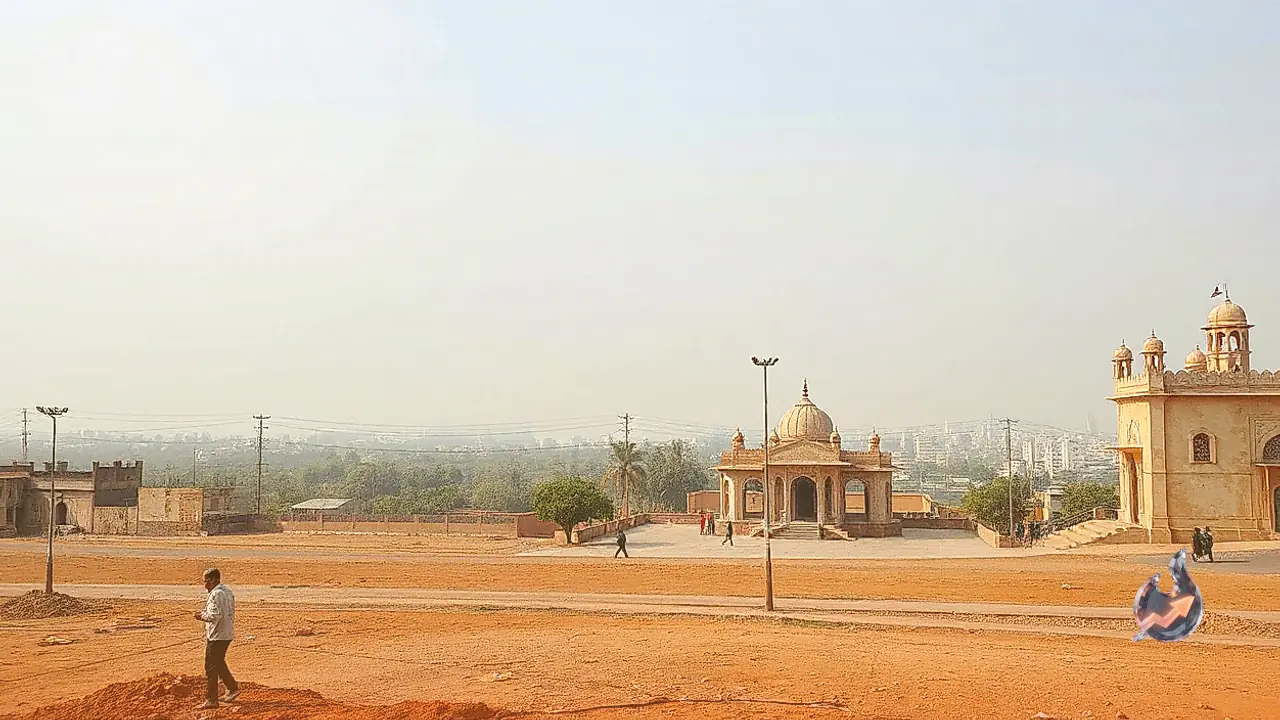

















Air quality across the Delhi-NCR region has deteriorated sharply as the festive season of Diwali approaches and winter begins to set in. The air has turned toxic, creating a severe health hazard for everyone living in Delhi, Noida, Ghaziabad, and nearby localities. The ongoing surge in air pollution has pushed the Air Quality Index beyond the 400 mark in numerous pockets, making it increasingly difficult for residents to breathe cleanly.
Current Ground Situation and Administrative Measures
The severity of the pollution crisis is evident across multiple locations where the air quality index has entered the severe zone. Near India Gate, the recorded AQI touched 403, placing it firmly in the severe category. To combat the worsening smog, municipal authorities have deployed truck-mounted water sprinklers to carry out extensive suppression operations. These measures are part of the Stage-II Graded Response Action Plan, which remains enforced across the entire region. Official records indicate that 28 monitoring stations across Delhi are currently recording an AQI above 400.
Central Pollution Control Board Metrics
Data from the Central Pollution Control Board shows that the AQI around Anand विहार (Anand Vihar) stood at 350, classifying it within the very poor category. Meanwhile, the 24-hour average AQI for Delhi on Thursday was recorded at 369, which is just 8 points lower than Wednesday's reading of 377. For context, the AQI scale designates readings between 51 and 100 as satisfactory, while figures between 301 and 400 are categorized as very poor. The overall average AQI for the capital currently hovers at 387, remaining firmly in the very poor bracket.
Worst-Hit Localities and Future Projections
According to the Air Quality Early Warning System, conditions are projected to worsen further, keeping the air in the severe category from Friday through Sunday. The forecast indicates that air quality will likely oscillate between the very poor and severe categories for six days following that period. On Thursday, out of 59 active monitoring stations in the capital, 22 registered pollution levels in the severe zone. Punjabi Bagh recorded the highest AQI at 459, followed by Jahangirpuri at 457, Rohini at 453, IIT Delhi at 452, and DTU at 443. These numbers underscore the critical state of the capital's atmosphere, with stubble burning widely cited as a major contributing factor.