




















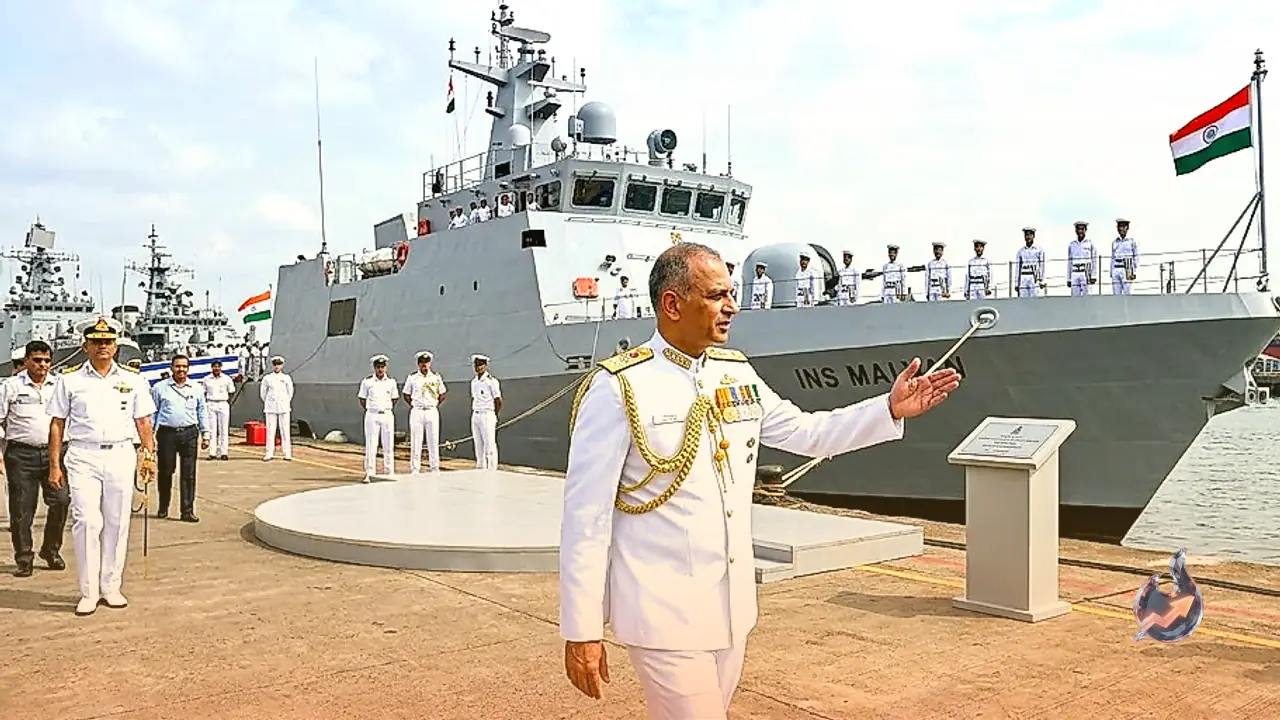

The Indian Navy has officially commissioned the 'Malvan', the second vessel in the Mahe-class Anti-Submarine Warfare Shallow Water Craft series. The induction ceremony took place on Wednesday, marking a significant step in bolstering India's coastal defense and submarine tracking capabilities. The event was presided over by Air Chief Marshal AP Singh. The ceremony witnessed the gathering of several key military figures, including Vice Admiral Sanjay Vatsayan, the Flag Officer Commanding-in-Chief of the Western Naval Command. Alongside the senior naval commanders, the gathering was attended by representatives from Cochin Shipyard Limited, the Kochi-based facility responsible for constructing the vessel, as well as respected military veterans.
Securing Maritime Trade Routes
During his address at the commissioning ceremony, Air Chief Marshal AP Singh highlighted the undeniable link between a secure maritime environment and national prosperity. He pointed out that sea routes are the primary arteries for global trade. Because trade fundamentally shapes the future trajectory of a country, securing these waters becomes a top national priority. The Air Chief Marshal placed special emphasis on the Indian Ocean Region, noting its critical strategic value to the nation. He credited the Indian Navy with maintaining a constant and effective vigil over these waters, ensuring that maritime communication networks remain open and commercial shipping flows without interruption.
A Triumph of Indigenous Manufacturing
The newly commissioned 'Malvan' stands as a major achievement for domestic defense manufacturing. Constructed by Cochin Shipyard Limited in Kochi, the vessel is a prime demonstration of the country's 'Aatmanirbhar Bharat' vision in the field of modern naval shipbuilding. The warship is built using more than 80 percent indigenous components. This high level of local sourcing reflects the nation's growing mastery in the complex processes of warship design, heavy construction, and advanced systems integration. The successful delivery of the Malvan proves that Indian shipyards are increasingly capable of meeting the sophisticated requirements of modern naval warfare using domestic resources.
Setting an Example for Other Forces
The high percentage of domestic parts in the new vessel prompted Air Chief Marshal AP Singh to praise the Indian Navy's long-standing commitment to self-reliance. "With 80 percent indigenous content in this ASW-SWC warship, we will soon realize the dream of Aatmanirbhar Bharat," AP Singh noted during the event. He observed that the Navy had embraced the mantra of indigenous development from its very beginnings. In contrast, he acknowledged that the Indian Air Force began its push toward self-reliance much later, explaining that different operational sectors naturally require varying amounts of time to progress and adapt. However, he expressed strong hopes that the other branches of the military, particularly the Indian Air Force, would draw valuable lessons from the Navy's successful model of implementing indigenous manufacturing concepts.
Building a Self-Reliant Defense Fleet
The commissioning of the Malvan is part of a broader, ongoing effort to modernize the Indian Navy with locally built assets. This strategy was prominently displayed recently when the indigenous stealth frigate INS Mahendragiri joined the Indian Navy. During that induction, Defence Minister Rajnath Singh addressed the gathering and declared that the stealth frigate serves as a powerful symbol of the strength of a self-reliant India. The addition of both the Mahendragiri and the Malvan demonstrates a clear, continuous shift toward relying on domestic shipyards to supply the advanced warships needed to protect the nation's maritime interests.