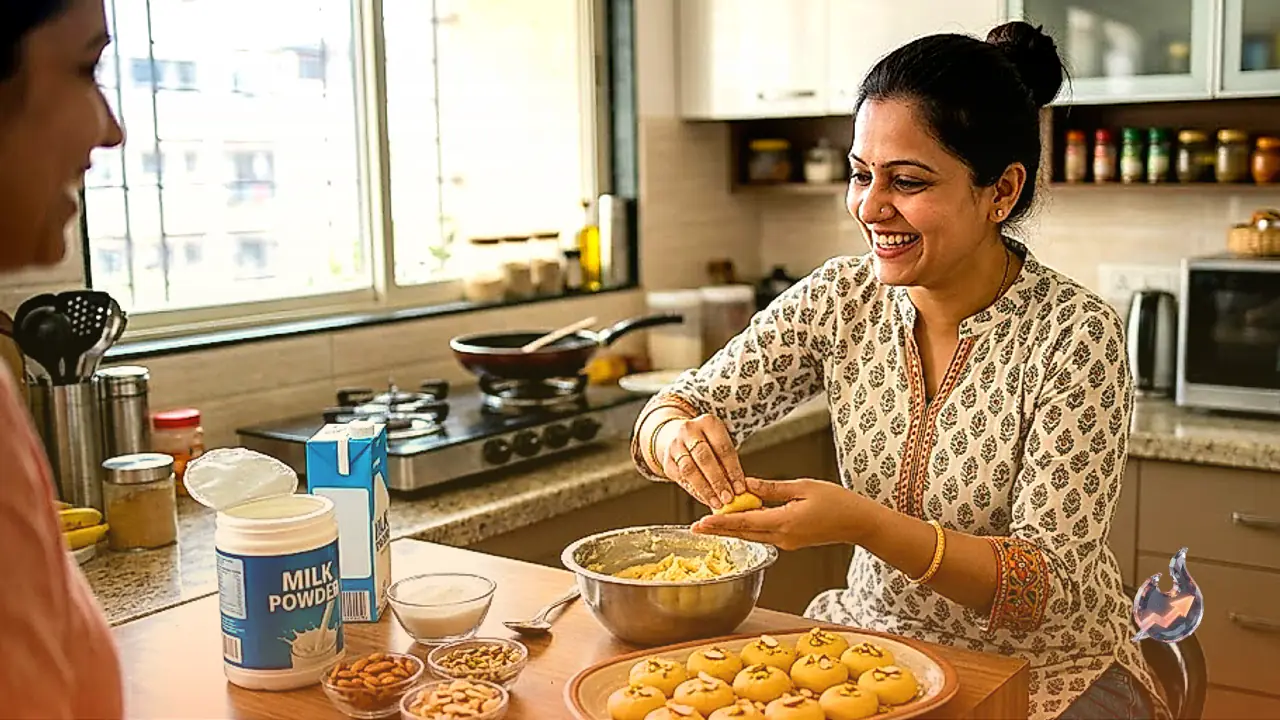





















Not every last-minute sweet craving or surprise guest needs a dash to the market. With just milk, milk powder, sugar and a handful of dry fruits already sitting in most kitchens, soft, fresh pedas can be ready in about 10 minutes flat. The quick method comes from the Instagram account 'Vrinda Ki Rasoi' (@vrinda_magic_kitchen_), shared by Madhu, and it is aimed squarely at anyone who wants homemade mithai without the usual hours of effort.
Grinding The Dry Fruit And Sugar Powder First
The flavour and aroma of this peda comes from a special powder that needs to be made before anything else touches the stove. In a mixer jar, add about 1/4 cup sugar, 6 to 7 cashews, 6 to 7 almonds and 2 to 3 green cardamom pods, then grind everything into a fine powder. Do not over-grind the mixture, since dry fruits start releasing oil if ground for too long, which can make the powder sticky. The finer and drier this powder turns out, the better the final texture of the pedas will be.
Warming The Milk And Prepping The Milk Powder Mix
Place a heavy-bottomed pan on the stove, pour in 1 cup of milk and warm it gently on a low flame, never a high one. As soon as the milk warms up, stir in the sugar and dry fruit powder and keep stirring continuously with a spoon. This helps the sugar dissolve evenly and stops the mixture from sticking to the base of the pan. After a few minutes of stirring, the milk starts looking slightly thickened.
While that is happening, take a separate bowl with 1/4 cup of lukewarm water and whisk in 1 cup of milk powder until no large lumps remain. Dissolving the milk powder in water first, rather than dropping it straight into the hot milk, is the small trick that makes the mixture smoother and ultimately gives the pedas a better, more even consistency.
Cooking Until It Reaches Peda-Like Consistency
Pour the milk powder solution into the pan with the warm milk, keep the flame between low and medium, and stir the mixture non-stop. It looks quite thin to begin with, but after a few minutes of cooking it gradually starts to thicken. At this stage, add roughly 1 teaspoon of desi ghee, which gives the mixture a glossy shine and smoothness while also helping it separate easily from the sides of the pan.
Once the mixture begins to leave the sides of the pan and comes together like a soft dough, it is nearly done. A little saffron water can be added at this point for extra flavour and colour, while using food colour is entirely optional. It is important not to overcook the mixture, since too much cooking dries it out and leaves the pedas hard instead of soft. Once ready, turn off the flame, transfer the mixture to a plate and let it cool slightly.
Shaping And Garnishing The Pedas By Hand
Once the mixture is just lukewarm, grease your palms lightly with ghee so nothing sticks. Break off small portions, roll them into balls and gently flatten each one into the familiar peda shape. Repeat until the entire mixture is used up. Finish with a garnish of finely chopped pistachios, slivered almonds or dried rose petals on top, and for a festive touch, a bit of silver vark (edible silver leaf) can be added as well.
Minimal Ingredients, Maximum Flavour
What makes this method stand out is that it completely skips the long, traditional process of boiling milk down into mawa. None of the usual time and effort that mawa demands is needed here. The combination of milk, milk powder and dry fruits alone gives the pedas a rich taste and aroma, using only a handful of ingredients and barely 10 minutes on the stove. For anyone caught off guard by unexpected guests, or simply in the mood for something sweet at home, this is a recipe that can be relied on every single time.