



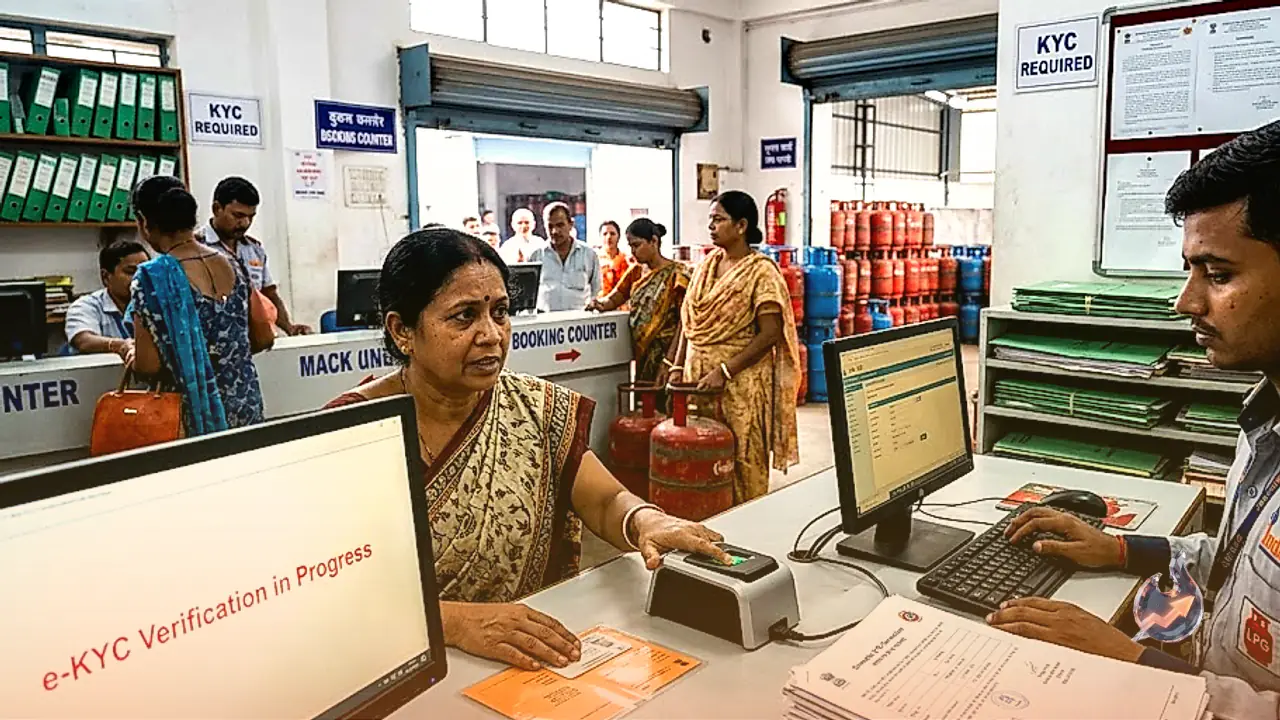















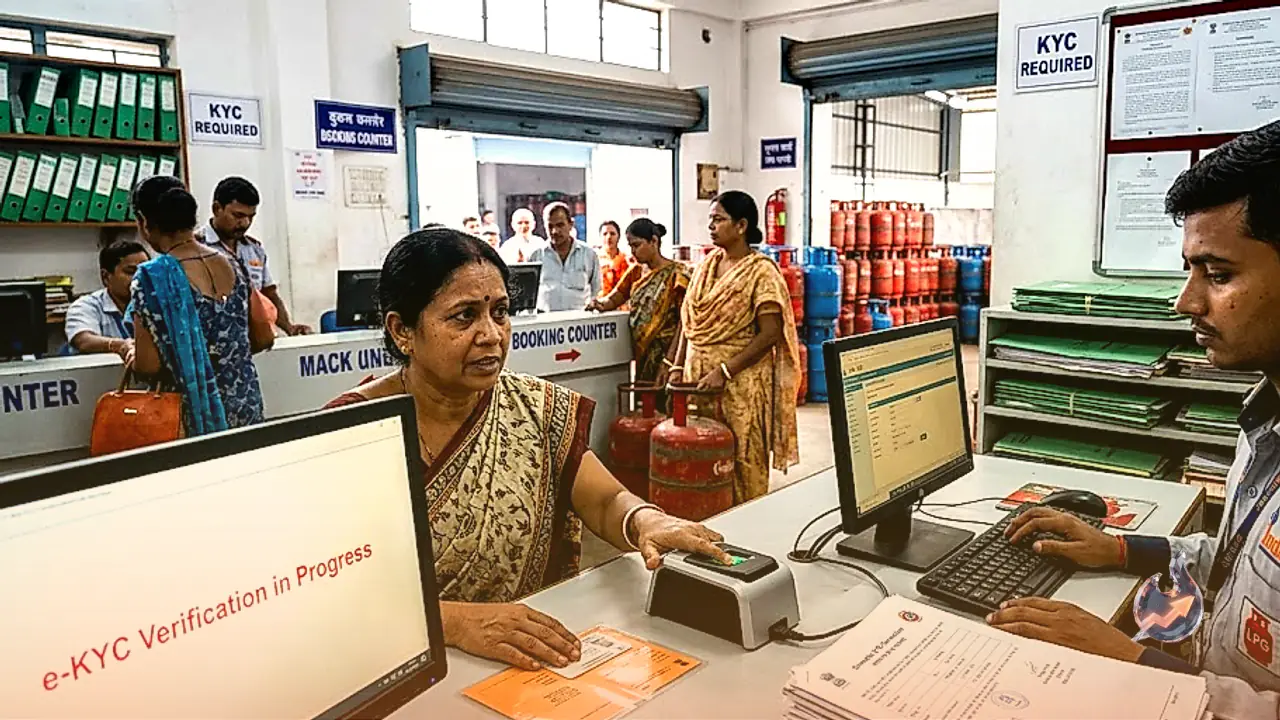

Biometric Aadhaar authentication has become mandatory from October 1, 2026 across the country for domestic liquefied petroleum gas consumers, making completed e-KYC an essential prerequisite for receiving subsidy benefits on cylinder refills. Consumers who have not carried out this biometric verification are encountering hurdles when booking their household refills, as oil marketing companies enforce stricter compliance to restrict subsidized supplies exclusively to verified accounts.
Purpose and Scope of Biometric Verification
Under the revised regulatory framework for biometric Aadhaar authentication (BAA), domestic gas users must clear authentication in order to book cylinder refills at the regulated Retail Selling Price (RSP) alongside applicable subsidy credits. The primary administrative objective behind mandating biometric checks is guaranteeing that public subsidy disbursements reach only legitimate and eligible households nationwide.
Linking consumer profiles of Indane Gas, Bharat Gas, and HP Gas to Aadhaar infrastructure serves several systemic purposes. It prevents the diversion of subsidized domestic gas cylinders toward commercial and industrial establishments, identifies and weeds out ghost or duplicate accounts, and establishes an auditable, transparent distribution pipeline that targets genuine household consumption.
Impact on Verified and Pending Consumer Accounts
Official ministry directives clarify that the BAA requirement applies strictly to those LPG consumers whose e-KYC verification remains pending. The procedure is not structured to restrict genuine domestic users from accessing fuel supplies, and verified customers face no changes to their existing service. Consumers who completed their biometric authentication prior to the rollout do not need to repeat the process, and their refill bookings will continue without interruption.
For consumers who have yet to finish biometric authentication, subsidized booking at regulated rates will remain blocked until the verification is processed. Those without completed BAA cannot access standard subsidized refills and are restricted to purchasing smaller gas cylinders, such as 5 kg and 10 kg variants, at prevailing open-market prices until they satisfy authentication requirements.
Opt-Out Provisions and Account Regularisation
Consumers who choose not to undergo biometric authentication must explicitly record their preference on the official web portals of Indian Oil, HPCL, or BPCL. Opting out permanently removes the account from the subsidy register, leaving the consumer eligible only to purchase 5 kg or 10 kg cylinders at unsubsidized market rates.
Beyond beneficiaries under Pradhan Mantri Ujjwala Yojana (PMUY), household consumers without verified e-KYC are also liable to face commercial pricing on standard 14.2 kg domestic cylinders if they fail to regularize their documentation. Data compiled by the Petroleum Ministry through mid-September 2026 shows that 27.43 crore active domestic LPG consumers have already concluded their biometric authentication, representing 89.9 percent of the total national user base.
Three Channels Available to Complete E-KYC
Eligible consumers can complete their pending biometric authentication through three distinct operational routes provided by oil companies
- At the Time of Delivery: Delivery personnel can execute on-the-spot biometric verification using official oil marketing company (OMC) mobile applications during cylinder drop-off.
- At Distributor Showrooms: Consumers can visit their assigned LPG distributorship in person and complete the physical biometric scan at the agency counter.
- Via Mobile Applications: Users can carry out self-verification directly from home by accessing designated OMC smartphone applications.
Commercial Fuel Revisions and Domestic Price Stability
Alongside the compliance changes, state-run fuel retailers revised commercial LPG cylinder rates for October 2026, raising 19 kg cylinder prices by Rs 62.50 to Rs 71.50 across key metropolitan centers. In Delhi, commercial cylinder prices rose by Rs 62.50 to Rs 2,810 per unit, while in Kolkata, a Rs 70 increase pushed the rate to Rs 2,954 per unit. In Mumbai, an upward revision of Rs 63.50 settled the price at Rs 2,764.50 per unit.
Across southern hubs, commercial cylinders were marked up by Rs 66.50 in Chennai, rose by Rs 67 in Bangalore to Rs 2,898, gained Rs 69 in Hyderabad to reach Rs 3,065, and climbed by Rs 65 in Thiruvananthapuram to settle at Rs 2,849 per cylinder.
Domestic cylinder rates, by contrast, have stayed unchanged since June 7, 2026. Through September 2026, retail prices for standard 14.2 kg domestic cylinders remain at Rs 942 in Delhi, Rs 968 in Kolkata, Rs 941.50 in Mumbai, and Rs 957.50 in Chennai. In an operational revision introduced last month, the ministry trimmed the mandatory refill booking interval for rural households from 45 days down to 25 days, standardizing a uniform 25-day gap across both rural and urban areas.