





















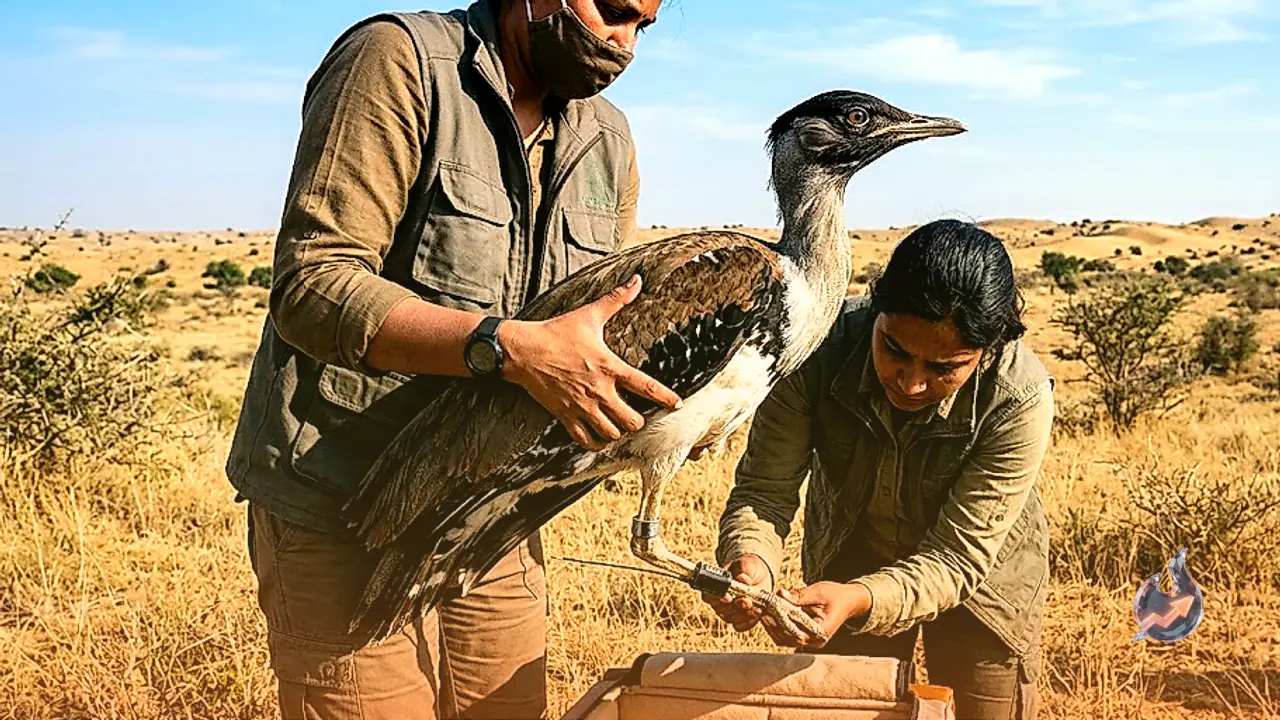

A monumental milestone is about to unfold in the fight to preserve the Great Indian Bustard, as birds raised within artificial breeding facilities step out of enclosures to reclaim the open skies. In the Sudasari area of Jaisalmer district, captive-bred bustards will be reintroduced directly into their native wilderness for the very first time. Considered the crown jewel of the Thar Desert, this state bird of Rajasthan now stands on the threshold of a new era of survival. Union Environment Minister Bhupender Yadav will personally attend the landmark occasion to witness the historic reintroduction.
This achievement represents the culmination of sustained dedication and exhaustive fieldwork by forest department personnel, wildlife biologists, and scientific researchers. Following rigorous assessments confirming that the birds are in peak physical health and fully acclimated to wild conditions, authorities granted approval for their return to natural habitats. For environmentalists and nature enthusiasts across the country, this transition marks a major triumph after protracted battles against extinction pressures.
Round-the-Clock Monitoring Through Advanced GPS Tagging
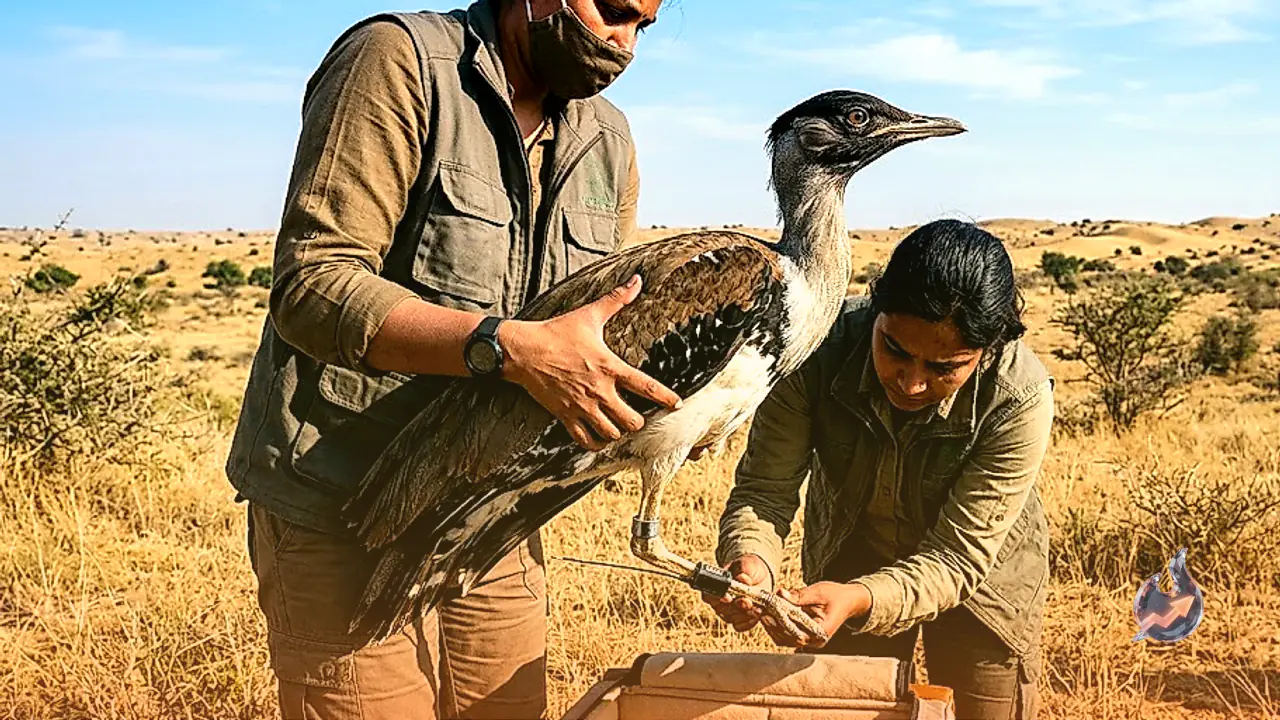
To ensure maximum safety and capture critical biological data, every bird being released into the wild has been fitted with cutting-edge GPS tracking devices. This high-tech tagging setup empowers research teams and forest authorities to oversee the birds around the clock without physical intrusion, keeping a continuous watch over their daily routines.
The satellite tracking apparatus will log how far the bustards fly, pinpoint the exact landscapes where they forage for sustenance, and map the territories they choose for nesting and shelter. By analyzing this real-time behavioural stream, specialists will obtain invaluable insights into their adaptation patterns while remaining positioned to respond swiftly should any individual stray into dangerous terrain.
Rigorous Natural Adaptation Drills Inside Specialized Tunnels
Transitioning captive-reared birds straight into untamed expanses poses severe survival challenges, prompting conservationists to execute an intensive preparatory regimen. Before clearance for release, the birds spent approximately two to three months inside an engineered conditioning tunnel designed to simulate wild living conditions and instinctive demands.
Within this controlled environment, the bustards honed fundamental survival mechanics, including independent flight maneuvers, acclimatization to desert atmospheric swings, and the crucial skill of foraging for wild food resources on their own. Only after demonstrating unassisted self-reliance, physical stamina, and complete readiness for natural survival did wildlife managers finalize the schedule for their liberation.
Mitigating the Peril Posed by High-Tension Transmission Lines
Among the most lethal obstacles facing the Great Indian Bustard population across arid landscapes are high-tension power transmission lines, which have caused numerous fatal collisions in past years. The deployment of precision GPS tracking directly addresses this vulnerability by documenting flight paths and movement corridors in high resolution. By mapping where the birds travel, authorities can identify high-risk overhead wire zones and implement targeted mitigation infrastructure to secure the corridors. Set to unfold on Sunday, this groundbreaking initiative at Sudasari opens an unprecedented chapter of hope for the endangered state bird of Rajasthan.