























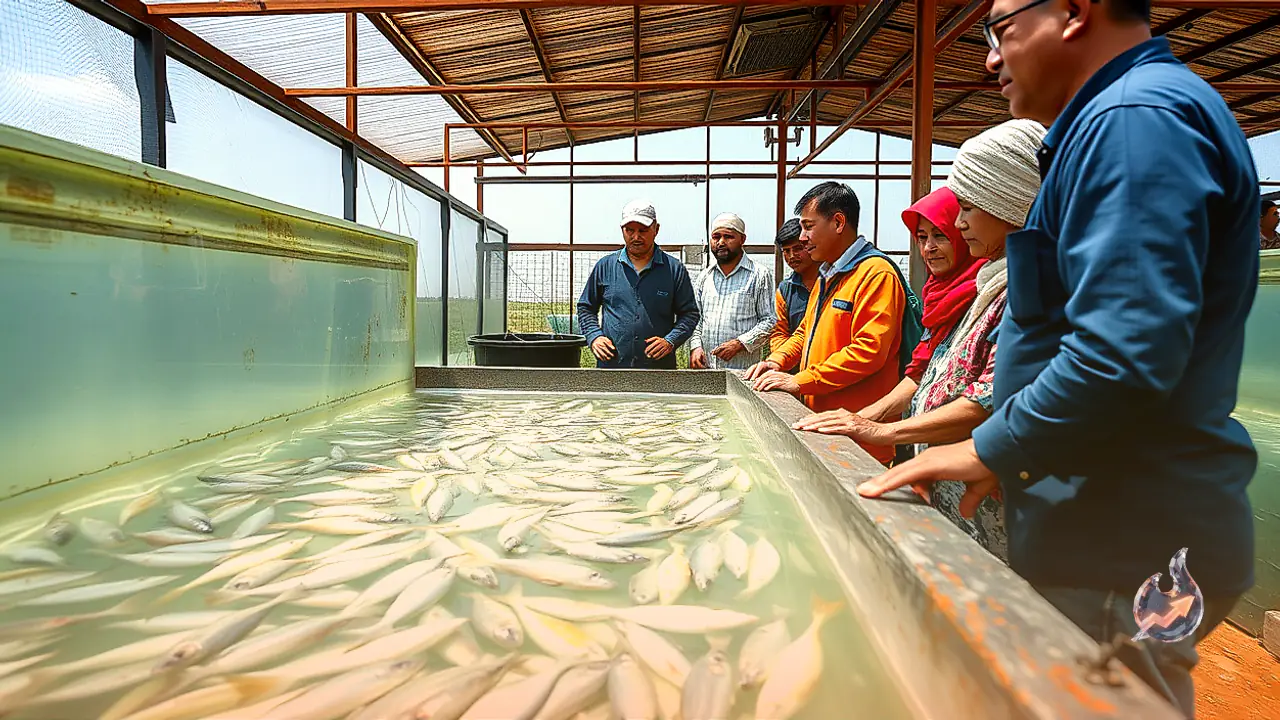

Aquaculture farmers raising fish in compact containers, drums, or artificial tanks frequently face severe hurdles when water deteriorates rapidly and compromises aquatic health. Addressing this widespread operational challenge in Samastipur, Dr. Mukesh Kumar, a scientist at Dr. Rajendra Prasad Central Agricultural University Pusa, presented the working mechanics of the Recirculatory Aquaculture System, widely known as RAS, while displaying visual illustrations of the apparatus. He emphasized that this engineering approach can significantly streamline small-scale aquaculture operations. In conventional high-density container farming, waste build-up causes dissolved ammonia concentrations to spike dramatically, creating hazardous conditions for aquatic stock. Instead of draining and refilling the enclosure at regular intervals, the RAS framework filters, purifies, and recirculates the existing water back into the habitat, effectively shielding growers from the labor and logistical strain of continual fluid replacement.
Biological Media and Nitrification Cleanse Aquatic Impurities
Unchecked spikes in ammonia levels present serious biological hazards to captive fish populations. Dr. Mukesh Kumar noted that within an operational RAS installation, contaminated discharge is routed through a specialized treatment vessel equipped with biofilters and structured bio-media. The engineering of this media provides an expansive surface area designed specifically to cultivate colonies of beneficial micro-organisms. Structured media elements such as bio-balls grant these essential bacteria abundant surface exposure to thrive. As nutrient-rich water flows through the medium, the bacterial colony drives an enzymatic process known as nitrification, breaking down harmful ammonia first into nitrite and subsequently into nitrate. This systematic chemical conversion neutralizes environmental toxicity, allowing the clarified water to be pumped directly back into the rearing tank. Consequently, farmers achieve continuous water reuse while drastically curbing freshwater loss.
Balancing Setup Capital Against High-Value Aquatic Demands
While the closed-loop circulation concept holds immense promise for smallholders cultivating stock within constrained physical boundaries, Dr. Mukesh Kumar highlighted the economic discipline required before investing in expensive setups. Farmers aiming to rear high-price fish varieties must scrutinize project capital alongside the physiological demands of the chosen species. Biological tolerances vary widely across aquatic species, meaning that a uniform filtration configuration or generic biofilter cannot serve every scenario efficiently. Incorporating supplementary storage tanks, separate aquariums, or advanced filtration units to satisfy delicate species inevitably raises structural expenditure. Producers must carefully weigh the selected species variety, water chemistry prerequisites, and installation costs before assembling such infrastructure, harnessing the water-conserving advantages of recirculatory farming without incurring unsustainable overheads.