





















Across the building and civil engineering sectors, the continuous pace of urbanization has reshaped raw material preferences. Developers and contractors are progressively abandoning conventional red mud bricks in favor of prefabricated concrete blocks for residential dwellings, commercial establishments, retail complexes, and boundary walls. Driven by sustained construction activities across towns and cities, this manufacturing venture represents an evergreen commercial opportunity that yields steady financial returns within a short operational timeframe.
Why Modern Construction Favors Concrete Blocks Over Red Bricks
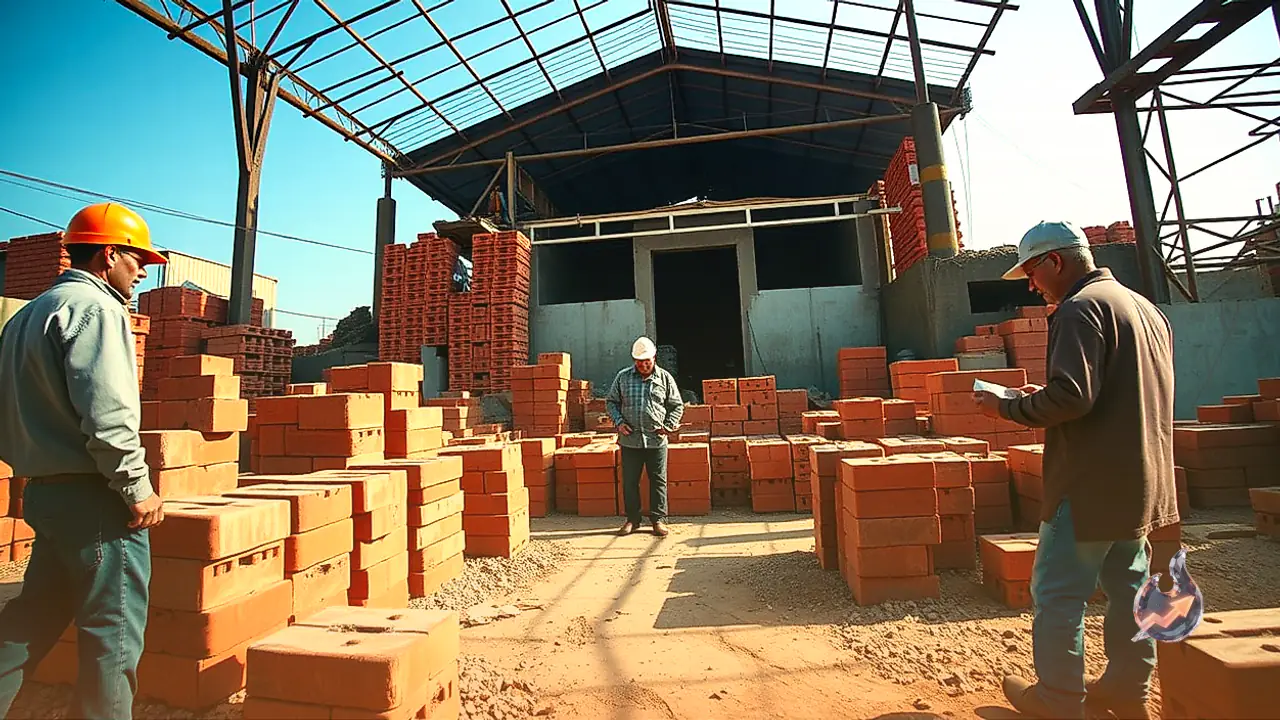
The swift migration toward precast cement blocks is primarily motivated by logistical advantages and structural performance. These units feature dimensions substantially larger than standard kiln-fired bricks. As a consequence, a single block encloses a significantly wider surface area during masonry work, thereby drastically decreasing the total number of masonry joints and individual pieces required per wall structure. This structural efficiency accelerates site completion schedules while considerably curtailing manual labor expenses. Despite their bulk, these compressed blocks demonstrate superior load-bearing strength compared to traditional brickwork, offering a durable masonry alternative.
Raw Material Components and Factory Fabrication Workflow
Industry specialist Chaudhary Arjun Singh Kaswa highlights that setting up and sustaining this manufacturing workflow requires adhering strictly to product quality and precise blend proportions. The foundational mixture utilizes stone dust, 15 mm crushed stone aggregate, standard grade cement, and clean water. The initial operational phase involves blending these ingredients in precise, scientifically balanced proportions to achieve a cohesive, durable mortar.
Once thoroughly mixed, the moist concrete matrix is fed into designated molds within a dedicated block-forming machine. Under heavy mechanical compression, the slurry is densified, purging entrapped air voids and locking in exact geometric dimensions and rigid density. After ejection from the molding machinery, the fresh blocks are transferred to curing yards. Regular water spraying and systematic moisture curing are administered across successive days, as comprehensive hydration remains the definitive determinant of ultimate structural toughness.
Production Cost Economics and Daily Revenue Potential
The operational balance sheet of concrete block fabrication demonstrates steady unit-level economics. According to figures provided by Chaudhary Arjun Singh Kaswa, fabricating a single standardized concrete unit incurs an aggregate expenditure of approximately 25 to 30 rupees, factoring in aggregate materials, cement consumption, commercial electricity charges, and machine operator wages. In nearby retail and wholesale construction supply channels, each finished block commands a market clearing price between 35 and 40 rupees.
This retail spread translates into a clear operational net margin of 5 to 10 rupees on every unit sold. For an enterprise producing and distributing an average daily volume of 500 units, daily net operating income ranges between 2500 and 5000 rupees. Over a consistent monthly billing cycle, sustained delivery contracts elevate total operational profits into substantial multi-lakh-rupee figures.
Initial Capital Expenditure and Distribution Tactics
Launching a medium-scale concrete block production venture demands an upfront seed capital of roughly 5 to 6 lakh rupees. This initial financial outlay covers the procurement of the core block-making hydraulic machinery, customized shaping molds, and necessary material-handling tools. Beyond machinery, the enterprise necessitates a sufficiently spacious open yard to store loose aggregates, operate curing sprinkler beds, and stack ready-to-dispatch inventory, supported by an uninterrupted water supply, commercial grid connectivity, and experienced laborers.
To guarantee consistent turnover right from commissioning, new entrants must actively build partnerships with regional construction ecosystems. Engaging directly with local masonry contractors, real estate developers, infrastructure builders, and retail building material hardware merchants establishes direct procurement pipelines, keeping production output moving steadily to job sites without warehousing bottlenecks.