




















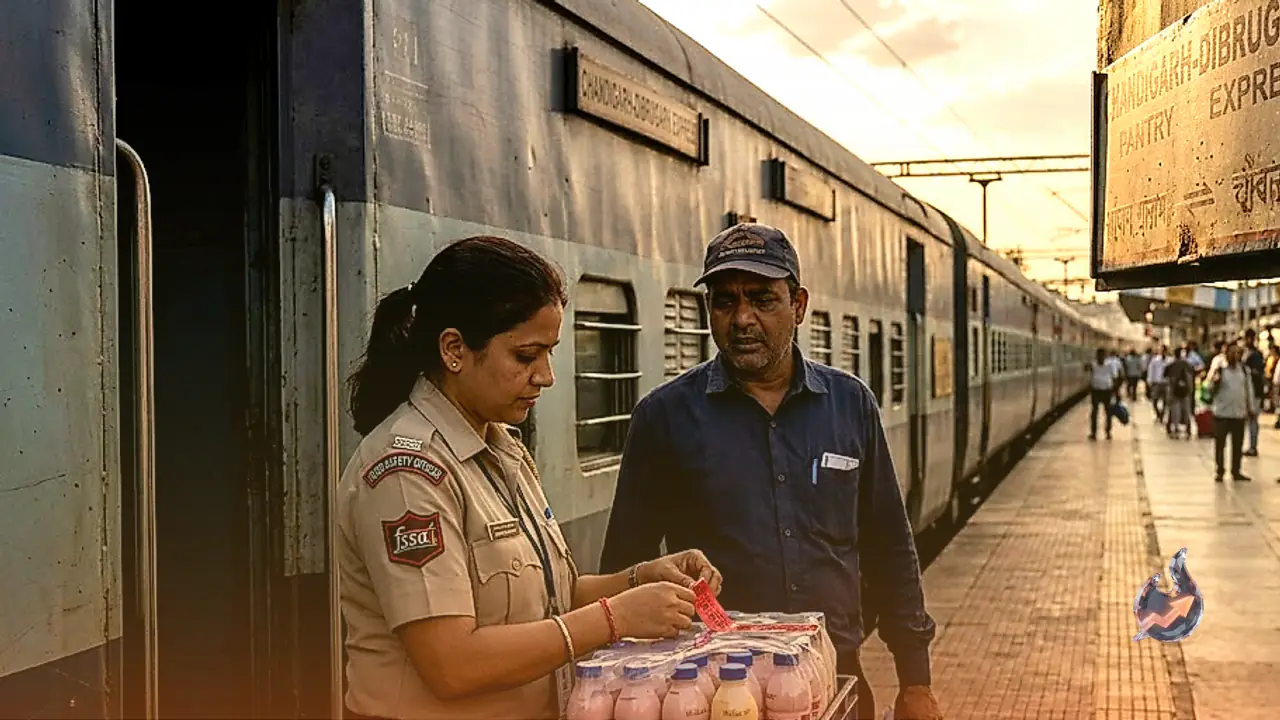

The safety of food served on long-distance trains in India has come under intense scrutiny following a major regulatory action against a pantry car operator. The Food Safety and Standards Authority of India (FSSAI) has taken stern measures after identifying substandard and adulterated beverages served to passengers. This latest enforcement action targets the pantry car operations of the Chandigarh-Dibrugarh Express, where passengers were being served milk that failed to meet basic quality parameters. Sopan Restaurant, the firm responsible for managing the pantry services on this train, was found compromising on the health of commuters, leading to immediate administrative and legal consequences.
Rigorous Testing Exposes Quality Failures on Chandigarh-Dibrugarh Express
Passengers traveling on long-distance routes like the Chandigarh-Dibrugarh Express often rely completely on packaged and sealed items sold in train coaches, assuming them to be completely safe and hygienic. However, a recent inspection has shattered this trust. During a routine quality check in pantry car number 15904 of the Chandigarh-Dibrugarh Express, food safety inspectors collected samples of Nova Flavoured Double Toned Milk. This product was being actively distributed and sold to passengers on board. The collected sample was immediately dispatched to a state-of-the-art food testing laboratory in Assam for a comprehensive chemical and nutritional analysis.
The laboratory report from Assam revealed shocking results. The analyzed sample of the flavored double toned milk failed to satisfy the regulatory baselines established by the government. The scientists and food analysts categorized the beverage as highly substandard and of deficient quality under the provisions of the Food Safety and Standards (FSS) Act of 2006. This scientific confirmation of poor quality proved that the pantry operator was prioritizing profits over passenger safety, prompting a swift response from railway and food safety authorities.
Northeast Frontier Railway and Local Officials Initiate Legal Proceedings
The negative test results from the Assam laboratory triggered immediate alarm bells within the railway administration. Upon receiving the official lab report, the designated officer located at Maligaon under the Northeast Frontier Railway took charge of the situation. Recognizing the severity of the violation, the officer initiated swift legal actions and forwarded the comprehensive investigative report to the dairy manufacturing company that produced the milk, alongside other concerned stakeholders, to ensure accountability at every stage of the supply chain.
The legal process intensified further when the Adjudicating Officer of Alipurduar took formal notice of the lab findings. Operating under the legal powers vested by Section 68 of the FSS Act of 2006, the officer issued show-cause notices to the responsible entities and commenced official adjudication proceedings. These structured legal hearings aimed to establish the exact extent of negligence and to decide the appropriate punitive measures against those who compromised public health inside the train.
Sopan Restaurant Penalized for Jeopardizing Passenger Well-Being
Following the completion of the formal legal and adjudication process, the authorities delivered a decisive blow to the negligent operators. The Adjudicating Officer found the pantry service provider guilty of distributing substandard food items. Consequently, a strict order was issued to impose a substantial monetary penalty on the authorized representative of Sopan Restaurant. While the central food regulator, FSSAI, has not disclosed the exact financial figure of the fine, the action serves as a strong warning to other railway catering service providers across the country.
This incident has also brought the overall monitoring mechanism of train pantry cars under the spotlight. Passenger welfare associations and ordinary commuters have often voiced concerns regarding the freshness and authenticity of food served on board. The confirmation of substandard milk on a prominent express train underscores the absolute necessity for regular, unannounced checks and stricter supervision of third-party vendors operating within the Indian Railways network.
A Broader Campaign Against Adulteration and Non-Compliance
The punitive action against Sopan Restaurant is not an isolated event but part of a highly coordinated nationwide crackdown orchestrated by the FSSAI. The regulatory body has significantly increased its vigilance to identify and punish non-compliant food business operators across various states. By conducting surprise raids and auditing production units, the regulator aims to eliminate adulteration and unhygienic practices from the food supply chain.
In a similar enforcement action earlier this week, the FSSAI suspended the operating license of Rehaan Healthcare, a manufacturing firm based in Punjab. During an inspection of the company's manufacturing facility, which produces health supplements, inspectors discovered severe compliance failures and operational irregularities. The regulator immediately ordered the firm to halt all production activities and issued an ultimatum to resolve all physical and procedural deficiencies before applying for a license reinstatement. This double action in the railway and healthcare sectors highlights the regulator's zero-tolerance policy toward any practices that threaten public health.