























Sultanpur district in Uttar Pradesh holds a profound and revered position in the annals of India's struggle for independence. During the aftermath of the 1857 War of Independence, this region witnessed pivotal events that shaped the course of the freedom movement. Among these historical episodes, the tragic massacre of 1858 stands out as a stark reminder of colonial brutality, when British forces executed approximately 150 local residents in Amhat to avenge a military loss. Today, the mass graves located in Amhat serve as a silent testament to the extreme sacrifices made by the local population against foreign rule.
The Death of Colonel Fisher and Colonial Retaliation
As the flames of the 1857 uprising spread across Sultanpur and adjoining areas, local residents rose courageously against the British East India Company's rule. Historical accounts indicate that residents of Amhat were accused of capturing and hanging British military officer Colonel Fisher. Incensed by this act of rebellion, the colonial administration launched a ruthless reprisal campaign across the area in 1858. British soldiers rounded up dozens of villagers and freedom fighters, executing nearly 150 individuals in a display of collective punishment. This mass execution was deliberately carried out to strike terror into the hearts of the populace and deter future revolts.
Ganj-e-Shahida: A Silent Witness to History
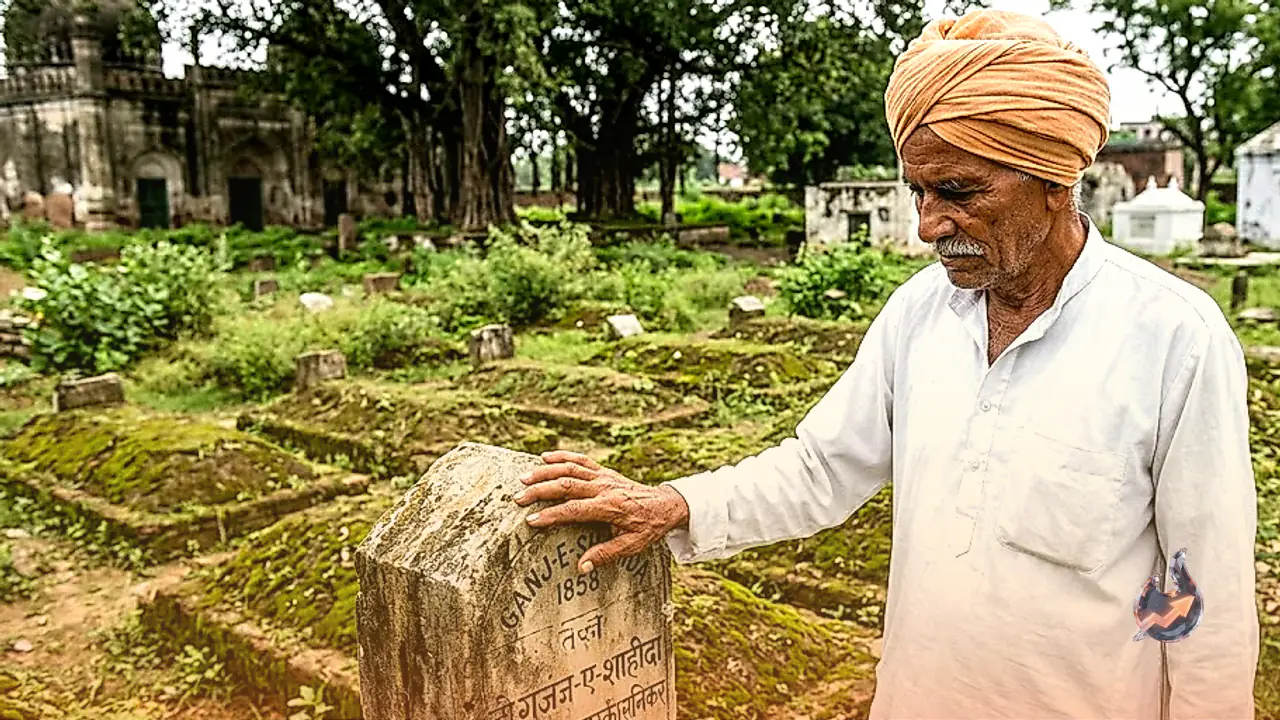
The site where these fallen patriots were laid to rest in a collective burial ground came to be known locally as 'Ganj-e-Shahida'. Far from being ordinary mounds of earth, these mass graves embody the painful memory of colonial suppression and human endurance. According to local resident Haider Abbas Khan, accounts of how nearly 150 people lost their lives in a single sweep have been passed down through generations within the community. Although specific figures and circumstantial details vary across different historical documentation, the historical significance of these mass graves in Amhat remains undisputed.
Literary Evidence in 'Gadar Ke Phool'
This historical tragedy in Sultanpur finds significant documentation in the acclaimed literary work 'Gadar Ke Phool', authored by renowned Hindi writer Amritlal Nagar. While researching the events and regional impacts of the 1857 uprising, Nagar traveled to Sultanpur to gather first-hand historical records and oral histories. During his research expedition, he consulted several prominent local figures, including Babu Ganpat Sahai of Sultanpur. Through these interactions, Nagar compiled crucial insights into the sacrifices of Sultanpur's freedom fighters and preserved the memory of the Amhat incident in his writing.
The Imperative to Preserve Historical Heritage
The story of Amhat underscores the immense hardships endured by the people of Sultanpur during India's quest for liberty. Present-day historians and local citizens emphasize the urgent need to conserve historical landmarks like 'Ganj-e-Shahida'. Preserving these memorial sites will ensure that future generations remain connected to their historical roots and appreciate the heavy cost of freedom. Protecting these silent grounds ensures that the sacrifices of those buried in the mass graves of Amhat remain honored and remembered forever.