




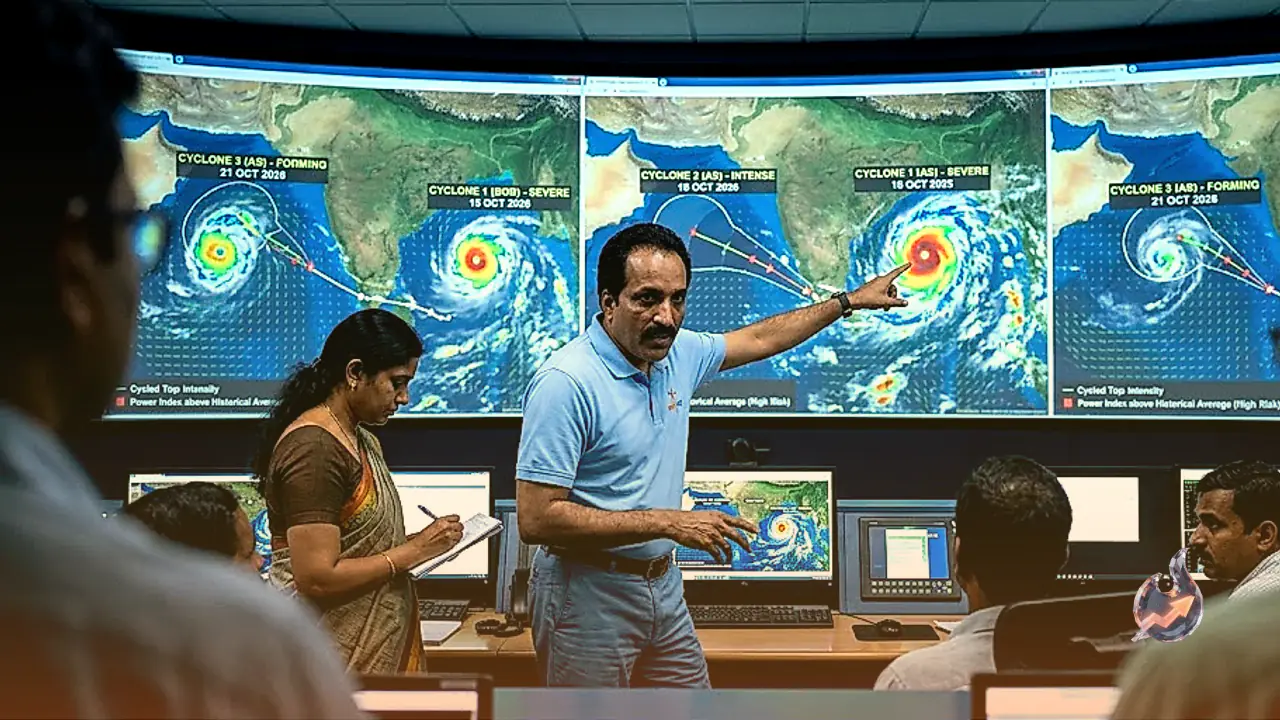


















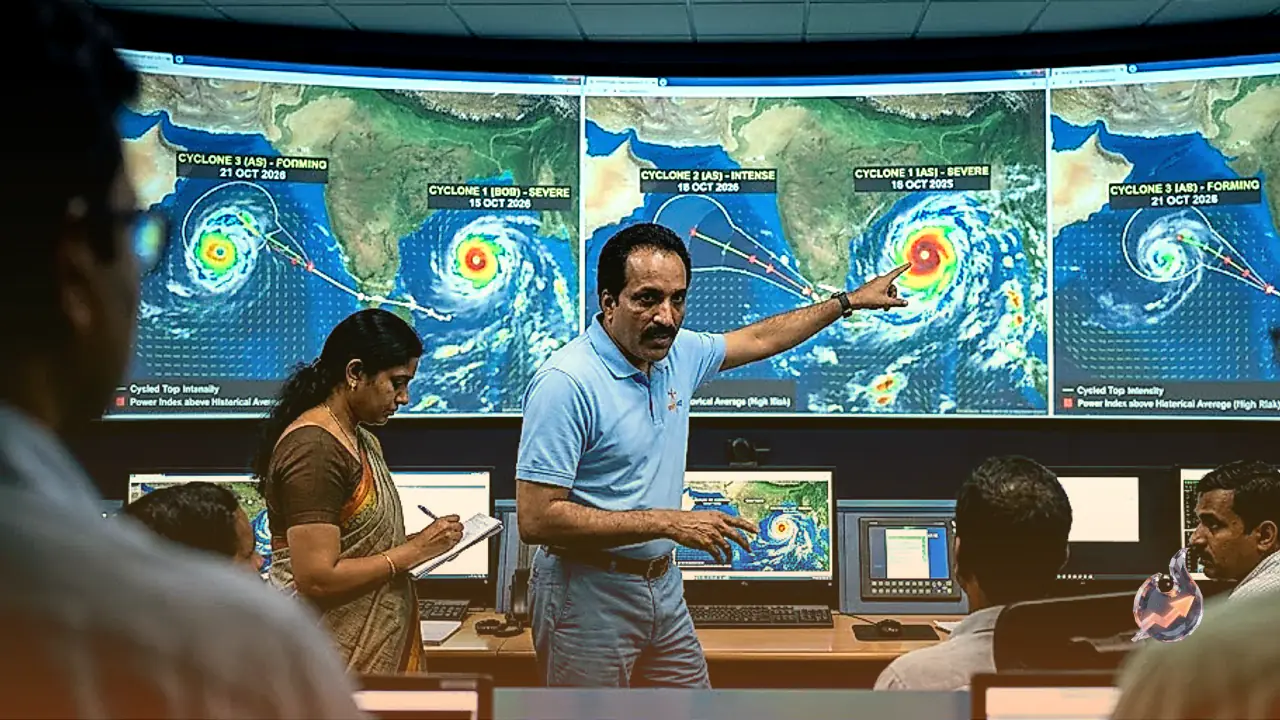

With less than three months remaining before the conclusion of the year 2026, a serious advisory has emerged for coastal regions across the nation. According to a recent report by the Indian Space Research Organisation, a succession of three tropical cyclones is projected to form over the North Indian Ocean during the final quarter from October to December 2026. While weather disturbances in the Bay of Bengal and the Arabian Sea are common occurrences around this time of year, this particular forecast is drawing significant concern due to its potentially severe implications.
Storm Intensities Projected to Surpass 44-Year Historical Averages
Meteorologists and scientists have arrived at these findings after thoroughly examining nearly four decades of climate records, oceanic temperatures, and atmospheric wind patterns. The analysis indicates that the Power Dissipation Index of the anticipated cyclones could exceed the historical average of the past 44 years by roughly 83 percent. This metric directly implies that the approaching weather systems will possess extraordinary strength, carrying the potential to cause widespread devastation across affected regions.
States Facing the Most Severe Vulnerability
The issuance of this warning by ISRO has triggered apprehension among populations residing along the nation's maritime borders. Both the eastern and western coastal belts could bear the brunt of these disturbances, with states such as Odisha, West Bengal, and Andhra Pradesh highlighted as facing the highest risk levels. Nevertheless, neighbouring states including Karnataka, Tamil Nadu, and Kerala will not remain entirely unaffected, as heavy torrential downpours and strong gusty winds are expected in those areas as well.
Landfall Remains Uncertain Despite Alarming Projections
While the meteorological outlook appears daunting, certain experts note that a direct landfall for all three anticipated cyclones during the October to December window is not predetermined. Tropical weather systems frequently remain restricted to open waters, alter their trajectories over time, lose momentum, or dissipate gradually. The exact path and true intensity of any cyclone can only be determined once the system actually materializes and official meteorological agencies commence active tracking.
Potential Devastation and Associated Hazards
When weather systems acquire extreme potency, they invariably bring severe disruption and destruction. Intense wind speeds, heavy precipitation, elevated ocean swells, and coastal inundation through storm surges become prevalent during such events. Low-lying areas face the risk of severe flooding capable of destroying residences, transport routes, and vital infrastructure. Power grids can experience widespread failures, transportation networks can come to a standstill, and maritime operations including fishing and shipping face major threats, rendering marine ventures extremely hazardous.
Preparedness Measures for Administrations and Coastal Zones
Given that the North Indian Ocean basin encompasses numerous nations and an extensive Indian coastline, receiving this preliminary advisory grants governments and local administrative bodies valuable preparation time. Disaster management frameworks can undergo thorough reviews, rescue personnel can be positioned on standby, and emergency equipment can be deployed to sensitive zones well in advance of any actual calamity.
Maintaining Vigilance Through Official Meteorological Updates
Cyclonic formations originating in the Bay of Bengal and the Arabian Sea exert distinct impacts on India's eastern and western shores depending on their genesis points, progression tracks, intensification rates, and landfall locations. Consequently, residents inhabiting coastal belts are advised against treating this seasonal outlook as an absolute landfall prediction, and are instead urged to monitor official weather bulletins continuously. As October approaches and newer datasets become available via satellite imagery and numerical weather prediction models, clearer insights will emerge, making this 2026 advisory a crucial call for widespread preparedness.