
















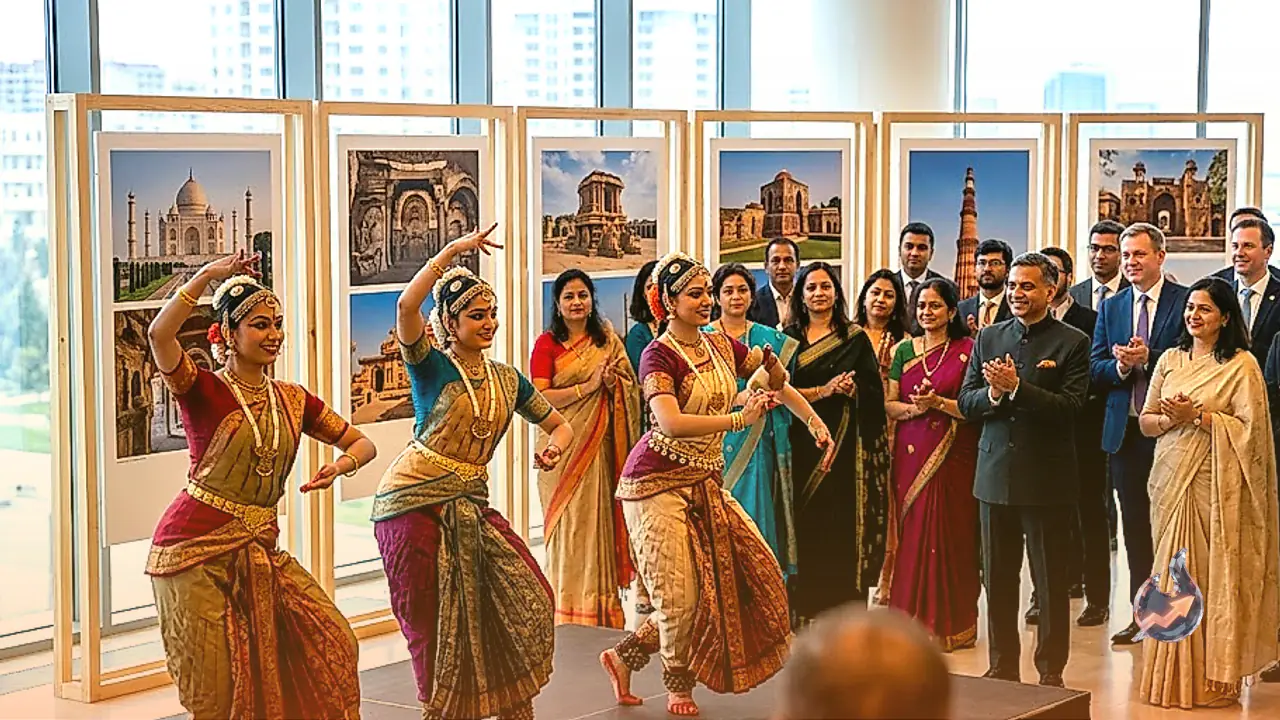

Diplomats, lawmakers and members of the Indian community filled the Embassy of India in Baku on Saturday for the unveiling of a new permanent exhibition celebrating India's UNESCO World Heritage Sites, an installation its creators hope will become a lasting cultural bridge between India and Azerbaijan.
Seventeen Panels, One Sweeping Story
The gathering drew ambassadors and diplomats posted in Baku, members of the Parliament of Azerbaijan, business figures, tour and travel operators, journalists, social media influencers and Indian nationals living in the country. At the centre of the event stood a display of 17 panels, each devoted to a different site chosen from among India's most recognised cultural and natural landmarks. The exhibition was put together by India's Ambassador to Azerbaijan, Abhay Kumar, who conceived the project to spotlight locations that carry UNESCO recognition for their historical, architectural, cultural or natural value. He jointly cut the ribbon on the display alongside Anna Soave, who heads the Country Programme of UN-Habitat in Azerbaijan.
"One of the World's Oldest Civilisations"
Speaking at the inauguration, Ambassador Kumar described India as among the oldest continuously living civilisations on earth, pointing to a cultural history that stretches back thousands of years. He told the audience that the country currently holds 44 UNESCO World Heritage Sites, a tally made up of 36 cultural sites, 7 natural sites and a single mixed site that qualifies under both categories. Kumar said the list is not just a record of India's own past but forms part of a shared inheritance for humanity as a whole. He singled out several entries for special mention, from the centuries-old seat of learning at Nalanda and the instantly recognisable Taj Mahal to the Buddhist stupas of Sanchi and the elaborately carved temple clusters at Hampi and Khajuraho, calling them proof of the diversity and creative range that has shaped India's civilisational journey. He said he hoped the exhibition would stir curiosity among visitors, encourage them to learn more, and deepen appreciation for India's cultural and natural inheritance while pulling India and Azerbaijan closer together culturally.
UN-Habitat's Anna Soave Weighs In
Anna Soave also spoke at the event, praising the Embassy for what she called an inventive step in setting up a standing exhibition dedicated entirely to India's World Heritage Sites. She said such a display gives visitors a durable platform for building cultural awareness, opening dialogue and marking humanity's shared heritage, rather than being a one-off event. Soave added that she found India's cultural and natural heritage extraordinary, noting that its UNESCO-listed sites mirror the country's deep civilisational roots, wide-ranging diversity and long-running effort to protect that inheritance for generations still to come.
From a Fashion Walk to Street Food
Once the ribbon-cutting was over, the programme moved into a Heritage-cum-Fashion Walk, in which Azerbaijani participants modelled traditional Indian outfits representing various states and regions of the country. Organisers said the enthusiasm with which local participants took to Indian clothing traditions was itself a sign of the growing warmth and cultural closeness between the two nations. The evening also included an Indian Street Food Festival, laying out an assortment of popular Indian snacks and beverages that have built a following well beyond India's borders for their flavour and variety; guests sampled the dishes as a hands-on introduction to India's food culture. Azerbaijani performers rounded off the celebrations with a set of energetic Indian-style dance and music acts drawn from the country's performing arts traditions, drawing sustained applause from the crowd.
A Standing Invitation to the Public
Unlike a one-day showcase, the exhibition is designed to stay up permanently inside the Embassy of India in Baku, giving members of the public an ongoing chance to walk through the 17 panels, explore some of India's most celebrated cultural and natural sites, and come away with a fuller picture of the civilisation behind them.