























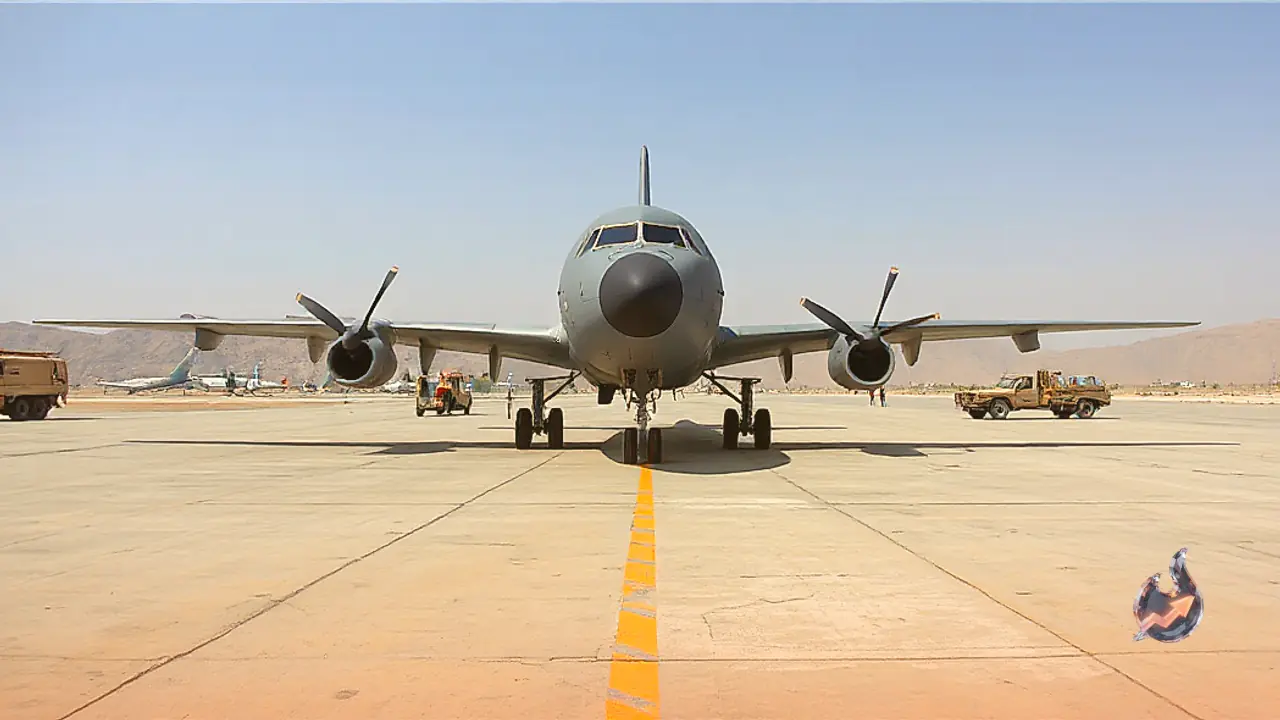

India has once again demonstrated its formidable logistical and transport capabilities in the challenging terrain of the high Himalayas. In a remarkable feat that has captured international attention, a heavy military transport aircraft of the Indian Air Force, the IL-76MD, successfully landed at the Mudh-Nyoma airfield in eastern Ladakh. Positioned at an altitude of approximately 13,629 feet, this operation is being widely regarded as the highest-ever landing recorded for this specific category of aircraft. The Air Force formally announced this historic milestone on a Saturday, marking a significant chapter in regional military logistics.
A New Benchmark in Aviation History
Military strategists have described the landing as a major turning point in high-altitude aviation. The achievement not only showcases the strategic airlift prowess of the Indian forces but also substantially enhances the operational value of the Nyoma base. Situated mere kilometers from the contested border, the facility allows for the rapid deployment of troops, heavy equipment, and essential supplies into critical operational zones where every minute counts during a crisis.
Strategic Proximity to the Line of Actual Control
The Mudh-Nyoma airbase lies approximately 23 kilometers away from the Line of Actual Control in eastern Ladakh. Perched at roughly 13,700 feet, it ranks among the highest fighter-capable airfields globally, featuring a runway stretching around 2.7 kilometers that can accommodate fighter jets, heavy transports, and helicopters alike. Its geographical positioning near sensitive sectors like Demchok and the southern banks of Pangong Tso gives it an unmatched tactical advantage. Unlike older bases such as Leh or Thoise, Nyoma dramatically slashes transit times to the frontier, facilitating quicker evacuations, troop rotations, and supply lines.
Overcoming High-Altitude Aerodynamic Challenges
Operating heavy aircraft in mountainous regions entails severe engineering hurdles. Atmospheric density drops sharply at high altitudes, directly reducing engine performance and the aerodynamic lift generated by the wings. Consequently, landing and subsequently taking off with a heavy transport aircraft in such thin air demands exceptional precision. The IL-76MD, of Soviet origin, is engineered to haul heavy cargo and personnel across vast distances. By landing it successfully at Nyoma, the Air Force has proven its capability to project power under punishing weather and geographical conditions.
Precision and Crew Expertise Highlighted
The Air Force released footage of the landing on the social media platform X, emphasizing that the operation was a stellar demonstration of the aircraft's enduring utility alongside the exceptional skill, precision, and professional competence of its flight crew. According to military assessments, this accomplishment significantly reinforces India's overarching strategic airlift architecture along the northern frontier.
The critical importance of rapid airlift capabilities during standoffs was starkly illustrated during the 2020 Galwan crisis, when massive reinforcements were swiftly flown into the Ladakh sector. Reports from that period indicated that over 68,000 troops, 90 tanks, and 330 infantry combat vehicles were airlifted to meet operational requirements. Decades earlier, during the 1962 conflict with China, the Air Force similarly utilized transport assets to ferry troops and supplies to Chushul, including light tanks, underscoring a long historical precedent of high-altitude logistics.
The Evolution of the Nyoma Airfield
Initially constructed as an advanced landing ground during the 1962 war, the Nyoma strip lay dormant for several decades before being reactivated on September 18, 2009, when an AN-32 transport aircraft touched down on its surface. The Border Roads Organization subsequently initiated formal tenders in December 2022 to upgrade the strip into a full-fledged airbase. Defense Minister Rajनाथ Singh laid the foundation stone for the project in September 2023. Executed at a cost of roughly 218 crore rupees, the upgrade project also saw remarkable contributions from a team of women officers. The base was formally inaugurated on November 12, 2025, when then Air Force Chief Air Chief Marshal AP Singh landed a C-130J Super Hercules aircraft, establishing Nyoma as the fourth operational airbase in Ladakh after Leh, Kargil, and Thoise.
Comparative Advantage Over DBO and Fukche
While India maintains other advanced landing grounds in Ladakh such as Daulat Beg Oldi and Fukche, their infrastructure differs significantly from Nyoma. Daulat Beg Oldi sits at an even higher elevation of 16,614 feet, making it one of the world's highest air strips, while Fukche is situated near the Demchok sector. However, neither of those locations currently possesses the structural capacity to handle heavy strategic transports like the IL-76 or C-17. In contrast, Nyoma has been specifically engineered with an extended runway and reinforced pavement designed to support heavier logistical aircraft.
China's Expanding Infrastructure Across the Plateau
This expansion of Indian operational readiness must be viewed within the broader context of Chinese military buildup across the frontier. On the opposite side of the Line of Actual Control, across the Tibetan Plateau, Beijing has established an extensive network of high-altitude airbases. Facilities such as Qamdo Bamda, Lhasa Gonggar, Ngari Gunsa, and Shigatse feature extended runways, hardened aircraft shelters, and robust support infrastructure. Additional military expansions have been noted in areas like Damshung, Tingri, Burang, and Lhuntse. Although high-altitude thin air similarly constrains Chinese payloads, Beijing has sought to mitigate these structural limitations through integrated air defense deployments, drone infrastructure, and heavy rail logistics running along the plateau.