























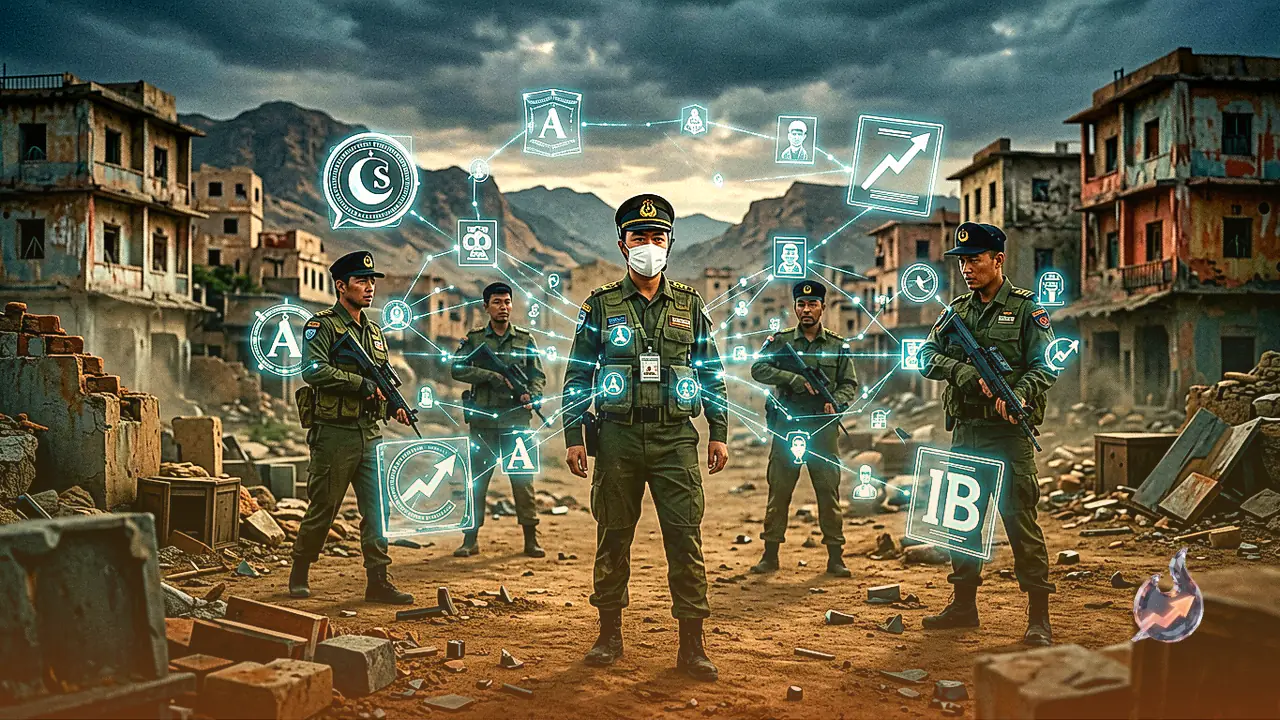

The honeytrap module operated by Pakistan's intelligence agency ISI has emerged as one of the gravest internal security headaches for India. The country's premier intelligence agencies, ranging from the Research and Analysis Workshop to the Intelligence Bureau, are on high alert due to this escalating menace. This network of female operatives deployed by the neighboring nation has transformed into a critical security challenge for the nation.
Massive Arrests and Involvement of Officials
According to available details, security agencies are rounding up dozens of individuals on a daily basis. Those apprehended include not only ordinary citizens but also educated individuals from official and administrative backgrounds. These suspects are accused of falling prey to honeytrap plots and leaking sensitive and classified information to the ISI.
Shifting the Network Deep Inside Indian Territory
While this problem has persisted for Indian authorities for a considerable period, a new complication has now arisen as the ISI seeks to operate these modules entirely from within Indian soil, leveraging artificial intelligence for generated imagery and videos. An Intelligence Bureau official revealed that this shift poses a fresh challenge for Indian agencies, given that these operations were historically managed directly from Faridkot in Pakistan.
Massive Funding and Changing Geographical Focus
Between the years 2015 and 2019, the ISI maintained a massive budget of 3,000 billion rupees to run this module, highlighting the expansive scale of their operations. The agency now intends to dismantle the Pakistan-based setup and run the entire infrastructure from inside India, ensuring that no electronic or physical trail of terrorist or espionage activities leads back to Pakistan.
Targeting Small Towns and Rural Pockets
According to officials, rather than focusing on major metropolitan areas, the ISI is now placing greater emphasis on establishing these cells in smaller towns and villages to evade detection. While earlier recruits operated mainly out of Madhya Pradesh, Gujarat, and Uttar Pradesh under the guidance of Faridkot handlers, the agency is now attempting to build similar clandestine networks in smaller cities across southern India.
Exploiting Financial Vulnerabilities
The strategic shift toward smaller towns stems from the ease with which individuals can be lured and manipulated using financial incentives. Another official noted that recent investigations uncovered how the ISI leverages obscene content and explicit photographs to blackmail targets into divulging sensitive information, alongside deploying attractive women specifically tasked with extracting defense-related intelligence.
The Dangerous Integration of Artificial Intelligence
The advent of artificial intelligence has streamlined these operations further for the ISI. By utilizing AI-generated fake photographs and video content of women, the complexity of tracking suspects increases manifold, as investigators may find that the real person behind the profile does not even exist. The combination of small-town infiltration and AI technology makes the task significantly harder for Indian security forces.
Targeting Young Agniveers and New Recruits
Recent intelligence reports indicate that the ISI has turned its attention toward newly inducted Agniveers. Such young recruits can easily fall victim to these traps due to limited technological awareness, making it difficult for them to differentiate between genuine individuals and AI-forged media. The primary objective remains the acquisition of sensitive information regarding India's armed forces, which could potentially be weaponized during conflict or utilized to embarrass the military.
The Aftermath of Operation Sindoor
Honeytrap cases have multiplied exponentially in the wake of Operation Sindoor. Executed as a retaliatory strike following the Pahalgam terrorist attack, the operation exposed the vulnerabilities of the Pakistani establishment and shattered their nuclear deterrence claims. Driven by a desire for retaliation and humiliation of the Indian military, these malicious campaigns have reportedly been scaled up tenfold.