

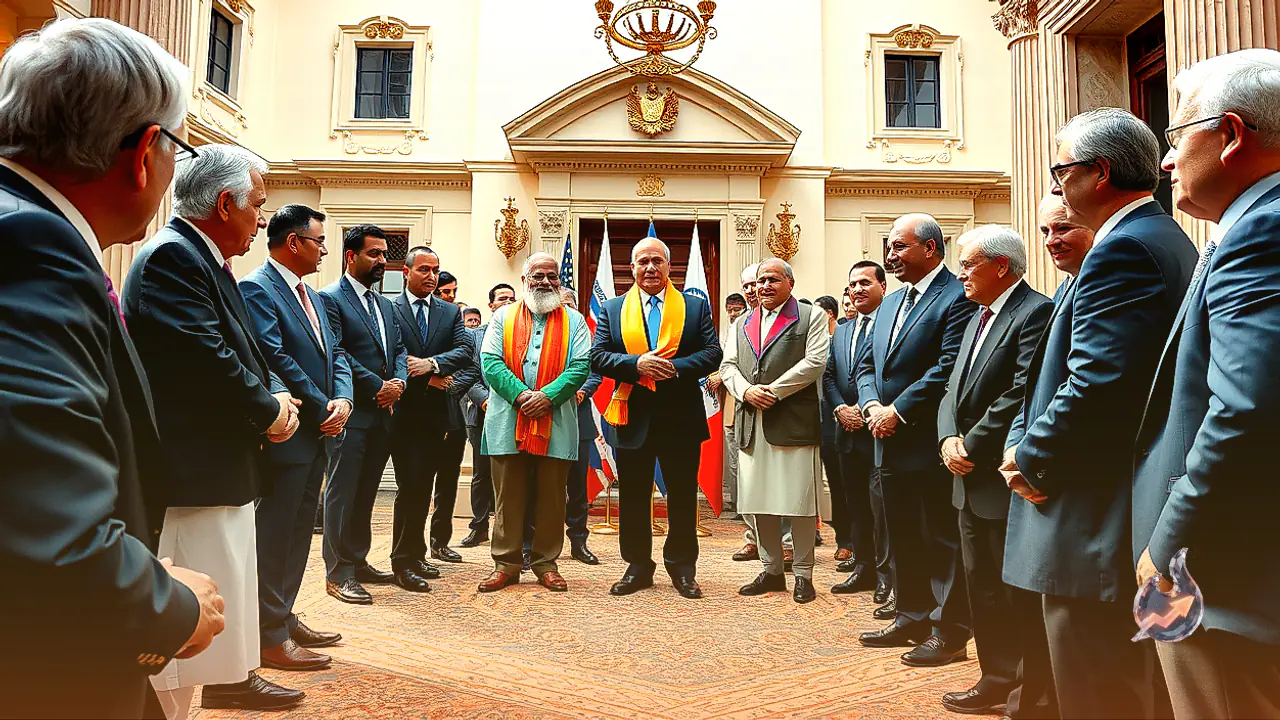















Affirming India's commitment to strategic autonomy on the global stage, External Affairs Minister S. Jaishankar offered a clear appraisal of New Delhi's enduring relationship with Moscow. Speaking during a session on the future of India-Russia ties at the Munich Leaders Meeting, he asserted that Indian foreign policy does not align itself with Western geopolitical camps. Instead, national decisions are guided by sovereign national interests, strategic imperatives, and lessons drawn from shared history, creating a foundation that India cannot set aside.
The Historical Heritage of the 1950s and Security Imperatives
Jaishankar highlighted that bilateral cooperation with Moscow traces its modern roots back to the 1950s. Reflecting on that critical juncture, he recalled that when India faced severe threats to its national security and territorial integrity, the Soviet Union repeatedly stepped forward in support. While numerous global powers chose to align with India's neighbouring military regime during those difficult years, ties with Moscow followed a distinct and reliable trajectory.
Because of this historical legacy, Jaishankar explained, any contemporary evaluation of bilateral relations cannot overlook the foundational support received in past decades. Over the intervening years, the partnership has evolved significantly, transcending the boundaries of traditional defence procurements to cover a multifaceted strategic landscape.
Broadening Bilateral Scope Across Energy, Trade, and Advanced Technology
A defining hallmark of the India-Russia relationship has been its consistent expansion across diverse domains. Although defence cooperation played a central role during the Cold War era, contemporary bilateral engagements encompass civil nuclear energy, space exploration, expansive trade flows, mutual investments, and natural resources.
The External Affairs Minister pointed out that alongside ongoing military and nuclear collaboration, both nations maintain extensive commercial exchanges. In particular, Russia remains an indispensable partner in fulfilling India's energy and mineral resource requirements. Jaishankar underlined that India's direct experience with Russia has remained consistently positive over the decades, ensuring that New Delhi views this engagement through the prism of its own core priorities rather than the shifting dynamics of global polarization.
Diplomatic Engagement and Peaceful Settlement of the Ukraine Conflict
Addressing the ongoing conflict between Russia and Ukraine, Jaishankar reiterated India's principled stance that the hostilities must come to an end. He stated unequivocally that an enduring resolution can only be achieved through diplomacy, dialogue, and sustained negotiations. India has maintained a long-standing call for both combatants to abandon armed escalation and engage in structured diplomatic talks.
In recent months, India has stepped up its proactive involvement by engaging in direct communication with leaders in both Moscow and Kyiv. The fundamental objective of these diplomatic exchanges is to keep communication channels open and foster conditions conducive to peaceful settlement.
Practical Problem-Solving From Black Sea Shipping to Energy Corridors
The External Affairs Minister emphasized that New Delhi has not restricted itself to general appeals for peace, but is actively working on tangible, practical friction points. Early diplomatic efforts focused on securing safe maritime passage for vessels operating in the Black Sea, which is vital for stabilising international grain exports.
Furthermore, discussions have addressed wider food trade, uninterrupted energy exports, and exploring potential understandings to prevent strikes on specific critical targets. Jaishankar indicated that India concentrates on identifying concrete areas where immediate breakthroughs are feasible, thereby easing humanitarian and commercial pressures generated by the conflict.
Navigating Western Sanctions Through Sovereign Foreign Policy
Jaishankar's remarks come at a juncture when Western nations continue to scrutinise New Delhi's economic and strategic engagement with Moscow. Following the outbreak of the Ukraine conflict, the United States and European partners imposed comprehensive sanctions against Russia, urging other nations to reconsider their existing economic and diplomatic ties with Moscow.
In response, India has consistently maintained that its sovereign diplomatic choices will not be dictated by external pressures. Decades of mutual trust in defence hardware, indispensable energy requirements, balanced trade, and comprehensive strategic cooperation ensure that the partnership with Russia remains a vital component of India's long-term foreign policy architecture.